When Is National Mushroom Day? October 15 or June 1
Short answer
National Mushroom Day is October 15 each year, the date the Mushroom Council and National Day Calendar both use. There is also a second date. In May 2026 the U.S. Senate agreed to a resolution stating that June 1 is National Mushroom Day, honoring Pennsylvania's mushroom growers. September is National Mushroom Month.
Search for National Mushroom Day and you may get two dates. Neither one is wrong. The mushroom industry uses October 15, and a 2026 Senate resolution names June 1.
September gets a turn too. It's National Mushroom Month.
When is National Mushroom Day?
October 15, each year. The Mushroom Council marks it as National Mushroom Day (opens in new tab), and National Day Calendar (opens in new tab) lists the same date.
The Council is the research and promotion board for fresh mushrooms in the U.S. Growers and importers sit on it. It runs under the supervision of the USDA's Agricultural Marketing Service, the Council says (opens in new tab).
Who picked October 15 is murkier. The day began in Australia, as an industry campaign led by the Australian Mushroom Growers Association, according to National Day Calendar. Australian growers do use the date. In 2020 the association commissioned a mushroom researcher to appear on the TV show Studio 10 for the day, an Australian trade paper reported (opens in new tab). No source we found gives a founding year or explains the date. The origin is unclear.
Why are there two National Mushroom Days?
Because a 2026 Senate resolution names a second date. On April 16, 2026, Senator John Fetterman of Pennsylvania submitted Senate Resolution 676 (opens in new tab) with Senator Dave McCormick. Its first clause reads "Whereas June 1 is National Mushroom Day." The Senate agreed to it on May 21, 2026.
Representative Chrissy Houlahan, with Representative Dan Meuser, submitted a matching resolution (opens in new tab) in the House the same day.
Both resolutions are mostly about Pennsylvania. Over 60 percent of U.S. mushrooms are grown in two of the state's counties, Chester and Berks, they say. They trace the local industry to 1885, when a Kennett Square florist began growing mushrooms beneath his greenhouse benches. Fetterman calls the state the Mushroom Capital of the World (opens in new tab).
None of this makes June 1 a holiday. Simple resolutions like these don't have the force of law (opens in new tab), and they need no approval from the House or signature from the president. Federal holidays are set in law, and the Office of Personnel Management's list (opens in new tab) has no mushroom day on it, in June or in October.
So which date is right? Both. October 15 was already in use by 2018, when the Mushroom Council called it "one of the greatest days of the year." June 1 has the Senate's words behind it, and Fetterman marked the day with a statement (opens in new tab) in 2026. Celebrate both. Nobody is keeping score.
Is September National Mushroom Month?
Yes. "September is National Mushroom Month," the Mushroom Council's 2021 announcement (opens in new tab) states, and the Council ran its 2025 National Mushroom Month sweepstakes (opens in new tab) in September. A month in September, a day in October, and the Senate's June 1 on top.
How do you celebrate National Mushroom Day?
Cook one, try a new one, walk with people who know them, and learn the ones people take for more than flavor.
Cook one mushroom well
Lion's mane wants a dry sauté, per the Mushroom Council's lion's mane page (opens in new tab). Cook it in a hot, dry skillet until the water releases and the edges brown. Then add butter and seasoning. The Council compares its flavor and texture to crab or lobster.
For a weeknight, try the Blend (opens in new tab), the Council's name for chopped mushrooms mixed into ground meat. The mix runs anywhere from 25 to 75 percent mushroom. Burgers are the easy place to start.
Try a species you haven't had
The Council's variety list (opens in new tab) runs well past white button. It covers crimini, portabella, shiitake, oyster, beech, maitake, king trumpet and lion's mane. Buy the one you've never cooked.
Join a local mushroom club walk
The North American Mycological Association keeps a map of its affiliated clubs (opens in new tab). A walk with a club puts you next to people who know your area's look-alikes. That local knowledge matters. Learning mushrooms in one region "is not reliable" for identifying them in another, Poison Control warns (opens in new tab). Look, photograph and learn. Don't eat what you find.
Learn the functional mushrooms
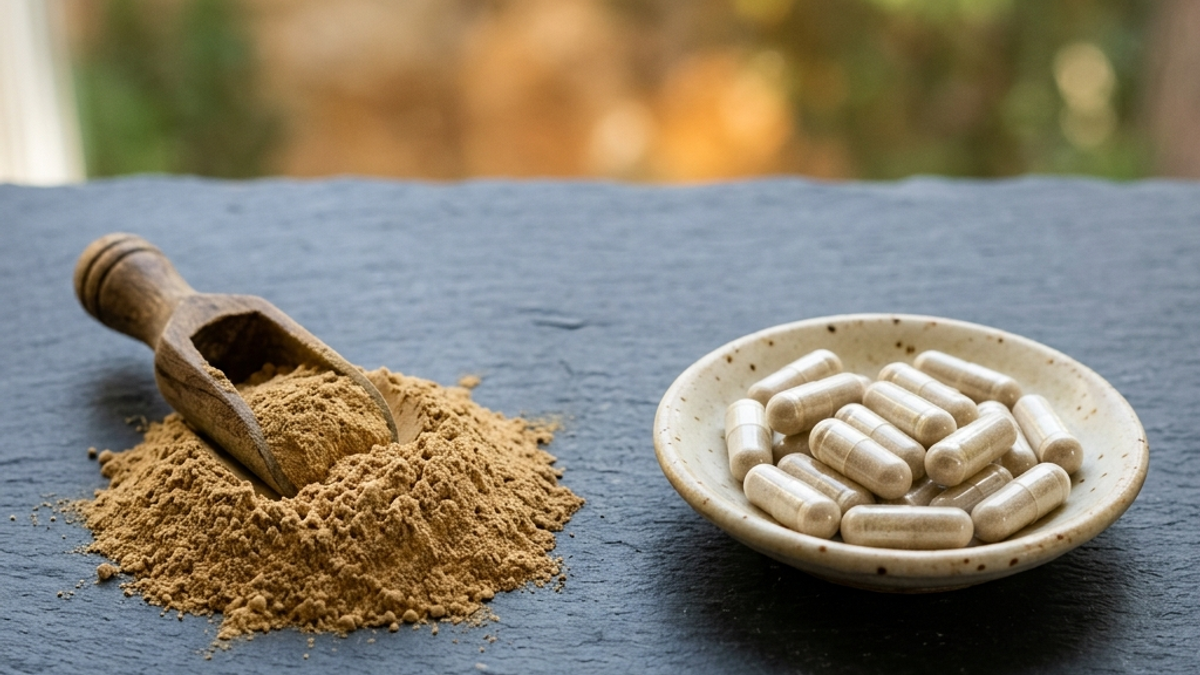
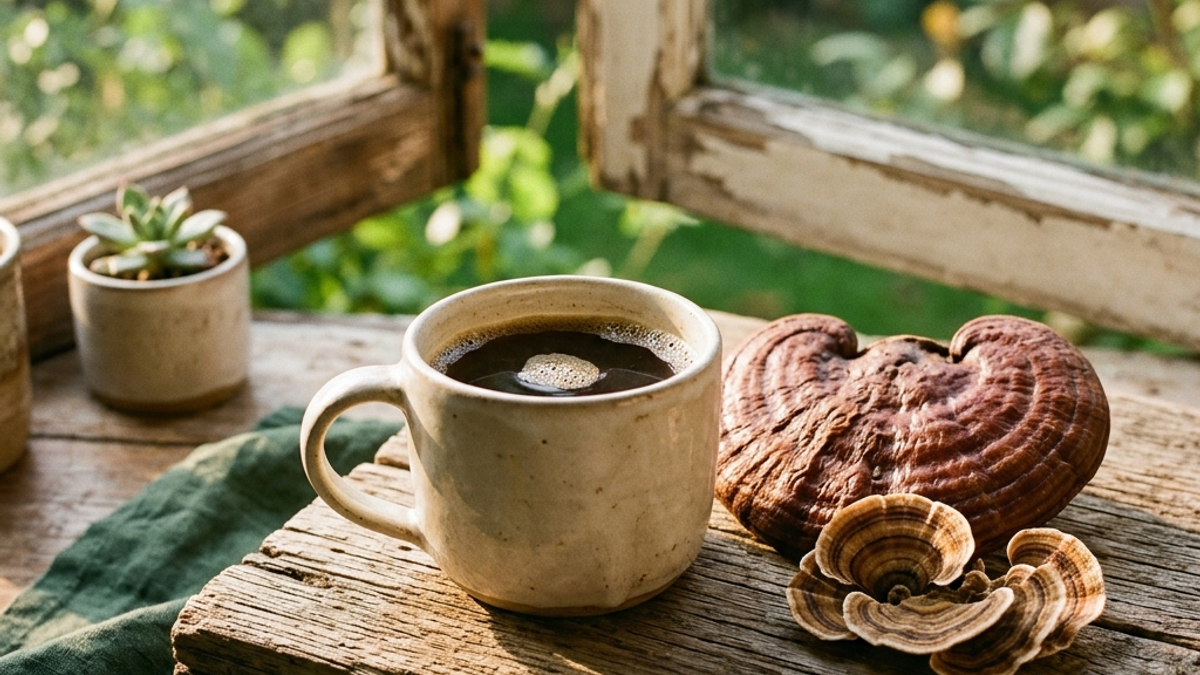
Culinary mushrooms are grown to be eaten. Functional mushrooms are taken for what they do in the body, and with those the species, the part and the dose all matter. Our functional mushrooms guide covers the category. For single species, start with lion's mane. Cordyceps is a name that covers more than one organism. Almost no blend includes poria. Tiger's milk names two different species. Check the Latin name.
If you'd rather take seven in one scoop, our tub is a caffeine-free mix-in with seven mushrooms, superfoods and pre-, pro- and postbiotics. Every dose is on the label.
Is it safe to eat wild mushrooms?
Not unless an expert has identified the mushroom. A wild mushroom is "NEVER safe" to eat unless a mushroom identification expert says so, Poison Control says (opens in new tab). Cooking doesn't make a poisonous mushroom safe, and symptoms can take many hours to appear. Keep an eye on children playing outdoors, too.
The U.S. numbers show why. Poison centers logged 133,700 mushroom exposures from 1999 to 2016, about 7,428 a year, and 62 percent involved children under 6 (Brandenburg & Ward, 2018 (opens in new tab)). Most caused no harm or only minor harm. Fifty-two people died, mostly older adults who ate a mushroom carrying cyclopeptide toxins by mistake.
Misidentification of edible species appears to be the most common cause, the authors wrote, and it may be preventable through education. If someone has eaten a wild mushroom, call Poison Control at 1-800-222-1222 right away.
References
- Mushroom Council. Happy National Mushroom Day! Published 2018-10-12. https://www.mushroomcouncil.com/articles/happy-national-mushroom-day/ (opens in new tab) (accessed 2026-10-15).
- National Day Calendar. National Mushroom Day. https://nationaldaycalendar.com/celebrations/national-mushroom-day (opens in new tab) (accessed 2026-10-15).
- Mushroom Council. Mushroom Council celebrates the "United States of Mushrooms" for National Mushroom Month in September. Press release, August 30, 2021. https://www.mushroomcouncil.com/wp-content/uploads/2021/08/PR-Mushroom-Month_08302021.pdf (opens in new tab)
- Good Fruit & Vegetables. National Mushroom Day given air time. October 30, 2020. https://www.goodfruitandvegetables.com.au/story/6988706/national-mushroom-day-given-air-time/ (opens in new tab)
- S. Res. 676, 119th Congress. Recognizing and honoring National Mushroom Day and the contributions of Chester and Berks Counties to the national mushroom industry and to healthy diets. Submitted April 16, 2026, and agreed to in the Senate May 21, 2026. U.S. Government Publishing Office. https://www.govinfo.gov/content/pkg/BILLS-119sres676ats/html/BILLS-119sres676ats.htm (opens in new tab)
- H. Res. 1184, 119th Congress. Recognizing and honoring National Mushroom Day and the contributions of Chester and Berks Counties to the national mushroom industry and to healthy diets. Submitted April 16, 2026, and referred to the House Committee on Agriculture. U.S. Government Publishing Office. https://www.govinfo.gov/content/pkg/BILLS-119hres1184ih/html/BILLS-119hres1184ih.htm (opens in new tab)
- Office of U.S. Senator John Fetterman. Fetterman, colleagues recognize Pennsylvania farmers on National Mushroom Day. April 16, 2026. https://www.fetterman.senate.gov/fetterman-colleagues-recognize-pennsylvania-farmers-on-national-mushroom-day/ (opens in new tab)
- Office of U.S. Senator John Fetterman. Fetterman celebrates June 1st as National Mushroom Day. June 1, 2026. https://www.fetterman.senate.gov/fetterman-celebrates-june-1st-as-national-mushroom-day/ (opens in new tab)
- U.S. Senate. Types of legislation. https://www.senate.gov/legislative/common/briefing/leg_laws_acts.htm (opens in new tab) (accessed 2026-10-15).
- U.S. Office of Personnel Management. Federal holidays. https://www.opm.gov/policy-data-oversight/pay-leave/federal-holidays/ (opens in new tab) (accessed 2026-10-15).
- Mushroom Council. 2025 National Mushroom Month sweepstakes, official rules. https://www.mushroomcouncil.com/2025-national-mushroom-month-sweepstakes/ (opens in new tab)
- Mushroom Council. Lion's mane. https://www.mushroomcouncil.com/mushroom-101/varieties/lions-mane/ (opens in new tab) (accessed 2026-10-15).
- Mushroom Council. The Blend. https://www.mushroomcouncil.com/the-blend/ (opens in new tab) (accessed 2026-10-15).
- Mushroom Council. Varieties. https://www.mushroomcouncil.com/mushroom-101/varieties/ (opens in new tab) (accessed 2026-10-15).
- North American Mycological Association. Clubs. https://namyco.org/clubs/ (opens in new tab) (accessed 2026-10-15).
- Poison Control (National Capital Poison Center). Mushroom poisoning: don't invite "the death angel" to dinner. https://www.poison.org/articles/wild-mushroom-warning (opens in new tab) (accessed 2026-10-15).
- Brandenburg WE, Ward KJ. Mushroom poisoning epidemiology in the United States. Mycologia. 2018;110(4):637-641. PMID: 30062915. Erratum in Mycologia. 2018;110(6):1349. https://pubmed.ncbi.nlm.nih.gov/30062915/ (opens in new tab) · doi:10.1080/00275514.2018.1479561 (opens in new tab)