Our science

What's actually in the blend, and what it actually does.

This is the honest version of the conversation most brands skip. Here's what each ingredient is studied for, where the evidence is strong, where it's early, and how to read a label so you don't overpay for filler. All of it in structure/function language — no disease claims, no overstating the research.

The formula at a glance

Per serving · full formula
Mushrooms · dual-extracted fruiting body
Lion's ManeHericium erinaceus 1000mg
Cordyceps 1000mg
ReishiGanoderma lucidum 500mg
Turkey TailTrametes versicolor 500mg
ChagaInonotus obliquus 500mg
PoriaWolfiporia cocos 500mg
Tiger's MilkPleurotus tuber-regium 300mg
Superfoods & functional add-ins
Organic CacaoTheobroma cacao 500mg
Ceylon CinnamonCinnamomum verum 500mg
Coconut Milk PowderCocos nucifera 1000mg
Pre / pro / postbiotics
Acacia FiberAcacia senegal 750mg
DE111®Bacillus subtilis DE111 1 BillionCFU
BPL1® HTBifidobacterium animalis subsp. lactis CECT 8145 10 Billioncells
Added nutrients
Vitamin C 60mg
Iron 0.4mg
Exact amounts are printed on every pouch. Where a number isn't shown here yet it reads on label — we don't publish a dose we can't stand behind.

The seven mushrooms

All seven are dual-extracted fruiting body only — never mycelium grown on grain, never fillers. The fruiting body is the part of the mushroom most of the research is about.

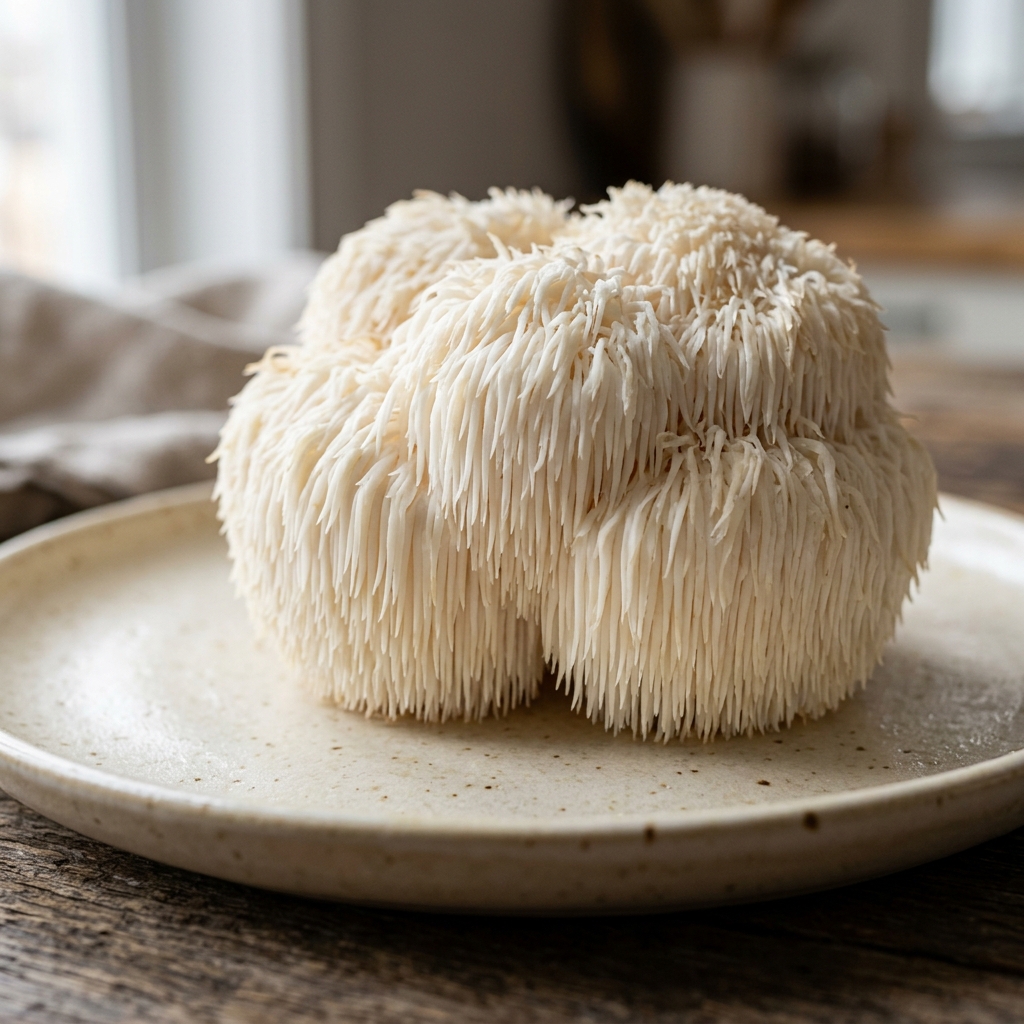
A fresh lion's mane mushroom with cascading white spines on a ceramic plate

Lion's Mane

Hericium erinaceus

Supports memory, focus, and cognitive clarity.

Lion's mane is the most-studied mushroom for cognitive support. Its active compounds — hericenones, concentrated in the fruiting body — have been studied for their relationship to nerve growth factor (NGF), a protein that helps maintain healthy neurons. Human studies on cognitive support have typically used 1,000–3,000 mg/day of extract; many retail products contain a fraction of that. Read the full pharmacology breakdown →

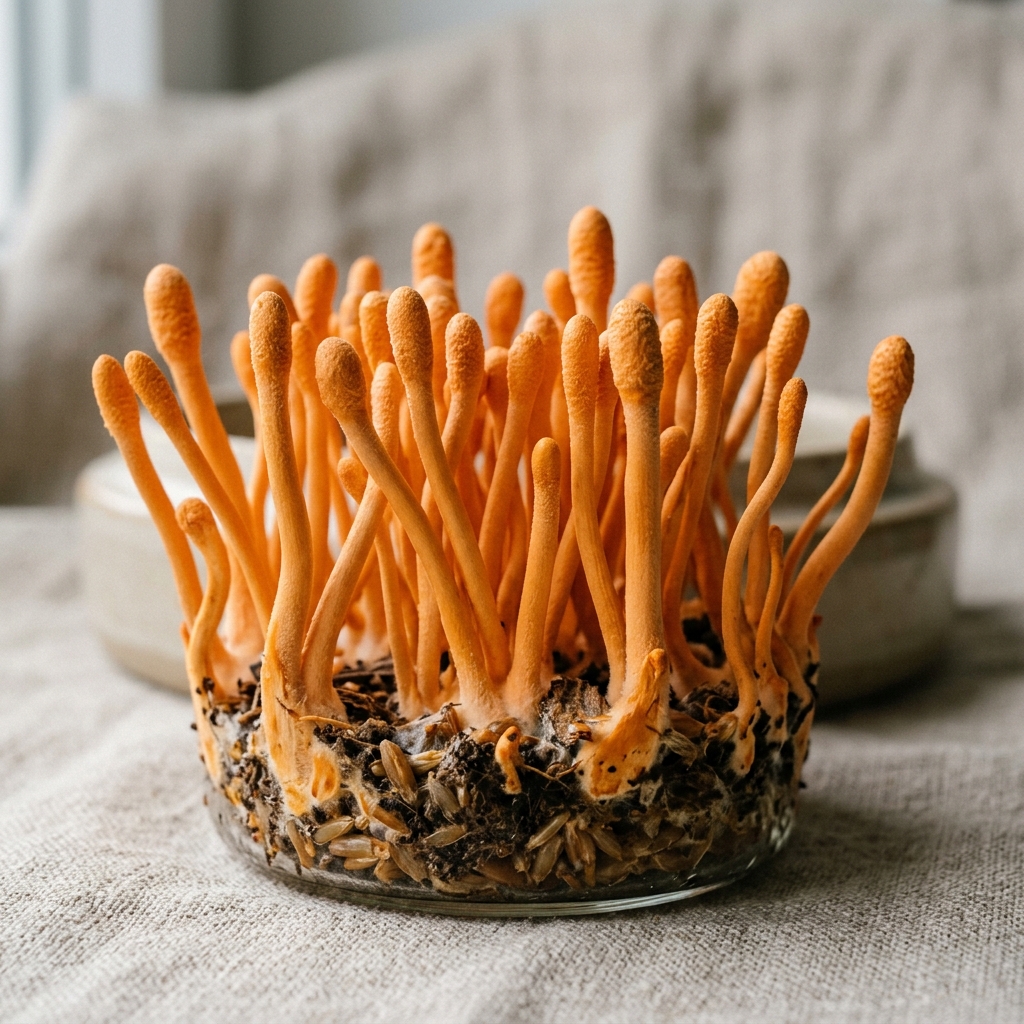
A cluster of bright orange Cordyceps mushrooms

Cordyceps

Cordyceps

Supports stamina, energy, and natural endurance.

Cordyceps is studied in the context of how the body uses oxygen and produces cellular energy (ATP) during exertion (much of the human evidence is on the Cordyceps militaris species). Unlike caffeine, it isn't a stimulant — the support is about how your cells make energy, not a jolt followed by a crash. The research here is still early, but it points toward steady stamina rather than a spike.

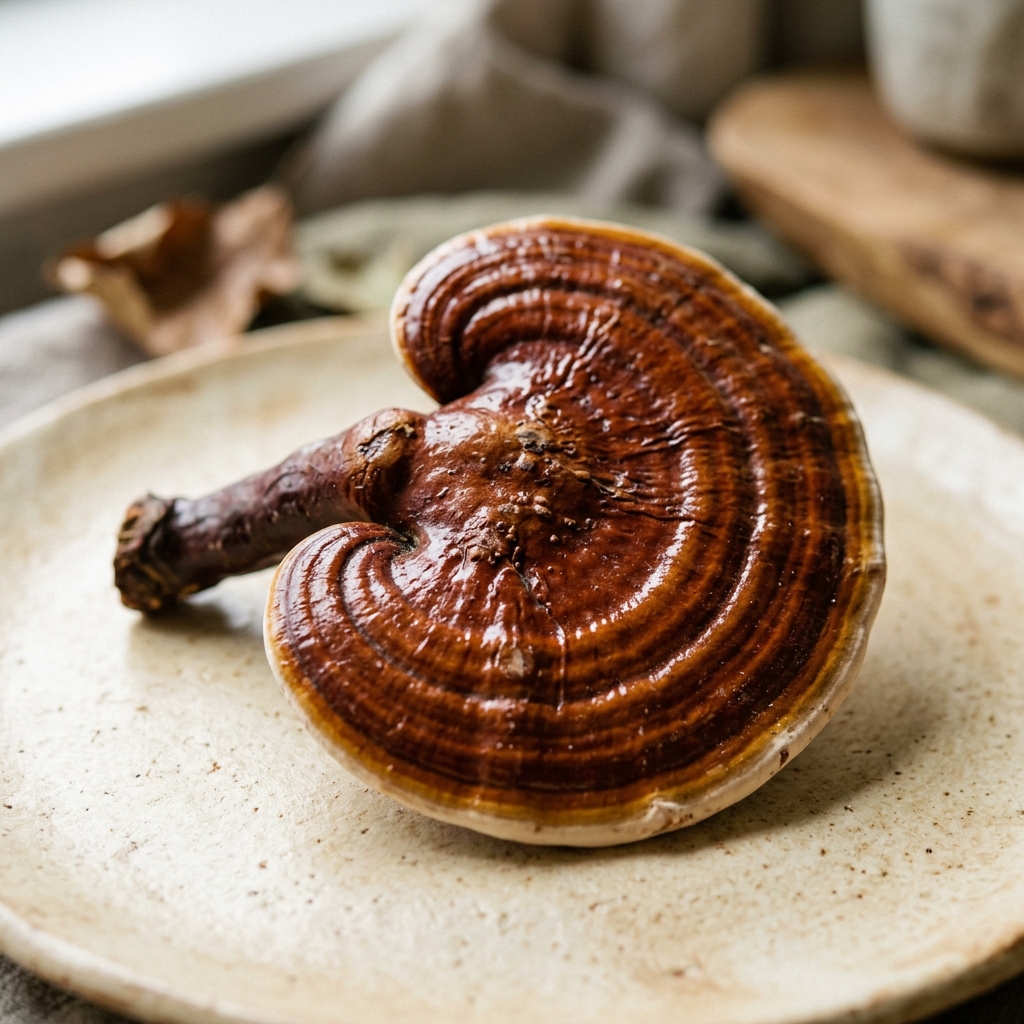
A glossy reddish-brown reishi mushroom on a ceramic plate

Reishi

Ganoderma lucidum

Promotes calm and supports a healthy stress response and immune health.

Reishi is a classic adaptogen, traditionally used to promote calm and support the body's response to everyday stress. Its beta-glucans are also studied for immune support. It's the evening-friendly, non-stimulating side of the blend.

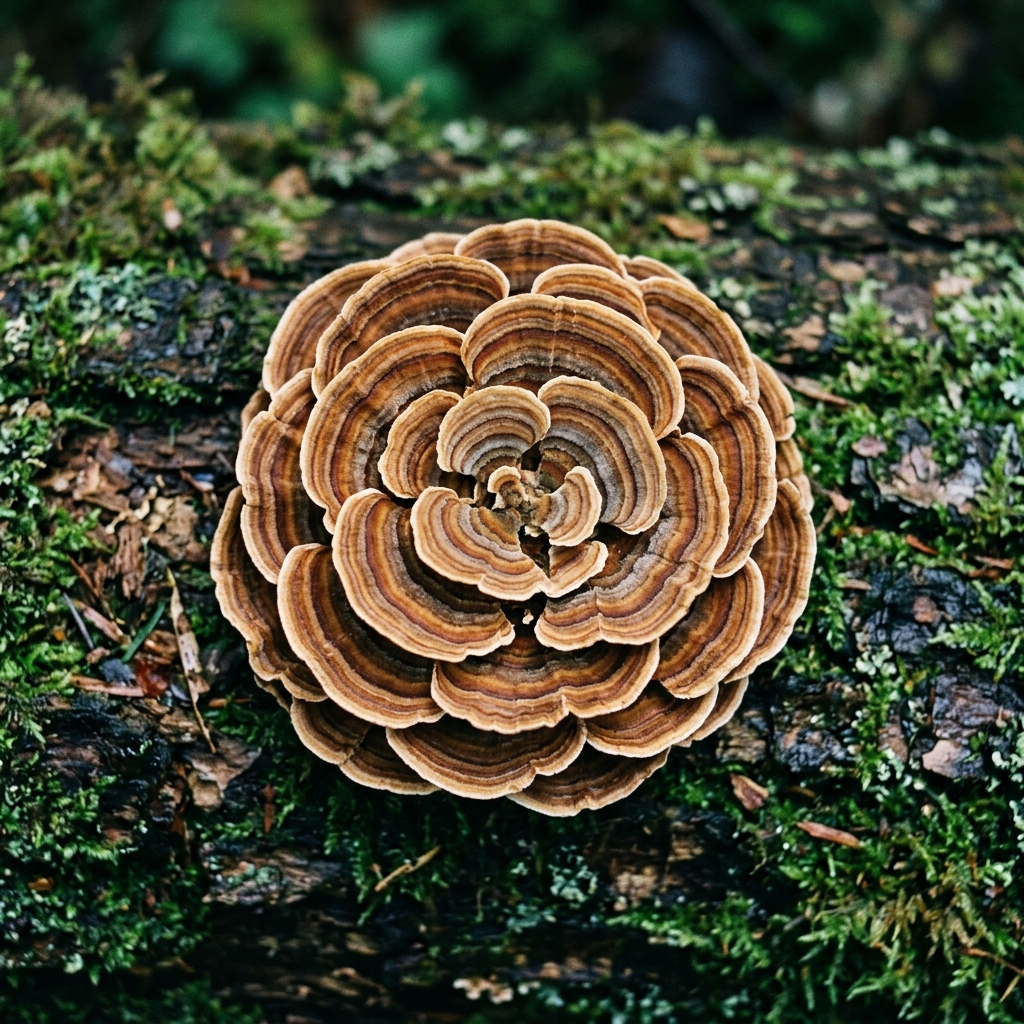
Turkey tail mushrooms with concentric brown, tan, and green bands on a mossy log

Turkey Tail

Trametes versicolor

Supports gut flora and immune balance.

Turkey tail is one of the most-researched mushrooms for immune support. It's rich in polysaccharopeptides and beta-glucans that act as prebiotics — feeding the beneficial bacteria in your gut. It's a big reason this blend supports the gut as well as immune balance.

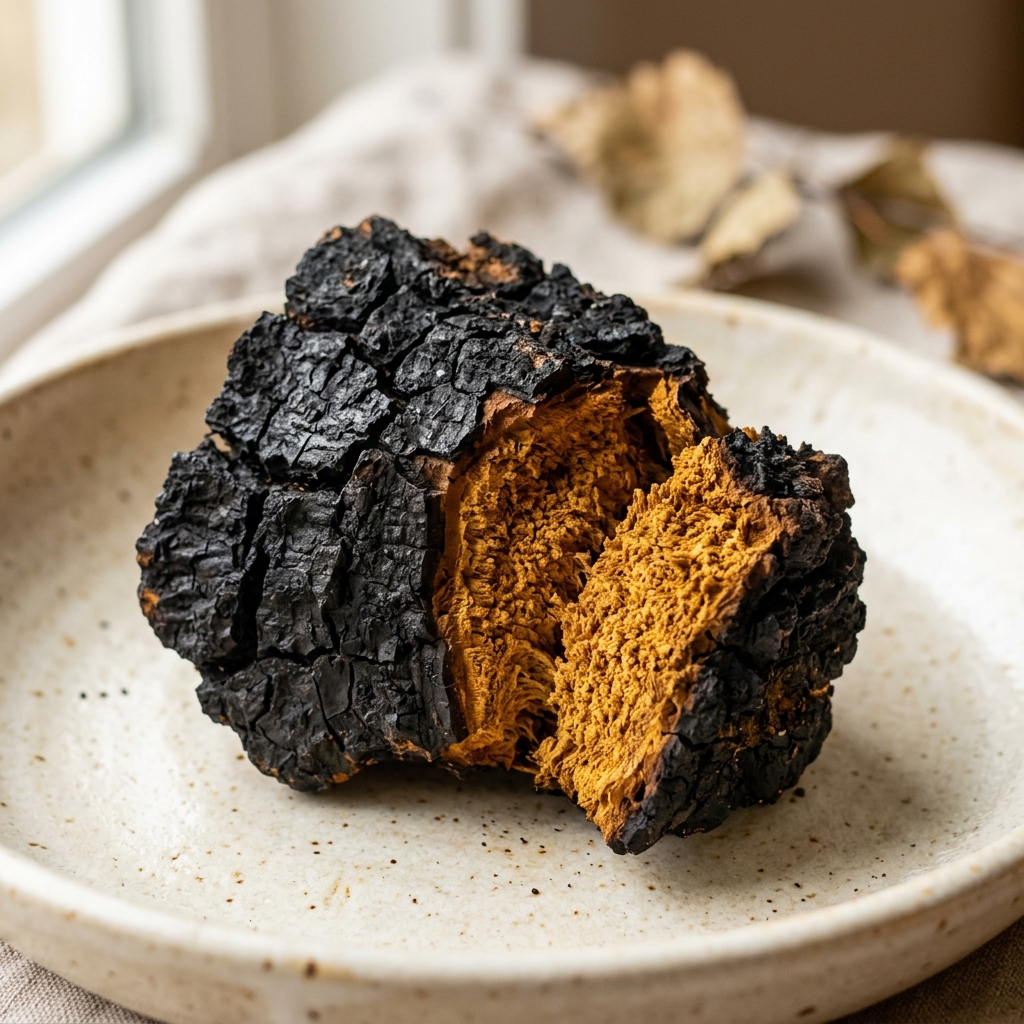
A chunk of chaga with a black cracked exterior and golden interior

Chaga

Inonotus obliquus

Antioxidants; supports immune health and vitality.

Chaga carries one of the highest antioxidant profiles among the functional mushrooms. Antioxidants help the body manage everyday oxidative stress — we include chaga for that support and for overall vitality.

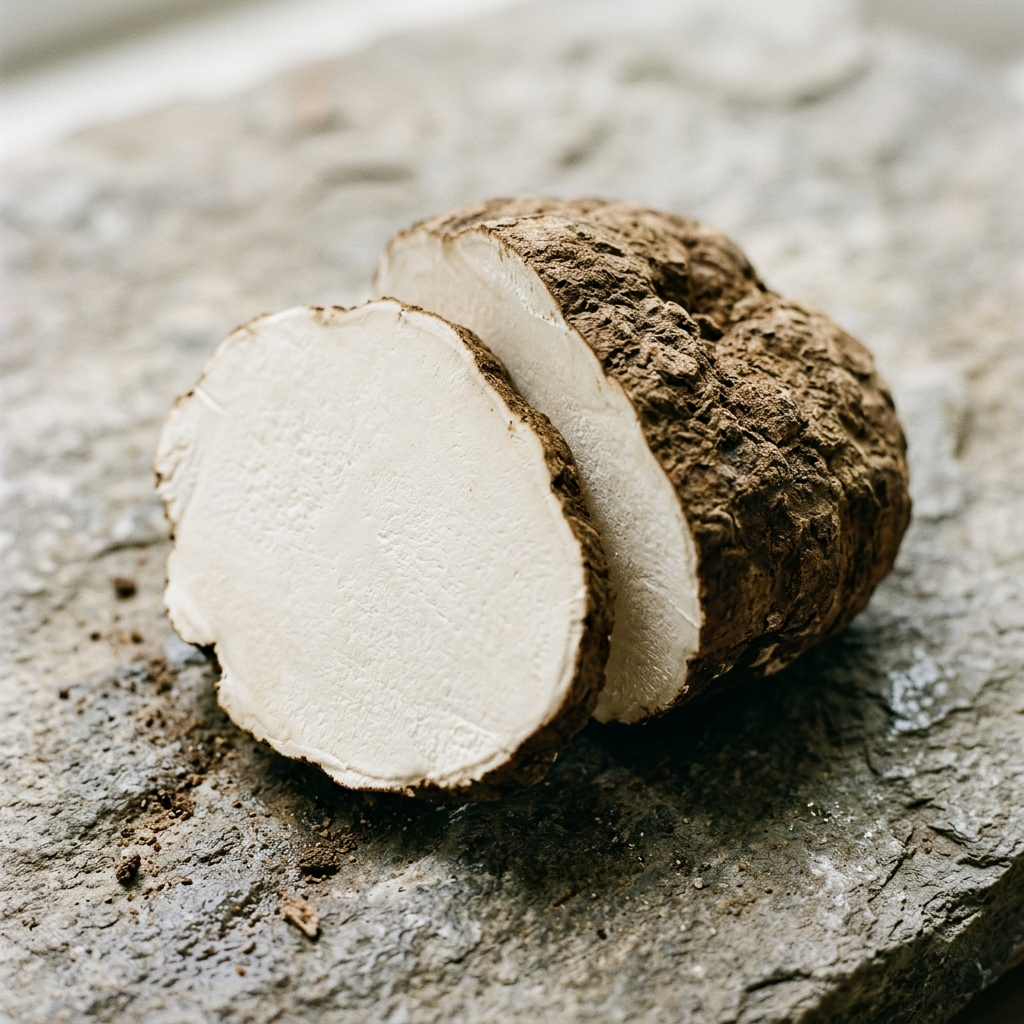
A sliced poria mushroom showing a smooth white interior beside its brown skin

Poria

Wolfiporia cocos

Supports fluid balance, digestion, and a calm mood.

Poria is a staple of traditional formulas, used to support healthy fluid balance, digestion, and a calm, settled mood. It rounds out the blend's gentle, grounding character.

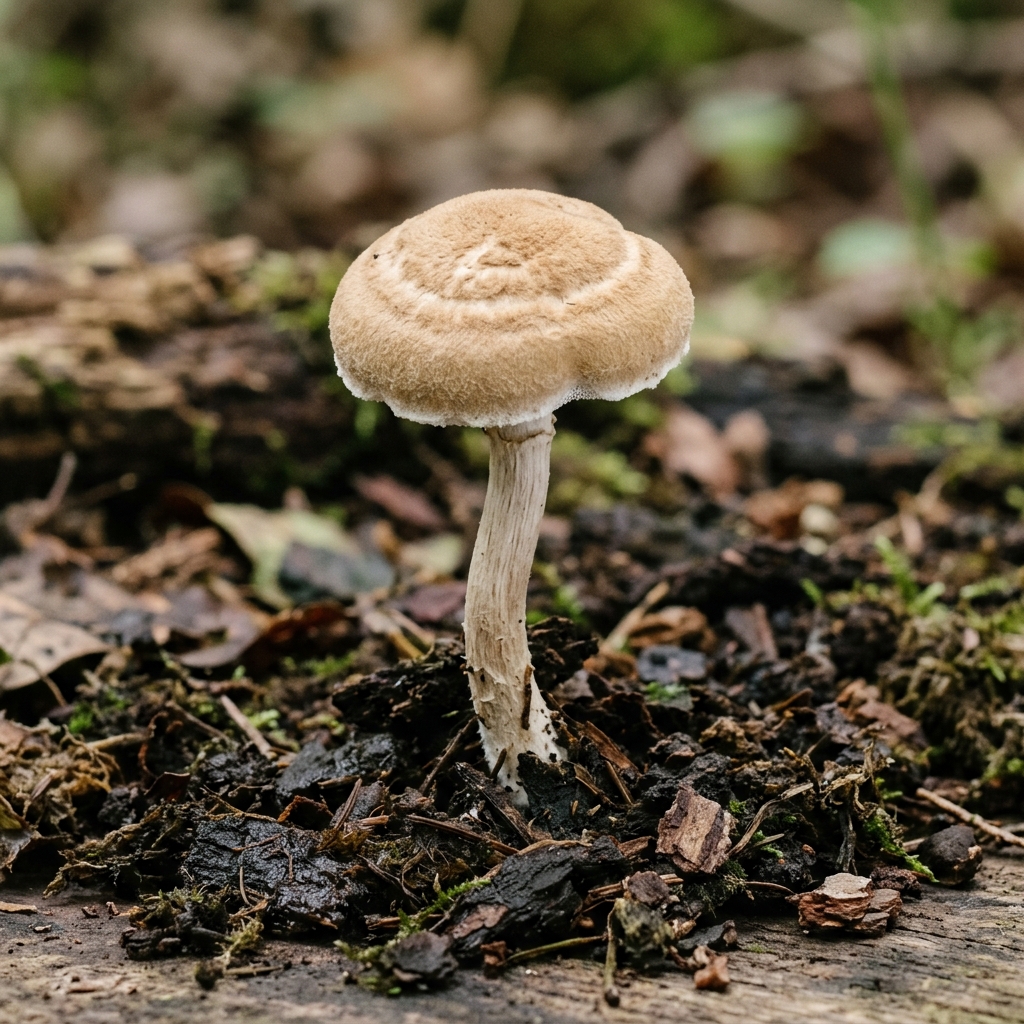
A tiger's milk mushroom with a tan cap on a slender stem on the forest floor

Tiger's Milk

Lignosus rhinocerus

Traditionally used to support respiratory health and resilience.

Tiger's milk mushroom is prized in Southeast Asia, where it has traditionally been used to support respiratory health and general resilience. It's a less common addition that reflects our science-and-tradition approach.

Superfoods & functional add-ins

Small, deliberate additions that make the mushrooms work better — and taste good.

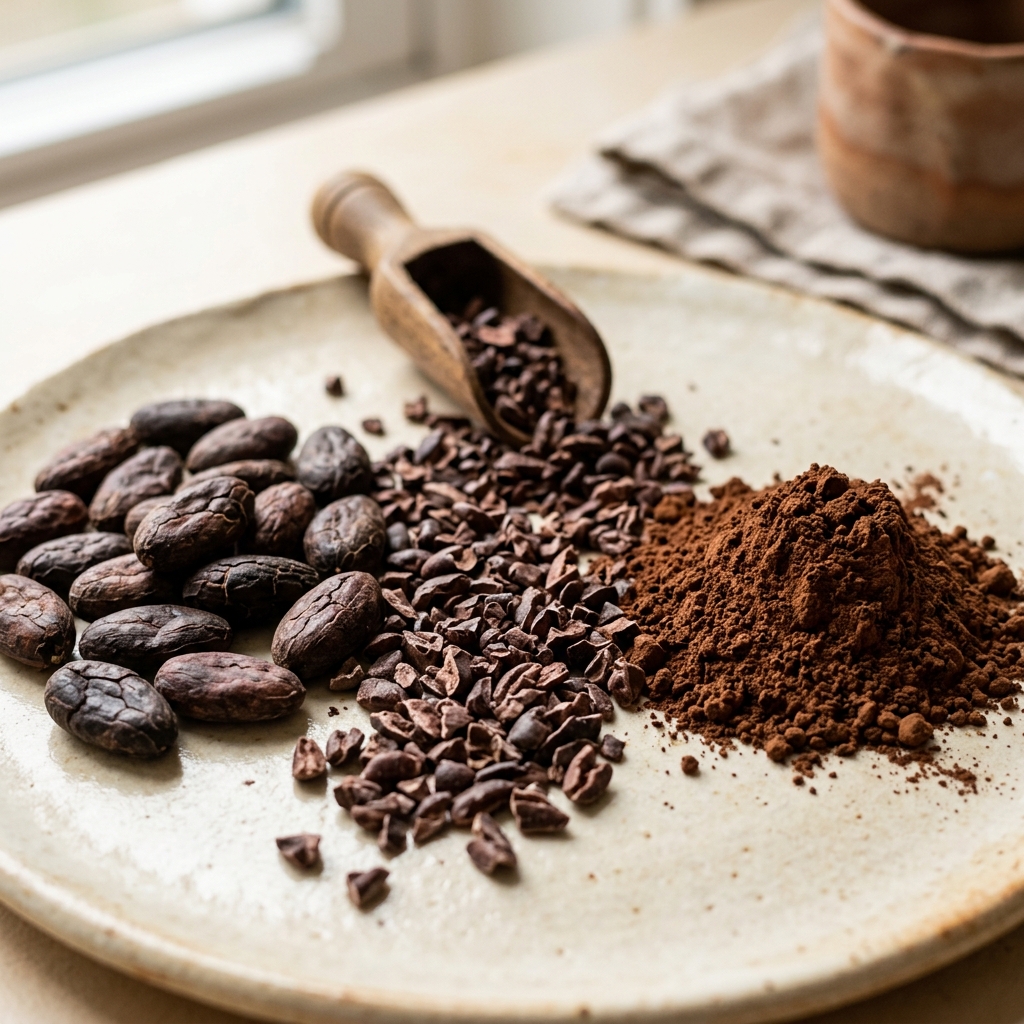
Whole cacao beans, cacao nibs, and cacao powder on a ceramic plate

Organic Cacao

Mood and antioxidant support — and the reason it actually tastes like something you want to drink.

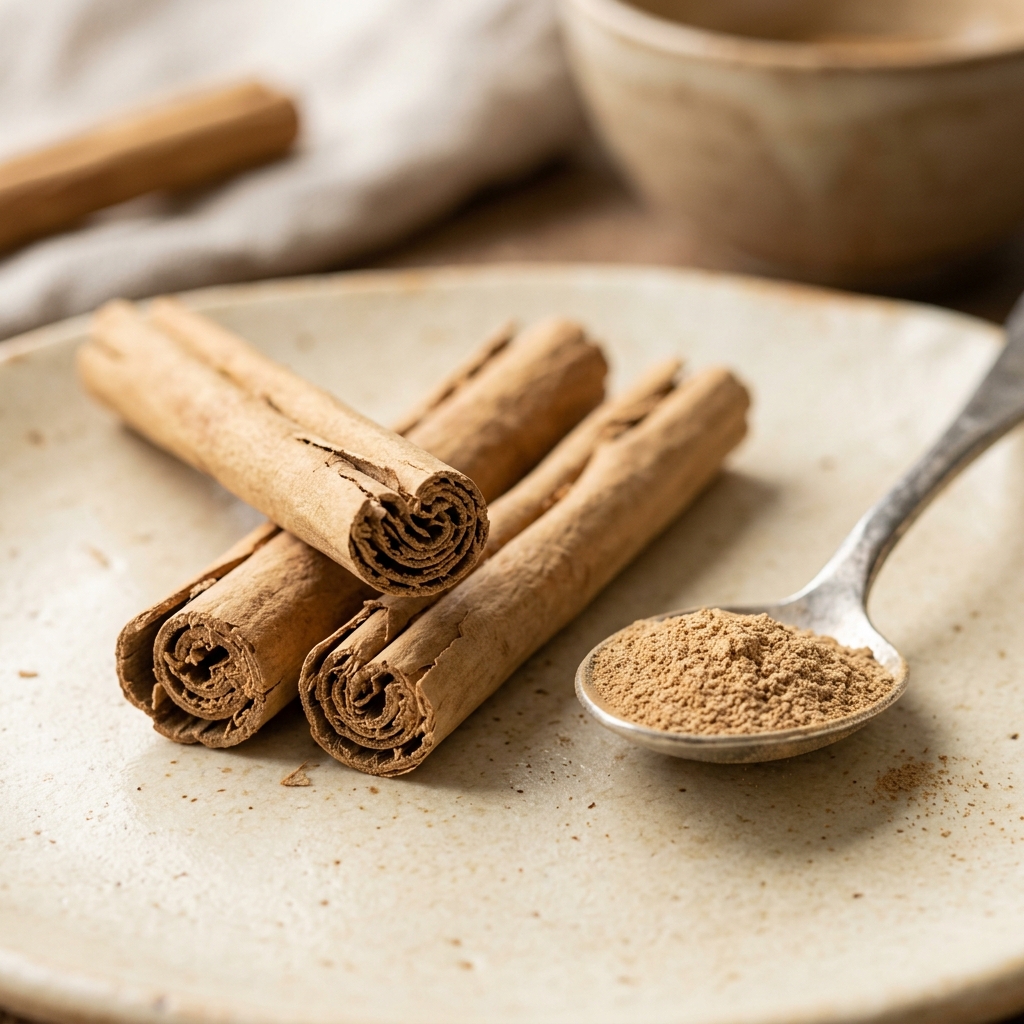
Rolled Ceylon cinnamon quills and a spoon of ground cinnamon on a ceramic plate

Ceylon Cinnamon

Antioxidant support; helps support healthy glucose metabolism. True Ceylon, not the harsher cassia.

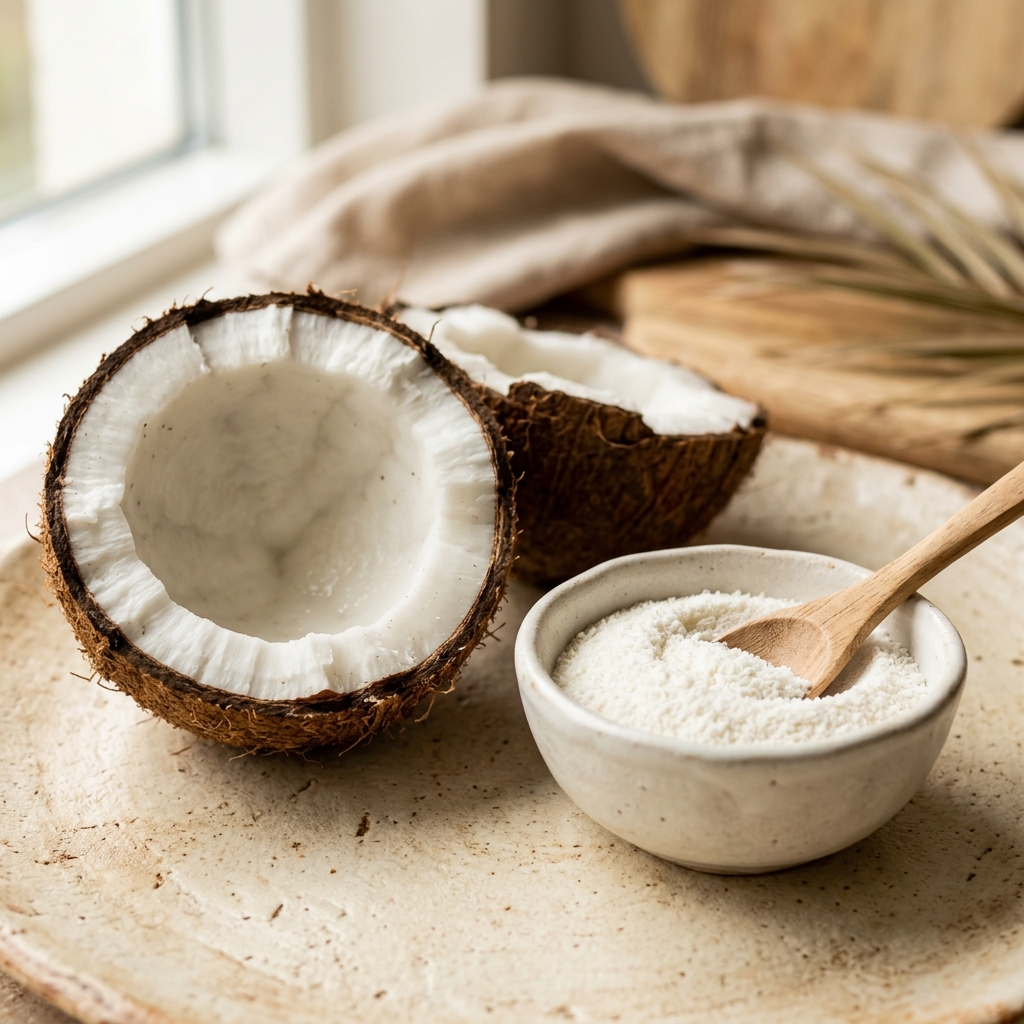
A cracked fresh coconut beside a bowl of coconut milk powder

Coconut Milk Powder

Many mushroom compounds are fat-soluble — a little healthy fat supports energy and helps your body absorb them.

Pre / pro / postbiotics

The full trio — a prebiotic that feeds your good bacteria, plus a spore-forming probiotic and a heat-treated postbiotic, both chosen to hold up in a hot drink. Not a marketing afterthought.

Acacia Fiber

Prebiotic

A gentle prebiotic fiber (gum arabic) that feeds the beneficial bacteria you already have — the "pre" in pre/pro/postbiotic.

DE111®

Probiotic

A clinically studied, heat-stable spore probiotic — Bacillus subtilis DE111® — that supports gut and metabolic health.

BPL1® HT

Postbiotic

The heat-treated postbiotic form of Bifidobacterium animalis subsp. lactis CECT 8145 (BPL1® HT), studied for gut and metabolic health — stable in hot, warm, or cold drinks.

How to read a mushroom label

Look for the dose of each mushroom — not a blend total.

The single most useful skill: find the amount of each mushroom, not a combined "proprietary blend" number. If you can't see the individual amounts, you can't judge the product. Everything we make lists them.

Read the full label guide

Questions, answered

Frequently asked

How is Shroombiosis different from other mushroom companies?

We're science-first and we show our work. Dual-extracted fruiting body only — never mycelium-on-grain or fillers — blended with organic cacao, Ceylon cinnamon, coconut milk, and clinically studied pre/pro/postbiotics (the DE111® probiotic strain, Bacillus subtilis DE111, and the BPL1® HT postbiotic). The full formula and dosages are published on the label, and the whole blend is caffeine-free so you can use it your way.

Is this mushroom coffee?

No. Shroombiosis is 100% caffeine-free, so you can use it any time without jitters or crashes. Mix it into coffee, tea, smoothies, or water — flexibility without piling more caffeine onto your routine.

Are you certified organic, vegan, and gluten-free?

Every ingredient is sourced to organic, vegan, and gluten-free standards. The formal third-party certification is in progress — a 12–18 month batch-based audit we'd rather complete properly than rush. In the meantime, every supplier provides documentation and we publish the full ingredient list and dosages on the label.

What's the best way to use Shroombiosis?

It's a versatile powder: stir it into hot or cold water, blend it with coffee or tea, or add it to a smoothie. Because it's caffeine-free, it works morning, afternoon, or evening — we like it first thing as part of a morning ritual.

Are these the same as psychedelic mushrooms?

Not at all. These are functional and adaptogenic mushrooms, not psychedelic — they won't alter your perception. They've traditionally been used to support focus, energy, gut health, and overall wellness.

Can I take Shroombiosis while pregnant or breastfeeding?

The ingredients are food-derived, but every pregnancy is unique. Please consult your doctor or healthcare provider before adding Shroombiosis — or any supplement — while pregnant or breastfeeding.

These statements have not been evaluated by the Food and Drug Administration. This product is not intended to diagnose, treat, cure, or prevent any disease.