Daily Immune Support: A Year-Round, Caffeine-Free Habit
Scientifically reviewed by Dr. Danielle Oncer, PharmD (pharmacology, dosing & safety).
Short answer
Daily immune support works best as a steady habit, not a cold-season scramble. Because much of your immune tissue sits against your gut and its microbes, a consistent daily cup — beta-glucan mushrooms plus pre/pro/postbiotics — supports healthy immune function over weeks. Consistency year-round beats cramming in winter.
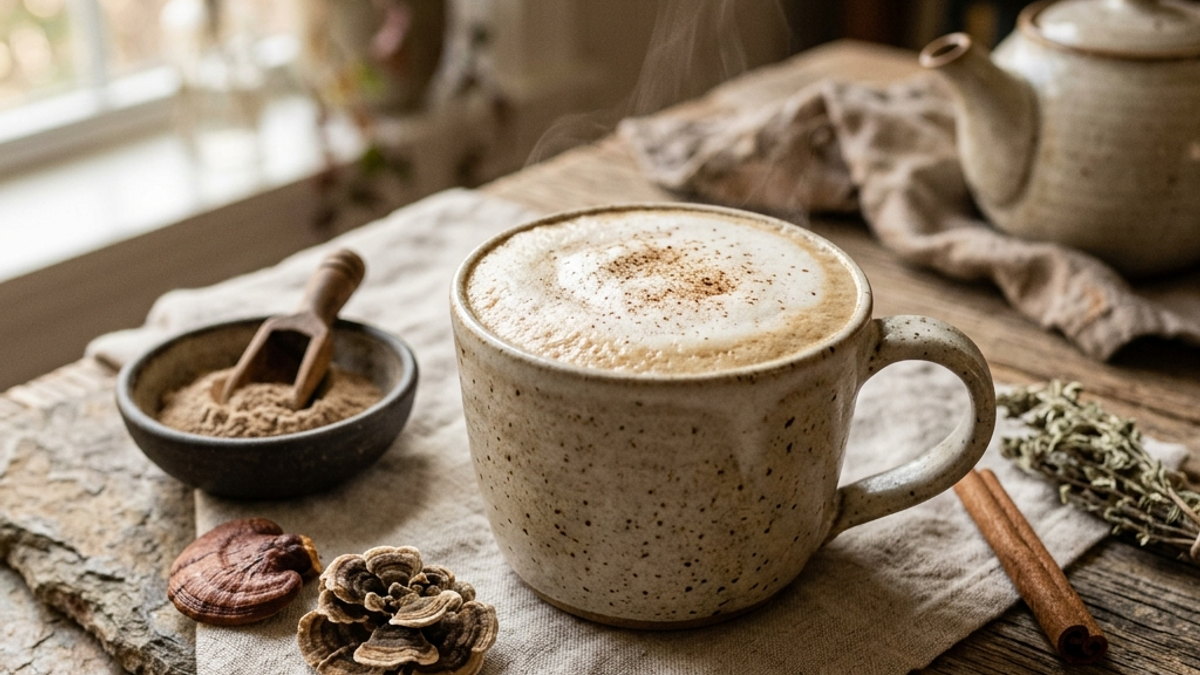
Immune support has a season, and you already know when it is. The shelves fill up in October, the panic-buying starts at the first sniffle, and by February half of it is sitting forgotten in a cupboard. It's a strange way to treat something your body runs every single day of the year. The more honest — and more useful — way to think about immune support isn't as a winter emergency purchase. It's as a quiet daily habit, kept up the same way in July as in January.
A ground rule first, because this is a health topic: nothing here treats, prevents, or cures any illness, and nothing here is a way to "prevent winter colds and flu." What the research below describes is structure and function — how a well-fed gut and the compounds that support it help your immune system do its ordinary, everyday job. Support is not a shield, and any product sold as a cold-and-flu defense is selling past the evidence. This post is about the habit, honestly framed.
Why consistency beats cramming
Here's the thing the winter panic-buy gets wrong: the part of your immune system most people can actually support day to day doesn't live where they think it does. A large share of the body's immune tissue sits in and around the gut, in constant contact with the microbes living there. A 2024 review in Trends in Immunology (opens in new tab) describes the gut-associated lymphoid tissue as a hub kept in a constant state of readiness by the resident microbiota — the microbes there help sustain the immune structures that do the everyday work.
That relationship is a daily one. It responds to what you feed it, steadily, over weeks — not to a single big dose crammed in when you feel a cold coming on. Which is exactly why the seasonal model is backwards. The microbiome you want supporting your immune tissue in February is the one you've been feeding since the summer. A habit you keep year-round is doing the quiet work; a bottle you crack open in a panic is mostly too late to the party. We walk through the full gut and immune system connection here — the short version is that "support your gut" and "support your immune system" end up being nearly the same sentence.
The mushrooms and biotics you'd actually take daily
So what goes in a cup you'd keep up every day? Two categories, working together.
First, the beta-glucan mushrooms. Several of ours — turkey tail, reishi, and chaga — are rich in beta-glucans, and those compounds pull double duty. They act like prebiotic fiber that feeds the microbiome, and they're recognized directly by receptors on your immune cells. A review of how beta-glucans interact with the immune system (opens in new tab) describes them as biological response modifiers that bind receptors such as Dectin-1 on immune cells — in effect, a molecule your immune system is built to notice. That dual role is what makes a beta-glucan-rich blend, rather than a plain fiber scoop, relevant here. If you want the molecule itself, we wrote a primer on beta-glucans in mushrooms. If you want the full map rather than the habit, start with our complete guide to mushrooms for immune support.
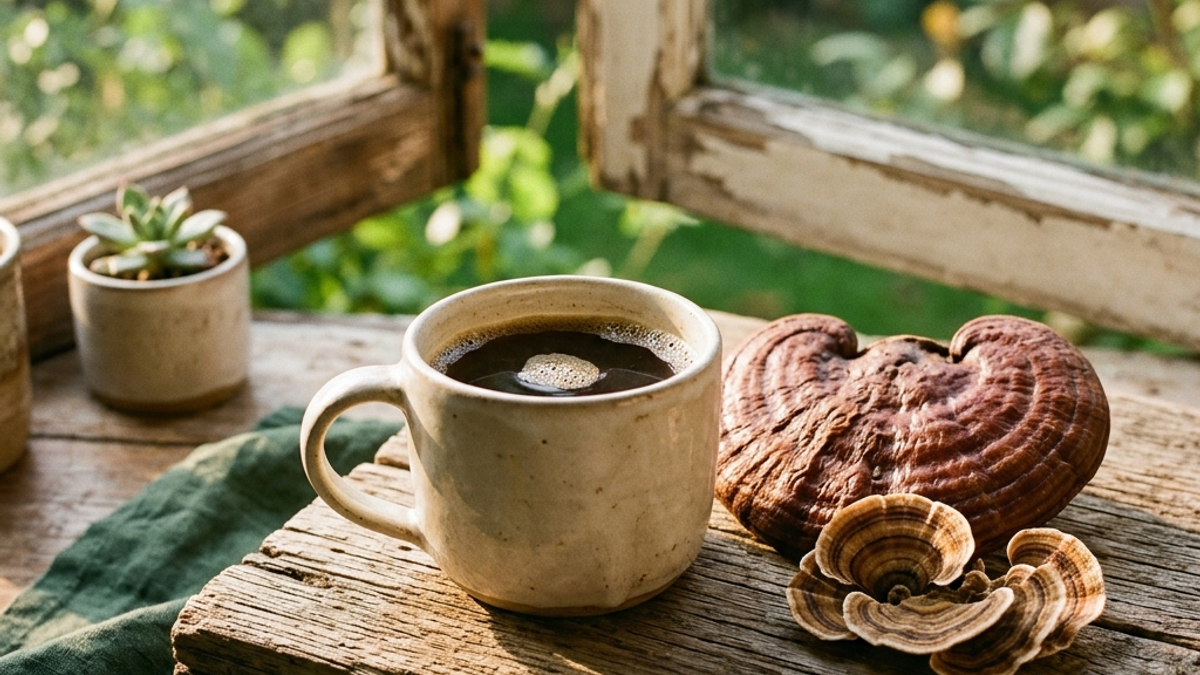
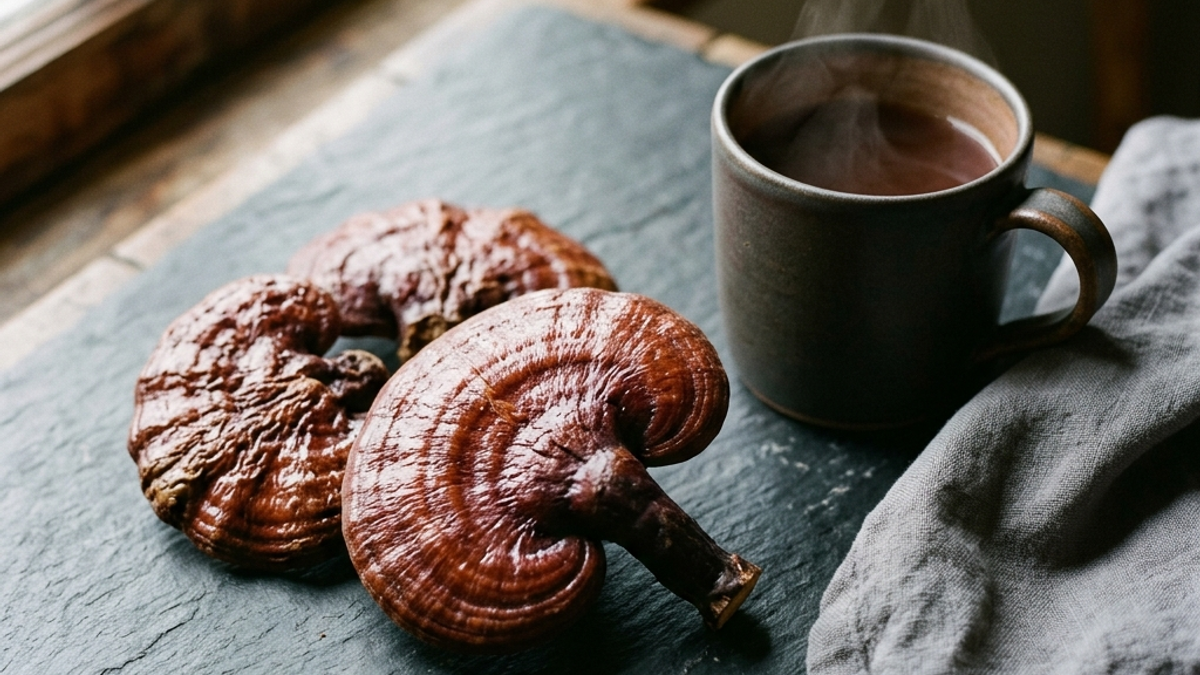
Turkey tail is the most-studied of the three: a Phase 1 human trial (opens in new tab) found its extract was well tolerated and associated with faster lymphocyte recovery and increased natural-killer-cell activity — we cite that strictly for the immune-function signal, nothing more. There's a deeper look at turkey tail and immunity if you want it. Reishi earns its place in a daily cup for a different reason too: it's traditionally used as an adaptogen to promote a sense of calm and support a healthy stress response, which is part of why a reishi-for-calm ritual fits so naturally into an everyday habit rather than an acute one.
Second, the biotics — the pre/pro/postbiotic trio that supports the gut community your immune tissue sits against. In a double-blind trial in healthy adults (opens in new tab), the spore probiotic Bacillus subtilis DE111® shifted the immune profile toward more anti-inflammatory immune cells over four weeks — and the study was honest that broader gut-microbiota markers were largely unchanged in that small pilot, so we read it as an immune-support signal, not a gut-overhaul claim. That "over four weeks" detail is the whole point of this post: it's a habit measured in weeks, not a dose measured in minutes. If the pre/pro/post distinction is fuzzy, here's the difference between prebiotics, probiotics, and postbiotics.
How to make it an easy ritual
A daily habit only counts if it's genuinely daily, and the thing that quietly kills supplement routines is friction. This is where caffeine-free earns its keep. Because there's no added caffeine in the cup, there's no wrong time to have it — you're not boxed into a narrow morning window or worried about an afternoon cup wrecking your sleep. Morning, mid-afternoon, wind-down, whenever the habit actually sticks: the timing is entirely yours.
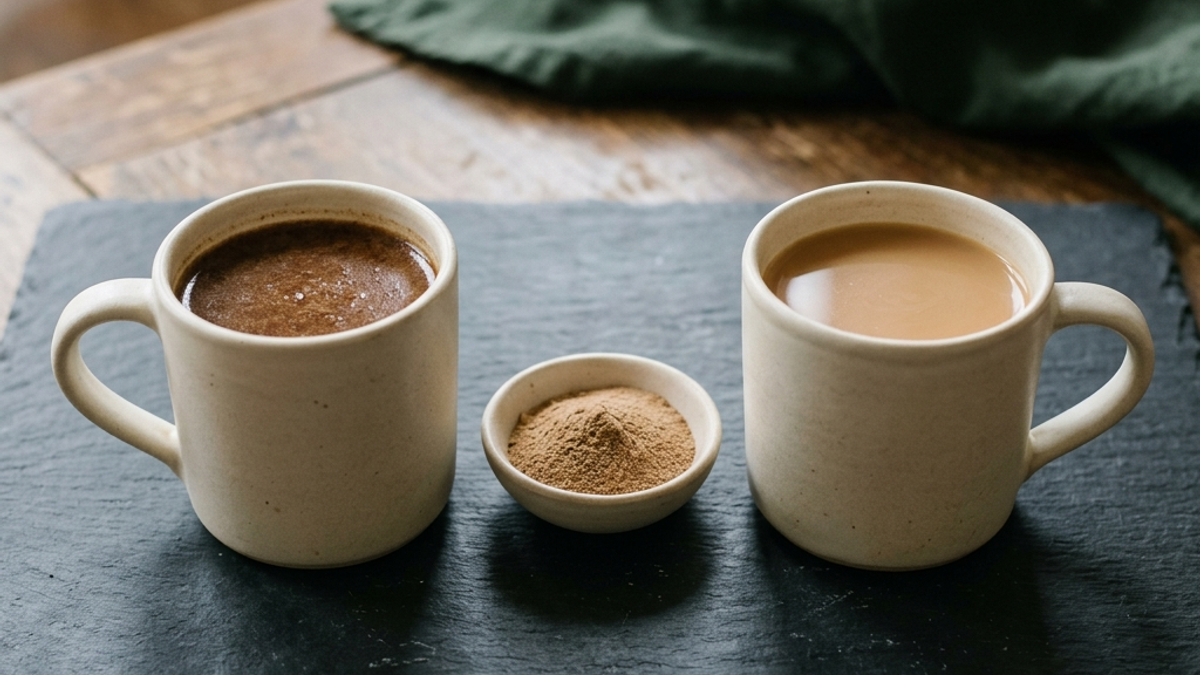
The easiest rituals are the ones that attach to something you already do. Clip the cup onto your existing coffee-or-tea moment, or make it the warm drink you reach for in the evening when you'd otherwise want something and can't have the caffeine. Warm milk or a plant milk, a little cocoa or cinnamon, and it stops feeling like "taking a supplement" and starts feeling like a small daily comfort — which is exactly the kind of thing you keep up in July without thinking about it. We collected a few caffeine-free mushroom latte recipes for precisely this reason: the tastier the ritual, the more consistent the habit, and consistency is the whole game.
The honest caveats
Three, and they matter.
Support is not a shield. "Supports a healthy immune system" is a real, defensible thing to say; "prevents you from catching colds this winter" is not, and we won't say it. A daily habit supports how your immune system does its normal job. It is not protection against any specific illness, and no supplement is.
Dose and consistency decide everything. The research above is about steady use over weeks, at real amounts — which is why we publish every milligram on the label instead of hiding it in a proprietary blend. A daily habit at an honest dose is the thing that might do something; an occasional scoop of an under-dosed blend is mostly a nice warm drink. Per 8.3 g scoop, ours carries 500 mg each of turkey tail, reishi and chaga, 750 mg of acacia fiber, 20 mg of Bacillus subtilis DE111® and 100 mg of the BPL1® HT postbiotic.
Ask a clinician if it applies to you. If you're pregnant, nursing, taking medication, or managing a health condition, talk to a physician or pharmacist before starting any supplement, including this one. That's not boilerplate — it's the right call.
The bottom line
Immune support isn't an October emergency; it's a year-round relationship between your gut and the immune tissue that sits against it, and relationships respond to consistency, not cramming. A caffeine-free daily cup — beta-glucan-rich mushrooms plus a pre/pro/postbiotic trio — is a simple way to turn that idea into a habit you actually keep. That's the logic behind the Shroombiosis blend: the gut and immune angle built into one cup, honest doses on the label, no added caffeine deciding when you drink it. If you want the wider category picture, start with our complete guide to functional mushrooms or the mushroom-by-mushroom view in our guide to the best mushrooms for immune support.
References
Bemark M, Pitcher MJ, Dionisi C, Spencer J. Gut-associated lymphoid tissue: a microbiota-driven hub of B cell immunity. Trends in Immunology. 2024;45(3):211–223. PMID: 38402045 (opens in new tab) · doi:10.1016/j.it.2024.01.006 (opens in new tab)
Akramiene D, Kondrotas A, Didziapetriene J, Kevelaitis E. Effects of beta-glucans on the immune system. Medicina (Kaunas). 2007;43(8):597–606. PMID: 17895634 (opens in new tab)
Torkelson CJ, Sweet E, Martzen MR, et al. Phase 1 clinical trial of Trametes versicolor in women with breast cancer. ISRN Oncology. 2012;2012:251632. PMID: 22701186 (opens in new tab) · doi:10.5402/2012/251632 (opens in new tab)
Freedman KE, Hill JL, Wei Y, et al. Examining the gastrointestinal and immunomodulatory effects of the novel probiotic Bacillus subtilis DE111. International Journal of Molecular Sciences. 2021;22(5):2453. PMID: 33671071 (opens in new tab) · doi:10.3390/ijms22052453 (opens in new tab)