What Are Beta-Glucans in Mushrooms? The Key Active
Scientifically reviewed by Onur Oncer, B.S. (B.S. Physiology, published researcher).
Short answer
Beta-glucans are fiber-like polysaccharides woven into mushroom cell walls. They're the active that shows up across nearly every functional mushroom, they're studied for supporting a healthy immune system, and fruiting body generally carries more of them than mycelium-on-grain. Because the number can vary so much, an honest label should disclose it.
A quick note before we start: this is education, not medical advice. The specifics of any supplement for you depend on your physiology, your other medications, and your goals.
If you read enough about functional mushrooms, you'll notice every species gets its own headline. Lion's mane for focus. Cordyceps for stamina. Reishi for calm. But underneath those distinct stories sits one compound class that nearly all of them share — and it's the one most tied to immune support in the research. That compound is the beta-glucan, and understanding it is the fastest way to read this entire category more clearly.
This post is part of our complete guide to functional mushrooms. Here I want to explain what beta-glucans actually are, why they're the cross-mushroom active worth measuring, why fruiting body and mycelium can differ so much in how much they carry, and why an honest label should put the number in front of you.
What a beta-glucan actually is
A beta-glucan is a polysaccharide — a long chain of glucose molecules linked together. The "beta" describes the type of chemical bond between those sugars. In mushrooms, the beta-glucans of interest are mostly beta-(1→3,1→6)-D-glucans, woven into the structural cell walls of the fungus.
The single most important thing about them is what doesn't happen: your digestive enzymes can't break those beta bonds apart. So unlike the starch in your toast, beta-glucans aren't digested and absorbed as fuel. They behave like dietary fiber — they pass through the upper gut intact and reach the lower intestine whole. That one property is the root of everything else they do.
Why beta-glucans are the cross-mushroom active
Here's the part that reframes the whole category. The marketing treats each mushroom as a separate product with a separate promise. But the compound that links most of them — and the one with the most-studied connection to immune support — is the same across the board.
A 2007 review of how beta-glucans interact with the immune system (opens in new tab) describes them as biologic response modifiers: compounds that bind specific receptors on immune cells — including Dectin-1 and complement receptor 3 (CR3) on cells like macrophages and natural killer cells — and, in doing so, help prime the body's normal defenses (Akramiene et al., 2007). Two honest caveats travel with that paper. It's a mechanism review, not a trial of any product, so read it as "how the support could work," not proof of a result. And much of the wider beta-glucan literature is oncology-heavy — we cite it strictly for the receptor-binding and immune-priming angle, nothing beyond that.
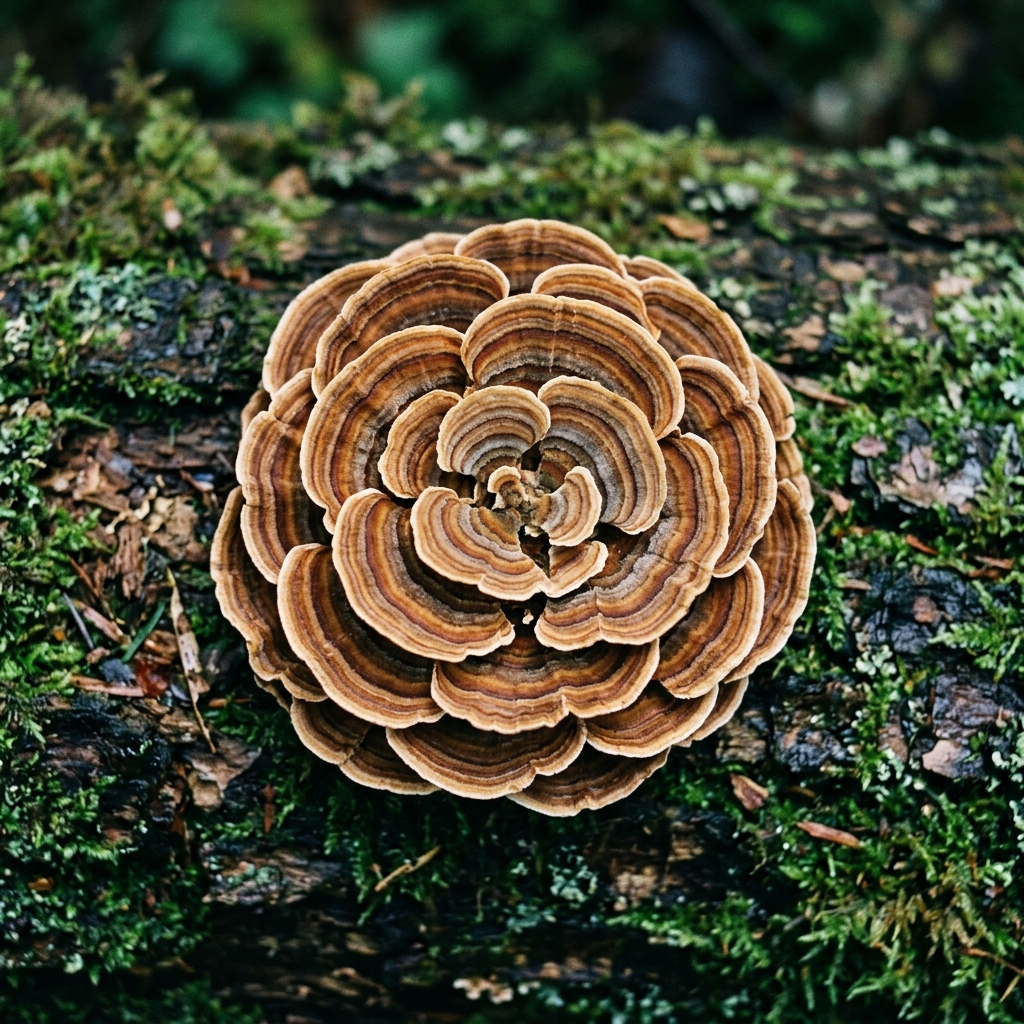
This is why beta-glucan content is the active worth measuring. "Reishi" or "turkey tail" on an ingredient line tells you which mushroom you bought. The beta-glucan figure tells you how much of the studied active is actually present. One is a name; the other is a number you can evaluate. For the deeper dive into the receptor mechanism specifically, our companion piece on turkey tail, beta-glucans, and your immune system walks through Dectin-1 and CR3 in detail — turkey tail is one of the most beta-glucan-rich species there is.
The human evidence — and where it stops
Mechanism is one layer. People are another, and it's where careful language matters.
A 2021 systematic review of randomized controlled trials of fungal beta-glucans (opens in new tab) in Food & Function pulled together 34 trials using beta-glucans from sources including Pleurotus, Lentinula, and Ganoderma — at doses spanning roughly 2.5 to 1,000 mg per day — and found the primary studied outcome was immunomodulation, with a consistently good tolerability profile and no glucan-related adverse events (Vlassopoulou et al., 2021). That's a genuinely useful signal: across many trials, fungal beta-glucans are studied for supporting a healthy immune system, and they're well tolerated.
But the same review is candid about the limits, and so are we. The findings on how the immune system changed were inconsistent at the cellular and molecular level — the picture isn't a tidy, settled mechanism. And it's a systematic review synthesizing other people's trials, not a single clean trial of our product at our dose. So the accurate framing is: beta-glucans are studied for supporting a healthy immune system, the human safety record is reassuring, and anyone selling them as a treatment for a specific illness is well ahead of the evidence.
There's also a second, quieter benefit that follows directly from that indigestibility. Because beta-glucans reach the lower gut intact, the resident bacteria there can ferment them — which makes beta-glucan-rich mushrooms behave like prebiotic fiber. Laboratory fermentation work on Ganoderma and Pleurotus (opens in new tab) showed exactly that: beta-glucan-rich mushrooms shifted the gut microbiota and short-chain fatty acid production in a prebiotic direction (Kerezoudi et al., 2021). That study is in vitro — a lab fermentation model, not people — so I hold it as mechanism, not proof. But it explains why the same molecule sits in both the immune conversation and the gut conversation at once.
Fruiting body vs. mycelium: where the number swings
This is where beta-glucans stop being abstract chemistry and start deciding what's in your jar.
- Fruiting body is the mushroom you'd recognize above ground — the cap and stem. Its cell walls are generally rich in beta-glucans.
- Mycelium is the root-like network the fungus grows through its substrate. In most commercial supplements it's grown on grain (a cheap, fast method), then dried and milled together with that grain.
The problem isn't that mycelium has no value — it's the grain riding along with it. Grain is mostly starch, and starch is an alpha-glucan, not a beta-glucan. That distinction is the whole game. A product can advertise a big "total glucan" or "polysaccharide" number that looks impressive and still be largely starch from the growing substrate. A review of medicinal mushroom production explicitly flags the standardization and quality-control problems in mushroom supplement products — the field's words, not ours — as an unsolved issue precisely because the active content varies so much (Chang & Wasser, 2018) (review (opens in new tab)).
So the honest read is: fruiting body tends to deliver more beta-glucan per gram, but the only way to know is a label that reports beta-glucan specifically — not total glucan, not polysaccharide, not just "mushroom." For the full breakdown of the two forms and what each is good for, see fruiting body vs. mycelium.
Why labels should disclose beta-glucans
Put the two ideas together and the case for disclosure makes itself.
Beta-glucan is the cross-mushroom active. Its content swings wildly depending on species, on fruiting body vs. mycelium-on-grain, and on extraction. And the word "mushroom" on a package tells you exactly none of that. So the single most useful thing a brand can print — beyond a real per-ingredient dose — is the beta-glucan content, measured as beta-glucan.
Two label traps to watch for, because they're how the number gets blurred:
- "Polysaccharides," reported instead of beta-glucans. Polysaccharide is a huge umbrella that includes starch. A high polysaccharide number can be mostly grain-derived starch. It's not the same as beta-glucan, and it shouldn't be read as if it were.
- "Total glucans," reported instead of beta-glucans. Total glucan = alpha-glucan (starch-like) + beta-glucan (the fiber-like active). Reporting only the total lets a starchy, mycelium-on-grain product look as potent as a clean fruiting-body extract. The beta-glucan figure on its own is the one that can't hide starch.
This is the same literacy we built the whole label series around. If those traps are new to you, how to read a mushroom supplement label lays out the full checklist, and how to spot an underdosed mushroom supplement shows how a clean-looking blend total can still come up short per ingredient.
What this means for a real formula
It's one thing to ask for transparency and another to design around it. The reason our blend leans on dual-extracted fruiting body rather than mycelium-on-grain is exactly this chemistry: beta-glucans are locked inside tough, chitinous cell walls, and the right extraction is what frees them into a usable form. (The how-and-why of that step is its own post — dual extraction explained.)
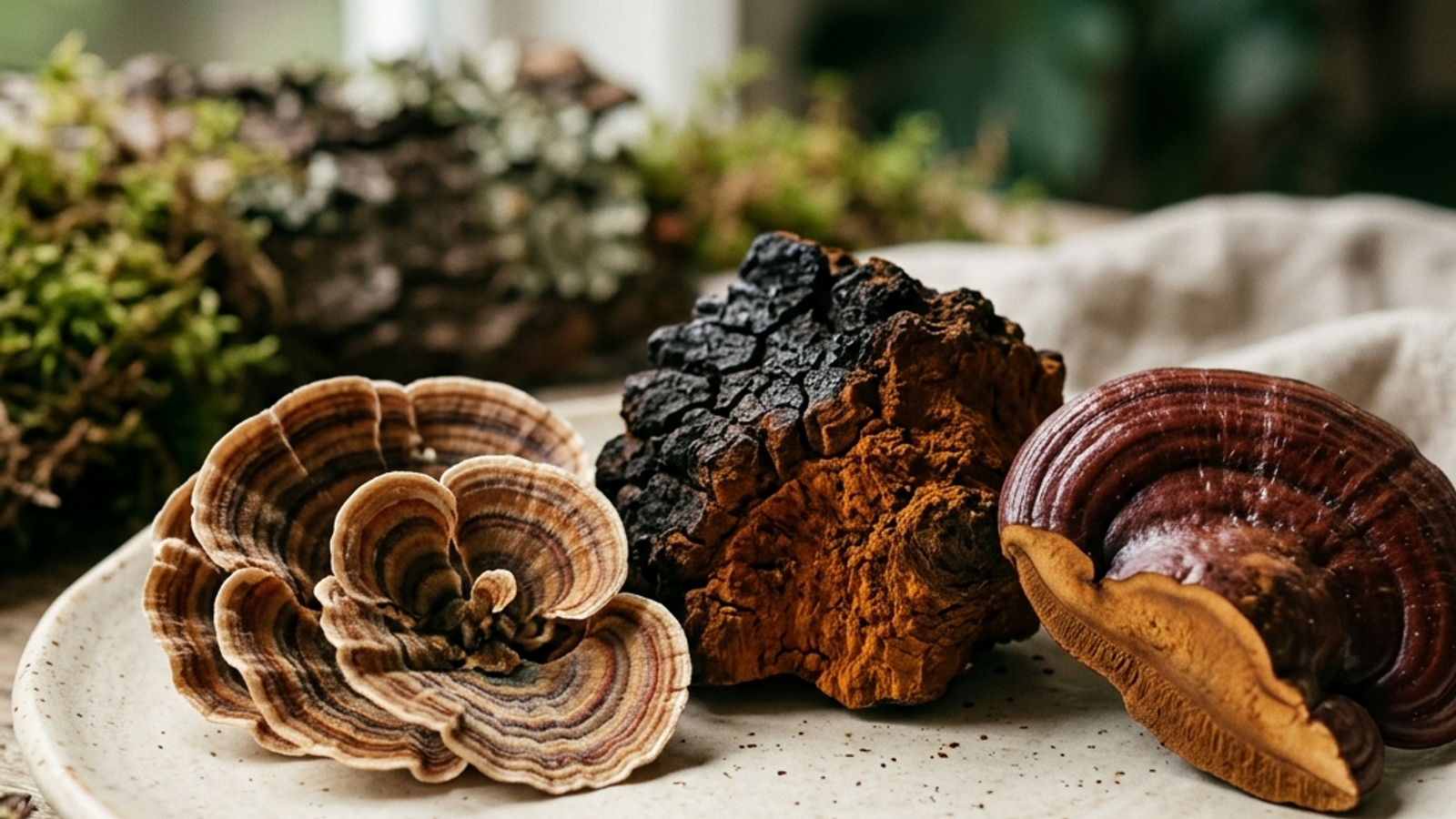
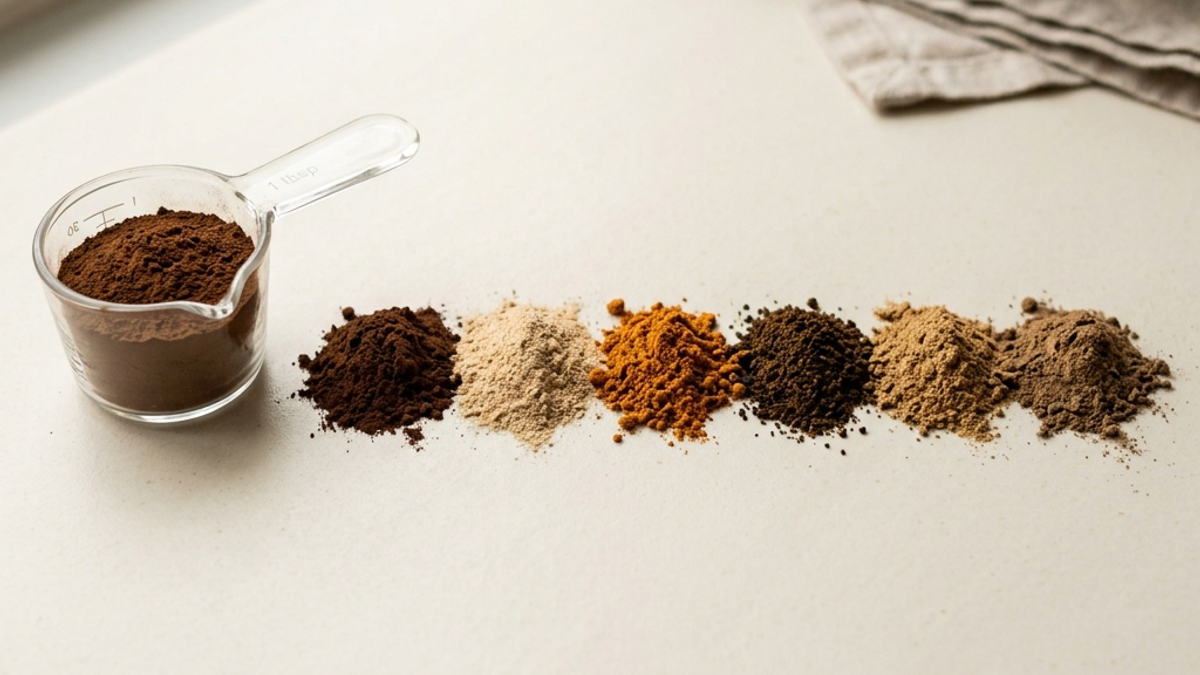
It's also why per-ingredient dosing matters more than a blend total. In our formula, the species best known for beta-glucans carry real, printed amounts — turkey tail at 500 mg, reishi at 500 mg, chaga at 500 mg, alongside lion's mane at 1,000 mg and cordyceps at 1,000 mg — rather than hiding inside a proprietary number you can't break apart. A multi-mushroom blend that totals only a few hundred milligrams across every species simply can't deliver a meaningful beta-glucan dose from any single one of them. For how to think about amounts across the category, our functional mushroom dosing primer sets realistic expectations.
The bottom line
Beta-glucans are the through-line of the whole functional mushroom category: fiber-like cell-wall polysaccharides, studied for supporting a healthy immune system, that double as prebiotic fuel because your gut can't digest them. They're the one active worth measuring — which is precisely why so many labels avoid measuring it, hiding behind "polysaccharides," "total glucans," or the word "mushroom" alone. Fruiting body generally carries more than mycelium-on-grain, extraction decides how much you can actually use, and the honest move is to print the number. That's the register beta-glucans belong in, and it's the one we build in too — every dose on the label, for the reasons laid out on our science page. Function, not friction; built with your physiology, not against it.
References
Akramiene D, Kondrotas A, Didziapetriene J, Kevelaitis E. Effects of beta-glucans on the immune system. Medicina (Kaunas). 2007;43(8):597–606. PMID: 17895634 (opens in new tab)
Vlassopoulou M, Yannakoulia M, Pletsa V, Zervakis GI, Kyriacou A. Effects of fungal beta-glucans on health — a systematic review of randomized controlled trials. Food & Function. 2021;12(8):3366–3380. PMID: 33876798 (opens in new tab) · doi:10.1039/d1fo00122a (opens in new tab)
Kerezoudi EN, Mitsou EK, Gioti K, et al. Fermentation of Ganoderma lucidum and Pleurotus ostreatus mushrooms and their extracts by the gut microbiota of healthy and osteopenic women: potential prebiotic effect. Food & Function. 2021;12(4):1529–1546. PMID: 33521800 (opens in new tab) · doi:10.1039/d0fo02581j (opens in new tab)
Chang ST, Wasser SP. Current and future research trends in agricultural and biomedical applications of medicinal mushrooms and mushroom products (review). International Journal of Medicinal Mushrooms. 2018;20(12):1121–1133. PMID: 30806294 (opens in new tab) · doi:10.1615/IntJMedMushrooms.2018029378 (opens in new tab)