Which Mushrooms Actually Support Immunity?
Scientifically reviewed by Onur Oncer, B.S. (B.S. Physiology, published researcher).
Short answer
Mushrooms are studied for immune support mainly because of beta-glucans — fiber-like cell-wall compounds that interact with receptors on your immune cells. The honest framing is that they support a healthy immune system, not that they treat any illness. Turkey tail has the strongest mechanism and early human data, reishi has limited human trials, and chaga is largely preclinical. Dose, extraction, and consistency decide whether any of it matters.
A quick note before we start: this is education, not medical advice, and nothing here is a claim to treat, prevent, or cure anything. The point of this post is the opposite of the usual immune-season marketing — to separate the part of the mushroom-and-immunity story that's genuinely well-described from the part that's sold far ahead of the evidence.
Search mushrooms for immune support and you'll get two flavors of answer. One treats every functional mushroom as a shield against whatever's going around. The other dismisses the whole category as expensive coffee creamer. As a pharmacist, I find both unhelpful, because the real story is more specific than either: there's a concrete, well-studied mechanism behind why mushrooms show up in immune conversations — and there are hard limits on what we can honestly say it does. This post is part of our complete guide to functional mushrooms, and it's the hub for how we think about the immune side of the category.
Here's the bounded version up front. The active story runs through beta-glucans — fiber-like compounds in mushroom cell walls that interact with receptors on your immune cells. That interaction is why the accurate claim is that certain mushrooms support a healthy immune system. It is not that they fight off any specific illness, and you'll notice I won't name one anywhere in this article. That's not me being cagey; it's the line between honest education and the overreach this industry is known for.
The active ingredient: beta-glucans
Almost everything worth saying about mushrooms and immunity routes through one class of molecule. Beta-glucans are long-chain polysaccharides — structural fibers — woven into the cell walls of functional mushrooms. Their defining feature is what doesn't happen to them: your digestive enzymes can't break them apart, so they pass through the upper gut intact.
That indigestibility does two things at once. The portion reaching your lower gut becomes food for the bacteria already living there, which is why mushrooms also belong in the gut conversation as prebiotic fiber. And elsewhere, the same class of molecule is what certain immune cells are built to recognize. If you want the full primer on what these compounds are and how they're built, we wrote a dedicated explainer on what beta-glucans are in mushrooms — this post stays focused on the immune angle and the species-by-species evidence.
One practical consequence worth flagging early: beta-glucans are locked inside tough, chitinous cell walls, so an unextracted raw powder can contain them and still struggle to deliver them. That's the entire reason extraction matters, and it's covered in dual extraction explained. Our complete guide to mushrooms for immune support pulls all of this together in one place.
How beta-glucans engage your immune cells (structure/function)
This is where the science gets genuinely interesting, and where careful language matters most. Beta-glucans aren't a nutrient your body simply absorbs and burns. They behave more like signals.
A 2007 review of how beta-glucans affect the immune system (opens in new tab) describes them as biologic response modifiers — compounds that bind specific receptors on immune cells and, in doing so, help engage the body's normal defenses (Akramiene et al., 2007). The receptors named are the ones you'll see again and again in this field: Dectin-1 and complement receptor 3 (CR3), sitting on cells like macrophages and natural killer (NK) cells. When a beta-glucan docks onto one of these receptors, it's a bit like a key tapping a lock the immune system already uses to notice fungal surfaces.
The receptor side of that story has only gotten clearer. A 2022 review of Dectin-1 signaling (opens in new tab) lays out how this C-type lectin receptor — originally described as the beta-glucan receptor on myeloid cells — recognizes beta-glucans and sets off the downstream signaling that shapes an innate immune response (Mata-Martínez et al., 2022). It's worth being precise about what this evidence is: a mechanism review, not a trial of any product. So read it as the "here's the plausible how" layer — a structure and function story about how these molecules interact with cells you already have, not a promise of any outcome.
That distinction is the whole game in a health category. "Beta-glucans engage receptors on immune cells" is a mechanism we can stand behind. "This mushroom will keep you from getting sick" is a different kind of sentence entirely — a disease claim no supplement is allowed to make — and the gap between those two is exactly where careful brands and careless ones part ways.
What the human evidence actually supports
Mechanism is the floor. What happens when people actually take these compounds?
The most useful human-evidence anchor isn't a single small study but a synthesis. A 2021 systematic review of randomized controlled trials of fungal beta-glucans (opens in new tab) pulled together 34 RCTs and concluded that supplementation is well tolerated, with immune modulation as the primary physiological outcome studied across the literature (Vlassopoulou et al., 2021). That's a meaningful, bounded takeaway: across many human trials, the most consistent theme is that fungal beta-glucans are safe to take and that the immune system is where researchers most often look for effects.
I'm going to be deliberately disciplined about how far that goes, because the review itself is honest about its limits — it notes that the cellular and molecular immune findings were inconsistent between studies, and that more work is needed to pin down the optimal dose and the underlying mechanisms. So the fair reading is: strong tolerability, immune support as the studied lane, and real uncertainty about the specifics. That supports a healthy immune system framing. It does not support a claim about any particular illness, and I won't stretch it into one.
Turkey tail: the strongest mechanism, plus early human data
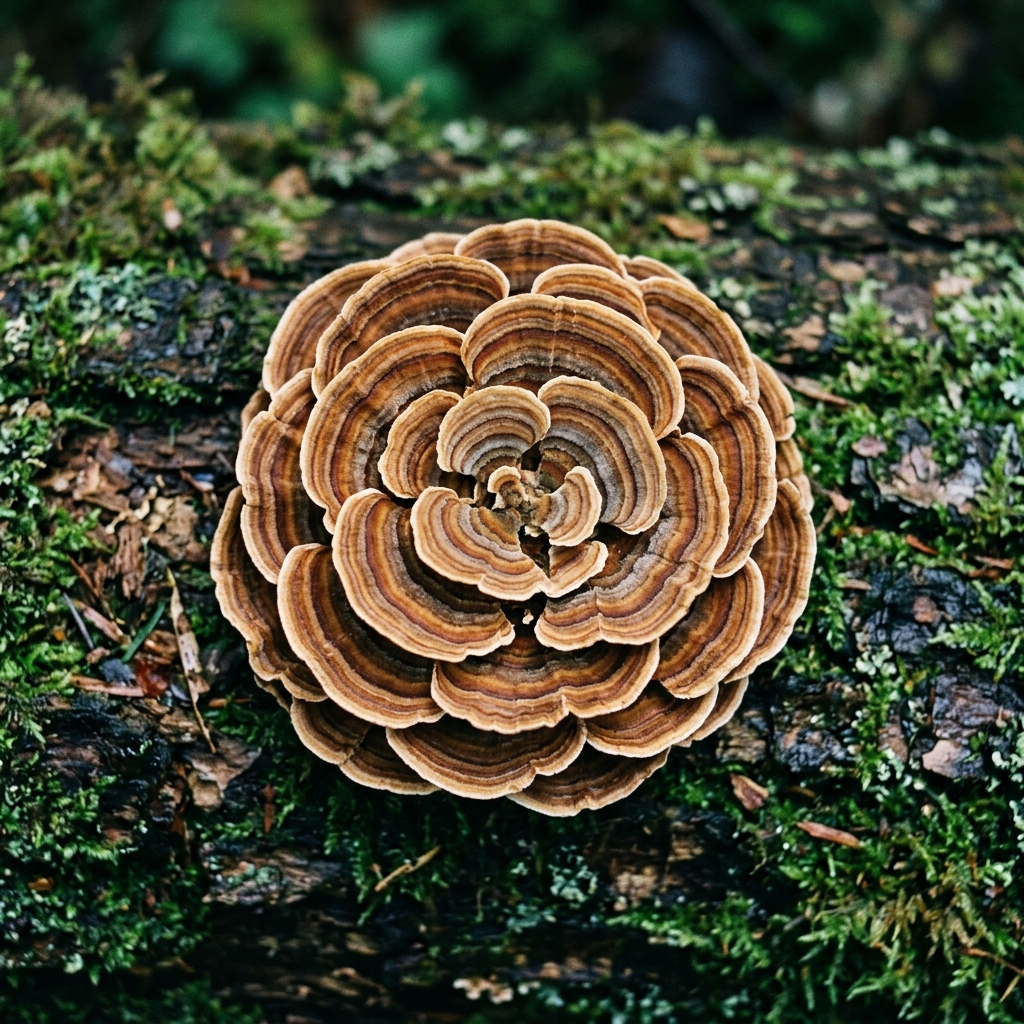
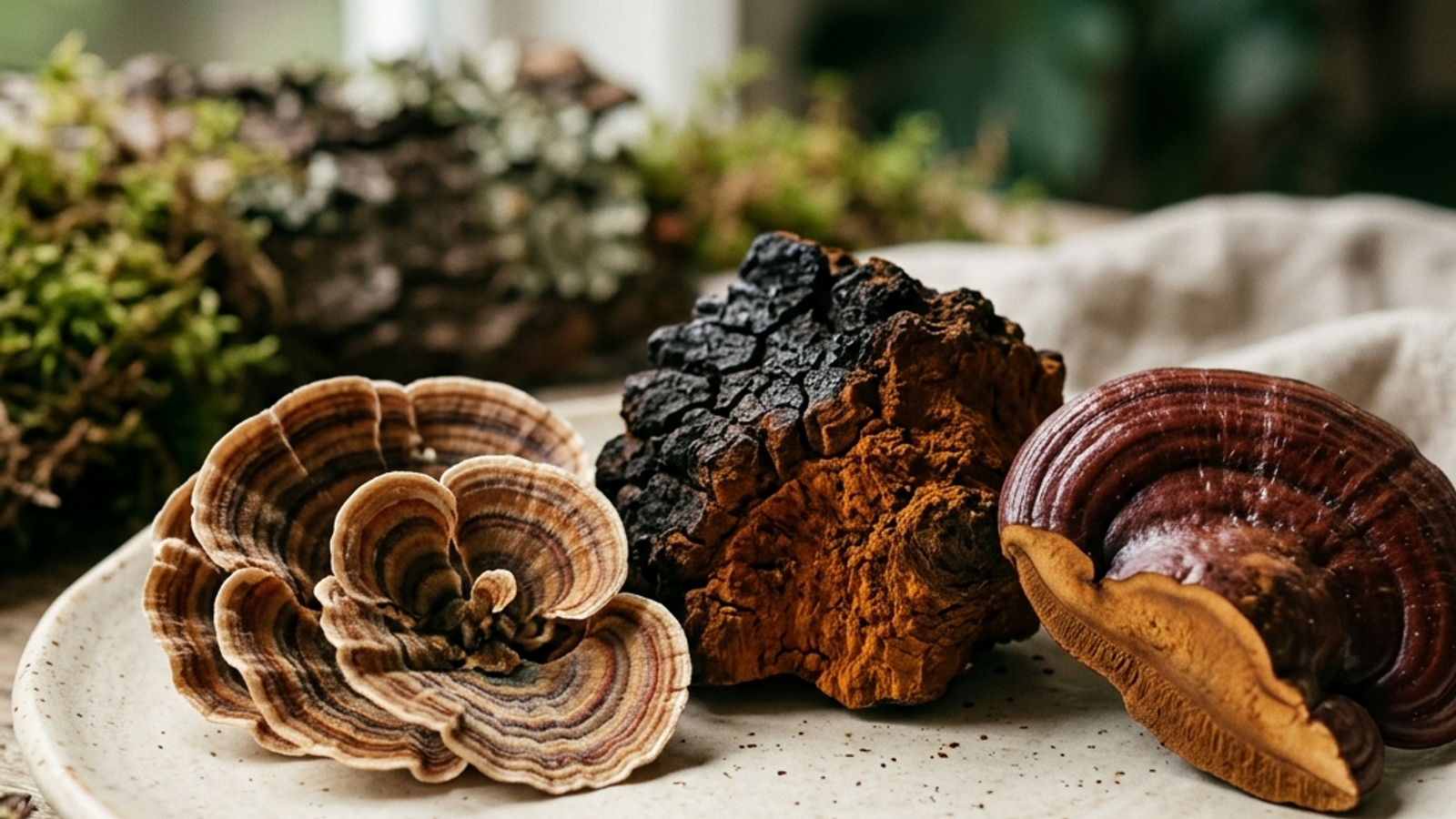
If one mushroom carries the immune-support reputation most honestly, it's turkey tail (Trametes versicolor). It's among the most beta-glucan-rich species there is — including a well-studied fraction called PSP — which puts it squarely in the receptor-binding story above.
On the human side, the cleanest data comes from a 2012 Phase 1 dose-escalation trial of Trametes versicolor (opens in new tab), which escalated the dose up to 9 grams a day in a small group and found turkey tail safe and well tolerated, alongside signals of faster lymphocyte recovery and increased natural-killer-cell activity — exactly the immune-cell behavior the beta-glucan mechanism predicts (Torkelson et al., 2012). The caveat that has to travel with that study every time: it was run in a specific recovery population, so we use it for two things only — turkey tail's good tolerability and an immune-function signal. We do not read any disease benefit into it. For the full breakdown of the mechanism and the receptors involved, see our deep dive on turkey tail, beta-glucans, and your immune system.
Reishi: a plausible mechanism, limited human immune data
Reishi (Ganoderma lucidum) carries the same beta-glucans as its shelf-mates, so the structural immune-support rationale applies here too. But its human evidence points in a slightly different direction. Reishi is studied most often as an adaptogen — a compound investigated for helping the body hold a steady, resilient stress response — and the strongest human reishi trial measured physical fitness, not immune endpoints.
In other words, reishi's clearest lane is calm and a healthy stress response, not a stand-alone immune claim, and we keep it there. If feeling steadier under pressure indirectly supports how your body copes day to day, that's your own physiology — not a specific claim we'd attach to the mushroom. The honest, hype-free version of the reishi story lives in reishi for calm: what the research shows.
Chaga: mostly preclinical and traditional
Chaga (Inonotus obliquus) is where the honesty has to be most blunt. It has a genuine traditional history and a substantial body of preclinical research — test-tube and animal studies — documenting antioxidant activity from its phenolic compounds and dark melanin, plus the beta-glucans common to the category. What it doesn't have is high-quality human trials.
So the accurate framing for chaga is "traditionally used" and "preclinical studies show," never proven human benefit. A high antioxidant reading in glassware does not automatically become a measurable effect when a person stirs chaga into a drink — the dose, the absorption, and what survives digestion are all open questions a lab can't settle. We include chaga for its traditional role and beta-glucan content, and we say exactly that. The full accounting is in chaga: traditional claims vs. what's studied.
What has to be true for any of it to matter
This is our signature question, and it matters more than which mushroom you pick. Even with a real mechanism, a few things have to line up before mushroom beta-glucans can support anything:
- A real, disclosed dose. "Turkey tail" or "chaga" on an ingredient line tells you nothing about how much active beta-glucan is inside. A multi-mushroom blend that totals only a few hundred milligrams can't deliver a meaningful amount of any single species. The fix is per-ingredient dosing, which is the heart of how to read a mushroom supplement label and how to spot an underdosed supplement.
- Fruiting body, properly extracted. Beta-glucans concentrate in the fruiting body and stay trapped in tough cell walls without proper extraction. Mycelium grown on grain can carry a lot of starchy filler and comparatively little active compound — the distinction we unpack in fruiting body vs. mycelium.
- Consistency over weeks. Like any prebiotic-style support, the benefit builds as your gut and immune system respond to a steady supply — not from one impressive scoop. A sensible dosing primer sets realistic expectations, and we make the case for keeping immune support going all year rather than only in cold season.
Put plainly: the headline isn't "mushrooms do X for your immune system." It's "mushroom beta-glucans can support a healthy immune system if the product is built and used well." That conditional is the part most marketing quietly drops.
How this fits a complete blend
We don't ask any one mushroom to be an immune miracle, because none is. In our seven-mushroom, dual-extracted fruiting-body blend, turkey tail leads the beta-glucan-driven immune-and-gut support, reishi covers the calm and stress-resilience corner, and chaga is here for its traditional role and beta-glucan content — labeled honestly, not haloed. Each mushroom is printed with its dose (turkey tail 500 mg, reishi 500 mg, chaga 500 mg per the label) so you can see exactly what you're getting rather than trusting a proprietary-blend total. The reasoning behind that build is on our science page.
The bottom line
Mushrooms for immune support is a fair, evidence-aware reason to reach for functional mushrooms — as long as "support" means supporting a healthy immune system, not warding off any specific illness. The mechanism is real: beta-glucans engage receptors like Dectin-1 and CR3 on your immune cells, and across many human trials they're well tolerated with immune modulation as the studied outcome. The species differ in how far the human evidence goes — turkey tail leads, reishi sits in the calm lane, chaga stays traditional and preclinical — and dose, extraction, and consistency decide whether any of it reaches you. That's the honest register this category belongs in, and it's the one we build in. Function, not friction — with your physiology, not against it.
References
- Akramiene D, Kondrotas A, Didziapetriene J, Kevelaitis E. Effects of beta-glucans on the immune system. Medicina (Kaunas). 2007;43(8):597–606. PMID: 17895634 (opens in new tab)
- Mata-Martínez P, Bergón-Gutiérrez M, Del Fresno C. Dectin-1 signaling update: new perspectives for trained immunity. Frontiers in Immunology. 2022;13:812148. PMID: 35237264 (opens in new tab) · doi:10.3389/fimmu.2022.812148 (opens in new tab)
- Vlassopoulou M, Yannakoulia M, Pletsa V, Zervakis GI, Kyriacou A. Effects of fungal beta-glucans on health — a systematic review of randomized controlled trials. Food & Function. 2021;12(8):3366–3380. PMID: 33876798 (opens in new tab) · doi:10.1039/d1fo00122a (opens in new tab)
- Torkelson CJ, Sweet E, Martzen MR, et al. Phase 1 clinical trial of Trametes versicolor in women with breast cancer. ISRN Oncology. 2012;2012:251632. PMID: 22701186 (opens in new tab) · doi:10.5402/2012/251632 (opens in new tab)