Functional Mushroom Dosing: How Much Do You Actually Need?
Scientifically reviewed by Dr. Danielle Oncer, PharmD (pharmacology, dosing & safety) and Jon Klipstein (supplement formulation expert, Die Tryin Co.).
Short answer
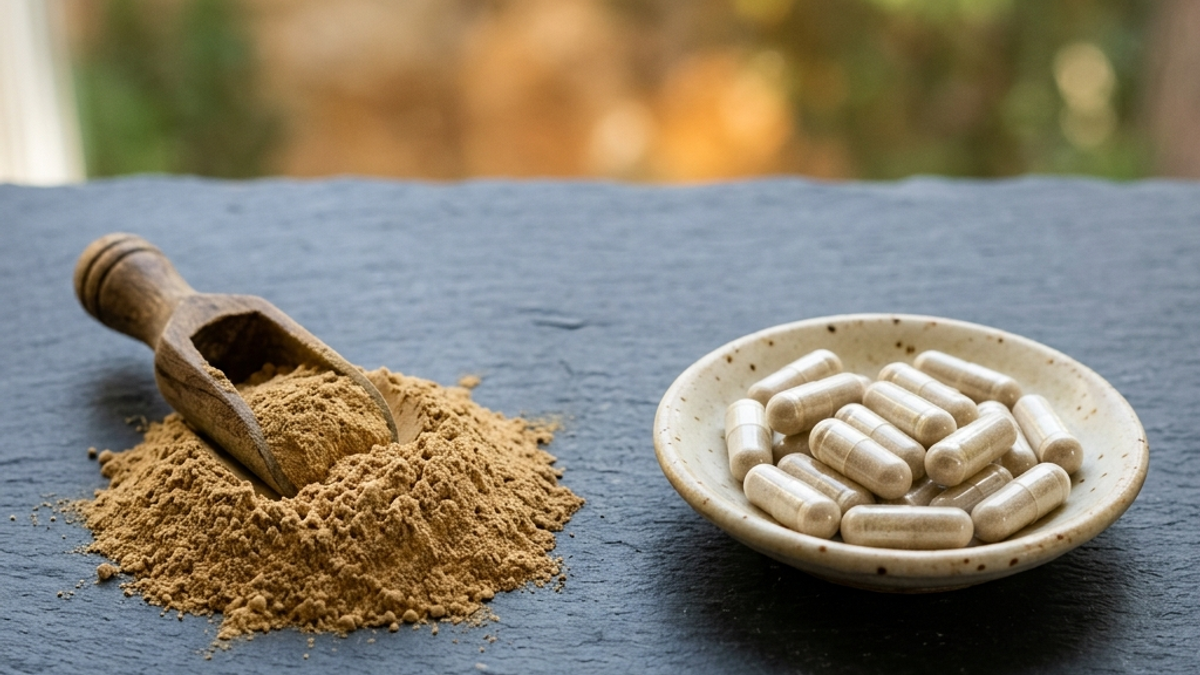
Lion's mane is the one functional mushroom with a citable human dose — roughly 1,000-3,000 mg per day in clinical studies. For every other mushroom, the honest answer is 'the amount on the label,' because the well-controlled human dosing trials simply aren't there yet. And across the board, consistency over several weeks matters more than any single serving size.
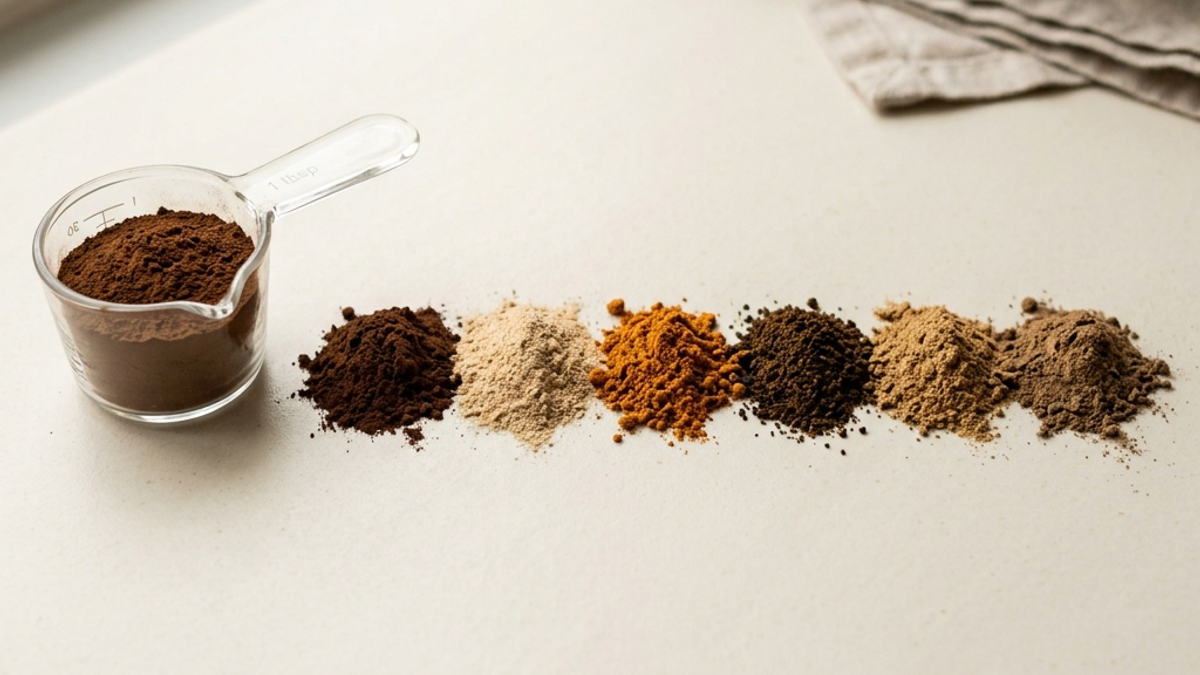
If you've gone looking for a clean chart that says "take X milligrams of each mushroom," you've probably noticed it doesn't really exist — and the versions that float around online are mostly invented. So let's be honest about what the human research actually supports. The short, slightly uncomfortable answer to functional mushroom dosing is this: only one of the seven mushrooms in a blend like ours has a genuine, citable human dose. Lion's mane sits at roughly 1,000-3,000 mg per day. For everything else, the right dose is the amount on the label — and we'd rather tell you that than make up a number.
That's not a cop-out. It's the most accurate thing anyone can say right now, and understanding why will make you a sharper supplement buyer than any dosing chart could. Let's walk through it.
The one mushroom with a real human dose: lion's mane
Lion's mane (Hericium erinaceus) is the exception, and it's worth dwelling on because it shows what a citable dose actually looks like.
The most-referenced human study is a 2009 double-blind, placebo-controlled trial in Phytotherapy Research (opens in new tab). It enrolled 30 older adults and ran for 16 weeks at 3,000 mg per day of lion's mane fruiting-body powder, and the group taking it scored higher on a cognitive scale than the placebo group during the intake period. One honest caveat worth stating up front: that trial was run in a population with mild cognitive impairment. We cite it for the dose and the cognitive-performance signal — not to suggest lion's mane treats or reverses any decline. That's a line we won't cross.
The other anchor is a 2023 placebo-controlled pilot on pure lion's mane in healthy young adults (opens in new tab), published in Nutrients. It tested 1.8 g per day in 41 healthy people and found that a single acute dose produced significantly faster task performance about an hour later versus placebo. (The study also looked at subjective stress, where it saw only a non-significant trend toward reduced stress, so we leave it there and don't lean on it.) What makes this one valuable is that it tested lion's mane on its own in healthy adults — exactly the population most people reading this belong to.
Put those together and you get a defensible range: about 1,000-3,000 mg of lion's mane fruiting-body powder per day, used consistently for weeks. That's the dose we can stand behind, because two human trials stand behind it. For the deeper "how it works" story — neurotrophins, plasticity, the mechanism layer — see our piece on the pharmacology of lion's mane.
For every other mushroom, "the label" is the honest answer
Here's where most of the industry quietly fabricates. You'll see confident dosing tables for reishi, cordyceps, turkey tail, chaga — numbers presented as if they came from settled human science. For the most part, they didn't.
When a well-controlled human dosing trial in healthy people doesn't exist, there is no honest milligram figure to print. So our answer for the other six mushrooms is deliberately plain: take the serving on the label, and judge the product by how transparently that label is built. That's not us dodging the question — it's us refusing to invent an answer.
Two "doses" you'll see quoted — and why they're research context, not recommendations
A couple of numbers come up so often that they deserve direct correction.
- Reishi "6 grams." That figure traces to a study in a specific disease population (women with fibromyalgia), where 6 g per day was used for six weeks. That is a research context, not a serving suggestion for a healthy person. Copying it would be reading a clinical-trial amount as a label instruction — which it isn't.
- Turkey tail "up to 9 grams." This one comes from a Phase 1 dose-escalation trial in a breast-cancer recovery population, designed specifically to test how high a dose could be tolerated. A dose-finding ceiling in a clinical setting is the opposite of a daily wellness recommendation.
Neither number is a target to chase. They're examples of why pulling a figure out of a disease study and printing it as a "dose" is exactly the kind of move we built this brand to avoid. If you want the broader map of what each of these mushrooms is actually for, our complete guide to functional mushrooms lays it out without the invented precision.
Why consistency beats any single number
Here's the part that genuinely matters more than milligrams: functional mushrooms are a build, not a switch.
Look back at the two lion's mane trials. One ran 28 days, the other 16 weeks. The benefit showed up over time, with daily use — not from a single large serving. That pattern holds across the category. Whatever the exact amount, the variable doing the heavy lifting is consistency: the dose you'll actually take every day, for a stretch of weeks, beats a bigger dose you take sporadically and then abandon.
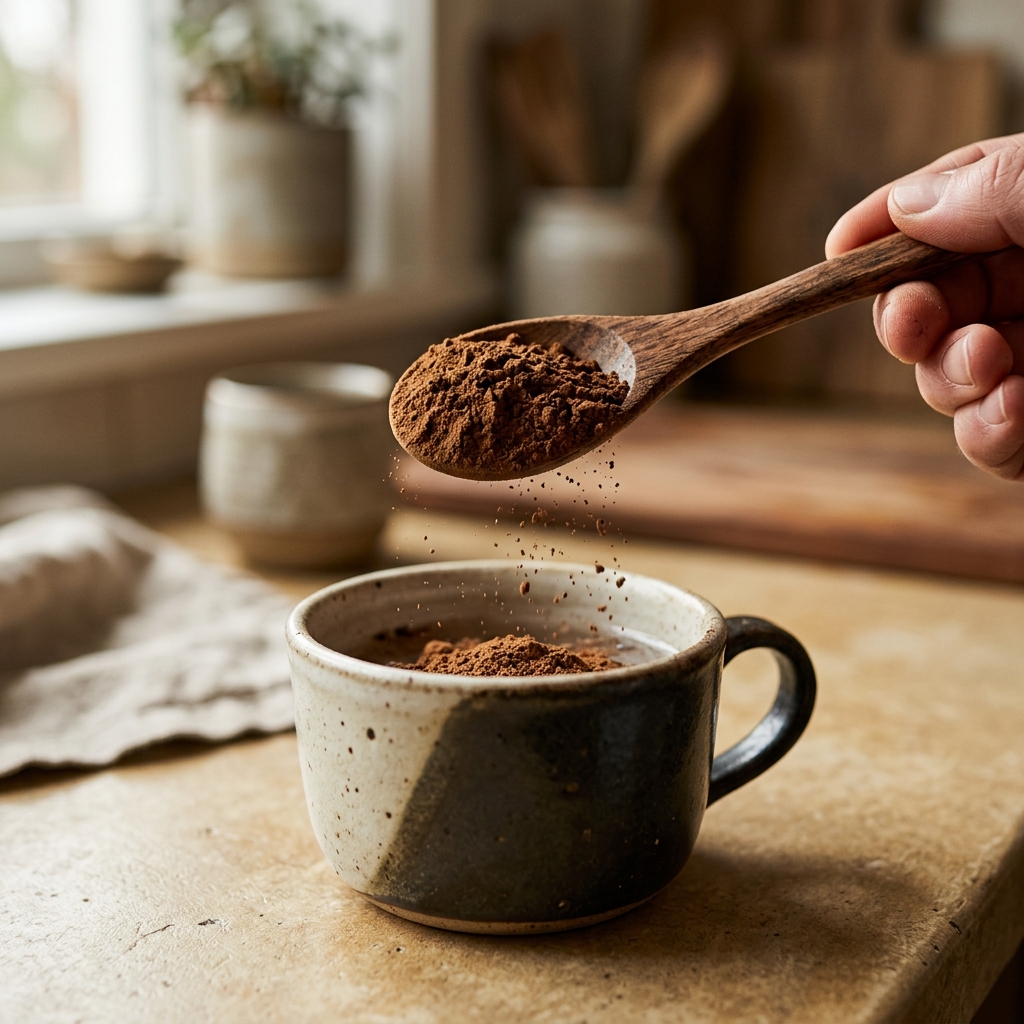
This reframes the whole question. Instead of "what's the perfect milligram count," the more useful question is "what's the routine I'll keep?" That's why we made the product a daily mix-in and kept it caffeine-free on purpose — steady energy you build rather than borrow, with nothing that nudges you to skip a day because your sleep got rocky. The same logic runs through how we think about reishi and a calmer baseline: the effect is in the accumulation, not the hit.
Extraction changes what a "dose" even means
There's one more wrinkle that most dosing conversations skip entirely: a number on a label only means something if you know what form it describes.
A milligram of dual-extracted fruiting-body powder is not interchangeable with a milligram of mycelium grown on grain, or a milligram of unextracted raw powder. Dual extraction — a water step plus an alcohol step — is designed to make both the water-soluble compounds (like beta-glucans) and the alcohol-soluble ones available, which is why we use it. We dig into the why in dual extraction, explained and the fruiting body versus mycelium distinction separately, because both quietly determine whether a stated dose is meaningful or just a number.
So when someone hands you a dosing chart, the smarter response isn't "is this the right amount?" It's "the right amount of what, in what form?" That single habit — learning to read a mushroom supplement label closely — protects you better than any milligram table. Curious about the foundational safety picture too? Our overview of whether functional mushrooms are generally well tolerated pairs naturally with this one.
The calm takeaway
Functional mushroom dosing comes down to two honest sentences. Lion's mane has a real, studied human range of about 1,000-3,000 mg per day. For every other mushroom, the right dose is the one printed on a label you trust — used consistently, in a form that's actually been extracted to deliver what it claims.
Anyone selling you more certainty than that is selling you a number, not the science. We'd rather show our work, print every dose on the label, and let you check the fine print yourself. That's the whole idea behind how we formulate the blend — function, not friction, built with your physiology rather than against it.
References
Mori K, Inatomi S, Ouchi K, Azumi Y, Tuchida T. Improving effects of the mushroom Yamabushitake (Hericium erinaceus) on mild cognitive impairment: a double-blind placebo-controlled clinical trial. Phytotherapy Research. 2009;23(3):367–372. PMID: 18844328 (opens in new tab) · doi:10.1002/ptr.2634 (opens in new tab)
Docherty S, Doughty FL, Smith EF. The acute and chronic effects of lion's mane mushroom supplementation on cognitive function, stress and mood in young adults: a double-blind, parallel groups, pilot study. Nutrients. 2023;15(22):4842. PMID: 38004235 (opens in new tab) · doi:10.3390/nu15224842 (opens in new tab)