Dual Extraction Explained: Why It Matters in Mushrooms
Scientifically reviewed by Dr. Danielle Oncer, PharmD (pharmacology, dosing & safety) and Jon Klipstein (supplement formulation expert, Die Tryin Co.).
Short answer
Dual extraction means a mushroom is processed twice — once in hot water and once in alcohol — because its most-studied compounds dissolve in different solvents. Beta-glucans are water-soluble and triterpenes are alcohol-soluble, so a single method captures only part of the picture. Doing both is how you liberate the full range of compounds locked inside a tough fungal cell wall.
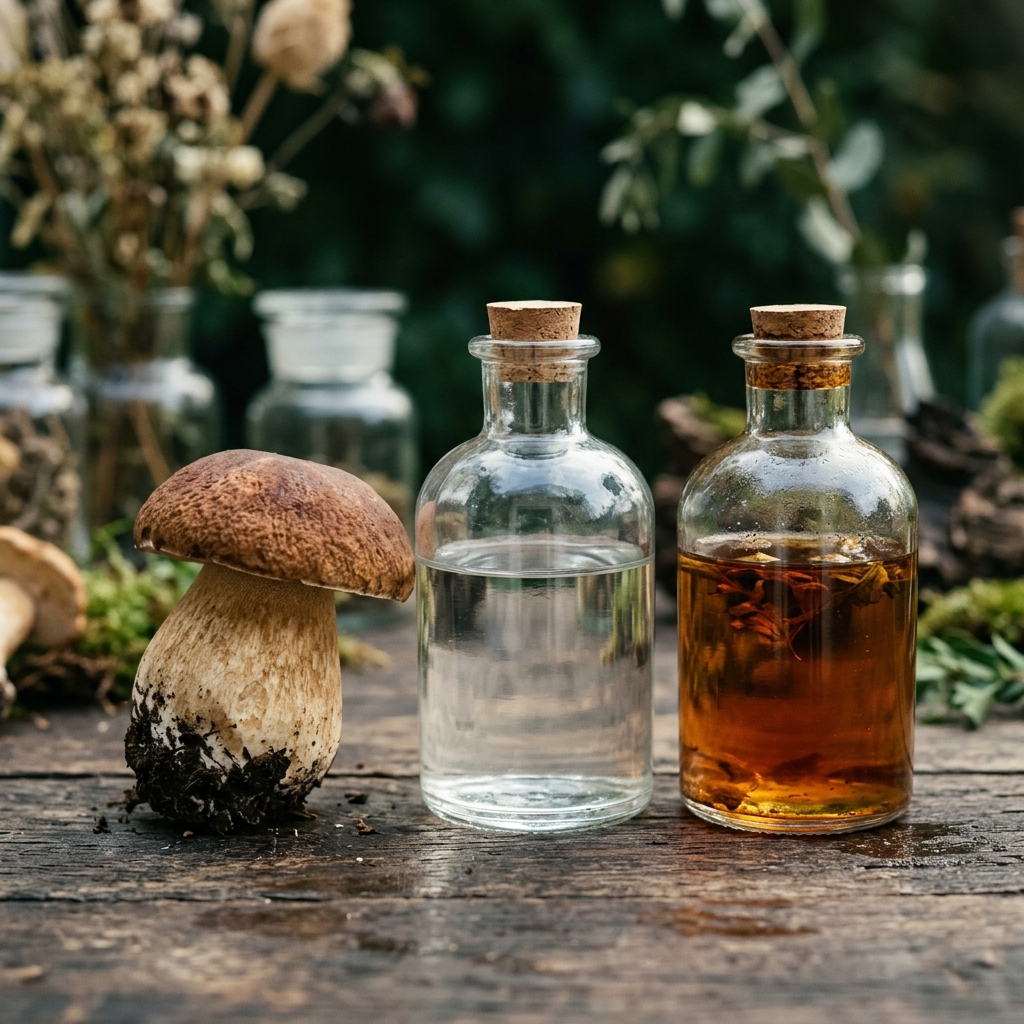
If you've compared mushroom supplements, you've probably seen the phrase "dual extraction" on a label and wondered whether it's real science or marketing garnish. It's real, and the reason is refreshingly simple chemistry: the compounds worth having inside a mushroom don't all dissolve in the same liquid. Dual extraction means the mushroom is processed twice — once in hot water, once in alcohol — so both major classes of compounds come along for the ride instead of one getting left in the discard pile.
Here's the short version before we go deeper. The fiber-like beta-glucans that mushrooms are prized for are water-soluble, so they need a hot-water step. The triterpenes concentrated in mushrooms like reishi are alcohol-soluble, so they need an alcohol step. Use only one solvent and you capture only part of what the mushroom has to offer. Dual extraction does both, then recombines the two liquids — which is why it's the thorough default rather than a gimmick.
What "extraction" actually does
Before the dual part, it helps to understand why mushrooms need extracting at all. A mushroom's cell walls are built largely from chitin — the same tough, structural material in an insect's shell. Your digestive enzymes can't break chitin down efficiently, which means the good stuff sealed inside those walls stays sealed if you just grind the mushroom into powder and swallow it.
Extraction is the step that breaks that wall open and pulls the compounds out into a liquid you can concentrate and dry. Think of it like brewing tea or coffee: you don't eat the grounds, you steep them so the active compounds migrate into the water. With mushrooms, the same logic applies — except, as we'll see, water alone only invites half the guest list.
This is also the cleanest line between a real extract and raw biomass. If a label just says "mushroom powder" with no mention of extraction, you may be buying ground-up, unextracted mushroom where the cell wall is still doing its job of locking compounds away. (This is a different question from which part of the mushroom was used — for that, see our breakdown of fruiting body versus mycelium. Extraction is about how the compounds are freed; fruiting-body-versus-mycelium is about where they came from.)
Why beta-glucans are the compounds worth liberating
The headline reason to extract a mushroom at all is beta-glucans — long-chain, fiber-like polysaccharides woven into the cell wall. They're the most-studied class of compounds in functional mushrooms, and they're exactly the compounds the chitin wall keeps locked up.
A 2007 review in Medicina on how beta-glucans interact with the immune system (opens in new tab) describes them as biologic response modifiers — compounds that interact with specific receptors on immune cells (Dectin-1, CR3). That's a mechanism review rather than a product trial, so read it as the why these compounds are worth the trouble layer, not a health-outcome promise. The practical takeaway is straightforward: if beta-glucans are the actives, and they're trapped behind a cell wall your gut can't open, then liberating them is the entire point of extraction.
Because beta-glucans are water-soluble, hot water is the solvent that frees them. Simmer the mushroom long enough and the wall releases its beta-glucans into the water. That's the first half of dual extraction — and for a mushroom valued chiefly for its beta-glucans, a well-run hot-water extraction does a lot of the work on its own.
The other half: triterpenes need alcohol
So if hot water already gets the beta-glucans, why bother with a second step? Because not every valuable compound is water-soluble.
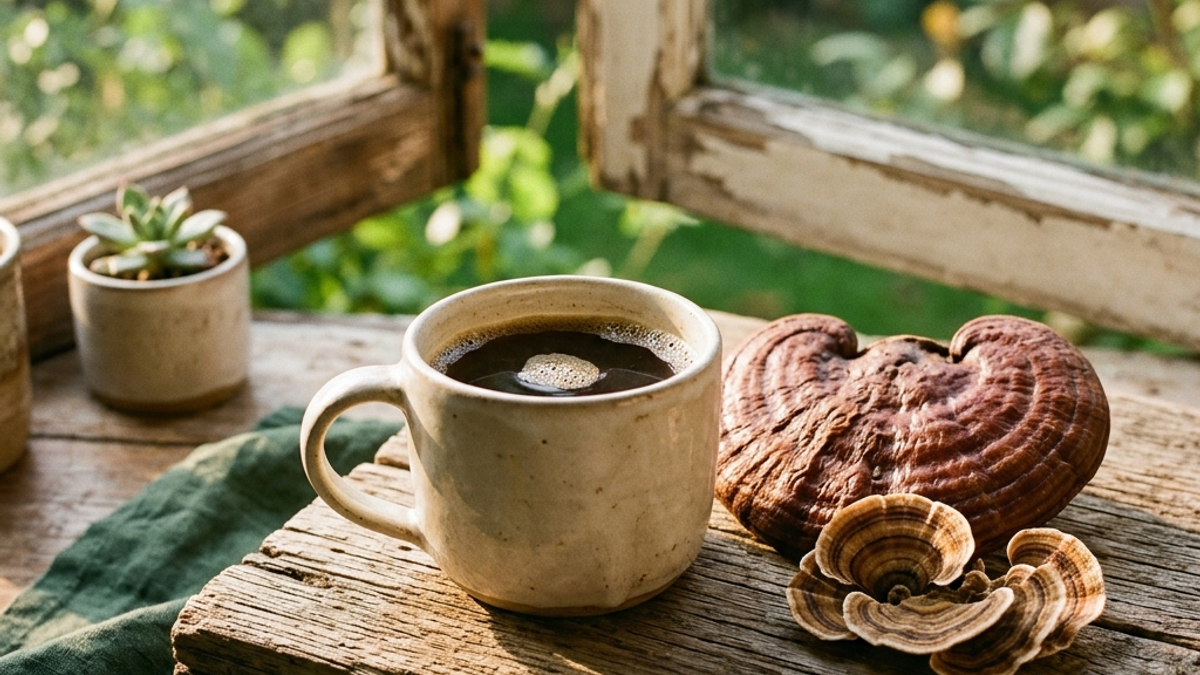
Triterpenes are a separate class of compounds, concentrated in mushrooms like reishi (Ganoderma lucidum) — they're part of what gives reishi its characteristic bitterness. The chemistry that matters here is general and well-established: triterpenes are largely alcohol-soluble, not water-soluble. Drop a triterpene-rich mushroom into hot water alone and a good portion of those compounds simply won't come out. You need alcohol — typically food-grade ethanol — as the solvent to dissolve them.
This is the heart of the case for doing both. A hot-water-only extract of reishi captures its beta-glucans but under-represents its triterpenes. An alcohol-only extract does the reverse. Neither tells the whole story of the mushroom. (To be clear, this is formulation chemistry — how extraction works — not a claim that triterpenes treat anything.)
How dual extraction puts it back together
Dual extraction is the obvious resolution: do both steps, then recombine them. The standard sequence looks like this.
- Hot-water extraction. The mushroom is simmered, often for hours, to break the chitin wall and pull the water-soluble beta-glucans into solution.
- Alcohol extraction. A separate batch (or the same biomass) is steeped in food-grade alcohol to dissolve the triterpenes and other alcohol-soluble compounds.
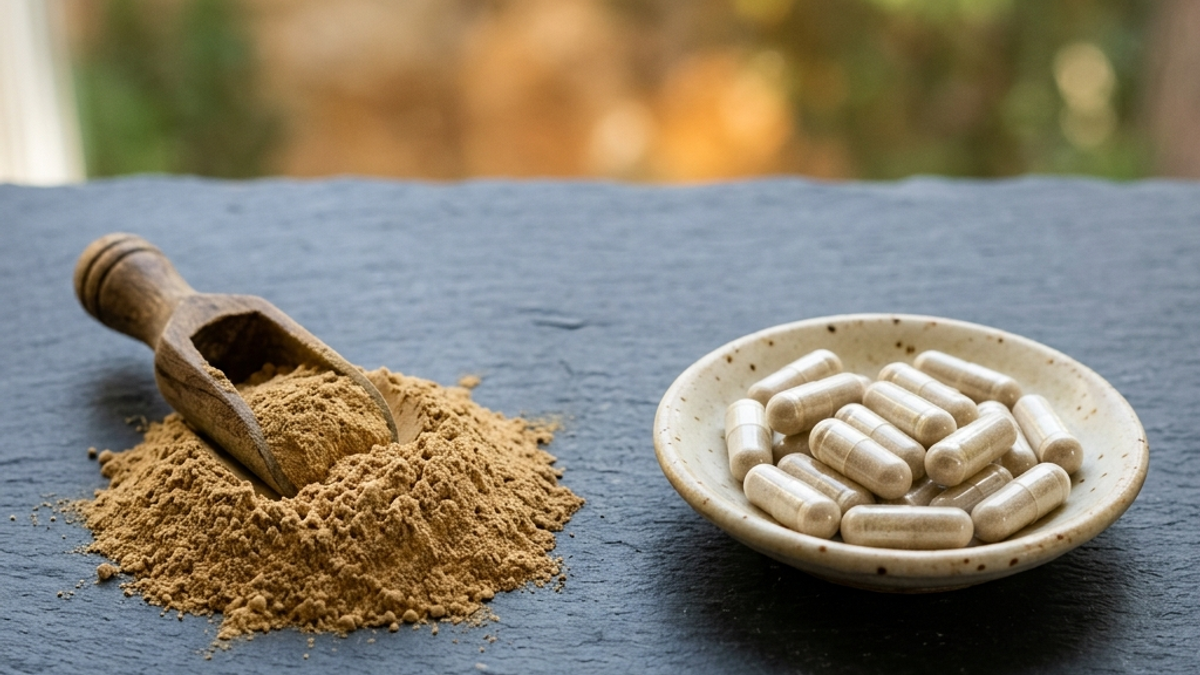
- Recombine and concentrate. The two liquids are blended, then concentrated and dried into a single powder that carries both compound classes.
The result is one extract that doesn't force a choice between the water-soluble and alcohol-soluble fractions. For a multi-mushroom blend, that thoroughness is the appeal: rather than guessing mushroom by mushroom which single method is "good enough," dual extraction covers both bases across the whole formula. It's also why we use a dual-extracted fruiting body as the foundation of our blend — the method matches the ambition of using seven mushrooms with genuinely different compound profiles.
Does every mushroom need both steps?
Honestly, no — and pretending otherwise would be the kind of overreach we'd rather avoid. The need for the alcohol step scales with how much of a mushroom's value sits in its triterpenes.
- Triterpene-rich mushrooms (reishi is the classic example) benefit most from dual extraction, because the alcohol step is the only way to capture a class of compounds hot water largely leaves behind.
- Beta-glucan-forward mushrooms get most of their value from a thorough hot-water extraction, since their headline compounds are water-soluble.
Dual extraction earns its place as the thorough default precisely because it doesn't require you to bet correctly on each mushroom. When a blend spans species with different chemistry, doing both steps is the way to avoid quietly leaving value behind. The trade-off is that it's more work and more cost than a single method — which is part of why some products skip it and hope you won't ask.
How to spot it on a label
A label is where all of this becomes shoppable. A few honest signals to look for:
- It names the method. "Dual-extracted" or "hot-water and alcohol extracted" beats silence. Vagueness usually hides something.
- It states the part used. Extraction works on real fruiting body; "mushroom powder" with no further detail can mean unextracted biomass.
- It gives a beta-glucan figure, not just "polysaccharides." Polysaccharide numbers can include starches from a grain growing medium, so a specific beta-glucan percentage is the more honest disclosure.
If parsing those lines feels like work, that's the point — we wrote a full guide to reading a mushroom supplement label so you can check the fine print before you buy. And if you want the wider map of how these mushrooms work and what each one is for, our complete guide to functional mushrooms is the place to start. You can also see exactly how we publish every dose on our label, dual extraction included.
The bottom line
Dual extraction isn't a buzzword — it's a chemistry-honest answer to a real problem: a mushroom's most-studied compounds don't all dissolve in the same liquid, so capturing them well means using both hot water and alcohol. Beta-glucans need water, triterpenes need alcohol, and doing both is simply the thorough way to free what's locked inside that tough cell wall. When you next read a label, you'll know what the phrase is promising and what to check. Function, not friction — built with the mushroom's actual chemistry, not against it. If you'd like to see how that thinking shapes a finished formula, take a look at the Shroombiosis blend.
References
Akramiene D, Kondrotas A, Didziapetriene J, Kevelaitis E. Effects of beta-glucans on the immune system. Medicina (Kaunas). 2007;43(8):597–606. PMID: 17895634 (opens in new tab)