Mushroom Extract Ratios: Why 10:1 Isn’t Better
Scientifically reviewed by Dr. Danielle Oncer, PharmD (pharmacology, dosing & safety) and Jon Klipstein (supplement formulation expert, Die Tryin Co.).
Short answer
A mushroom extract ratio like 10:1 means ten parts raw mushroom were concentrated into one part finished powder. A higher ratio is not automatically better, because concentration only matters if it captures the active compounds. The number worth checking is the beta-glucan percentage or a stated, standardized extract — not the ratio alone.
If you have compared mushroom supplements, you have probably seen a label boast a mushroom extract ratio like "10:1" — sometimes 8:1, sometimes a dramatic 20:1 — presented as proof that one product is stronger than the next. It looks like a potency score. It mostly isn't. A ratio tells you how much raw material went into the process, not how much of the good stuff came out the other side. Here is what the number actually means, and the one detail that tells you more.
What "10:1" actually means
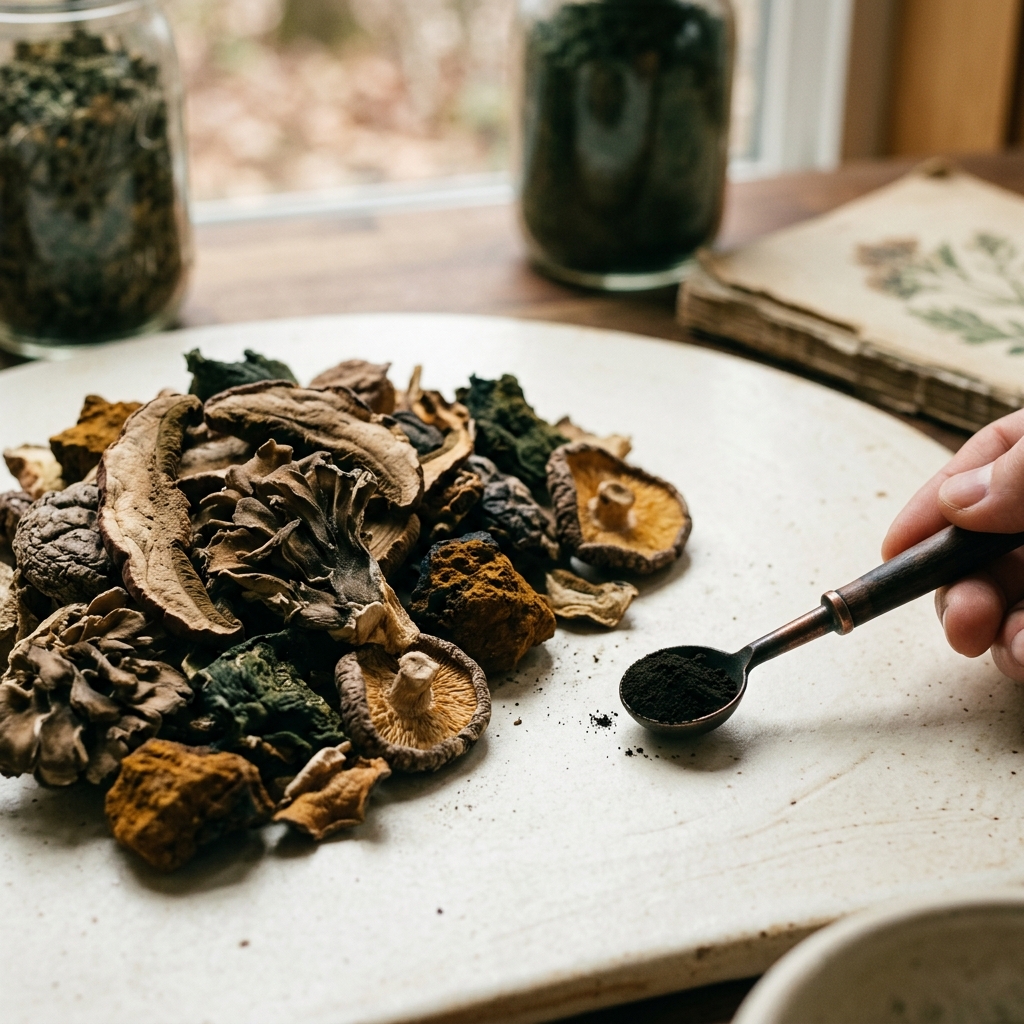
An extract ratio describes concentration by mass. A 10:1 extract means ten parts raw mushroom were processed down into one part finished extract powder — ten kilograms in, roughly one kilogram out. By that math, the finished powder is more concentrated than the raw mushroom it came from, and a smaller scoop can carry more material than the same scoop of unprocessed powder.
So far, so reasonable. The ratio is a real, factual description of a real, physical process. The problem isn't the number. It's what people are invited to assume the number means.
Why a higher mushroom extract ratio isn't automatically better
Here is the trap: a ratio describes the effort, not the outcome. It tells you how much starting material was reduced, but it says nothing about what survived the reduction. Two products can both claim 10:1 and contain very different amounts of the compounds you came for.
Consider what can go wrong while the number still looks impressive:
- Poor starting material. Ten parts of low-quality, low-potency mushroom concentrated tenfold is still concentrated low potency.
- The wrong part of the mushroom. If the raw material is mostly mycelium grown on grain, a high ratio can be concentrating starch along with everything else. (Which part you start from is its own question — see fruiting body vs. mycelium.)
- A method that misses the actives. Concentration only helps if the process captures the compounds that matter. A big ratio achieved by a method that leaves the bioactives behind is a big number attached to a weaker product.
A well-made 8:1 can easily out-deliver a carelessly made 20:1. The ratio is a description of how hard the material was condensed, not a guarantee of what is in the jar. A bigger number is not a stronger product — it is, at best, a hint that needs a second piece of information to mean anything.
The number that actually matters: beta-glucan percentage
If the ratio only matters when it concentrates the actives, the obvious next question is: which actives, and how much? For functional mushrooms, the most useful answer on a label is the beta-glucan percentage (or a clearly stated, standardized extract).
Beta-glucans are the fraction most worth concentrating. They sit inside tough fungal cell walls, and a review of how beta-glucans interact with immune-cell receptors (opens in new tab) describes them as biologic response modifiers — compounds that bind specific receptors on immune cells. In other words, they are among the active fractions a good extraction is trying to liberate and concentrate in the first place. A ratio that concentrates beta-glucans is doing useful work; a ratio that doesn't is just moving mass around.
That is why a beta-glucan percentage is the more honest metric. It measures the result, not the effort. A label that says "30% beta-glucans" is making a checkable claim about what is in the powder. A label that says "10:1" is making a claim about what went into the process and asking you to infer the rest. Why this matters: one number can be verified against a lab test; the other can't. (One caution worth knowing: some labels quote total polysaccharides rather than beta-glucans specifically, and the two are not interchangeable — the beta-glucan figure is the one tied to the receptor-binding research above.)
Ratio vs. extraction method — two different questions
It is easy to blur the extract ratio together with the extraction method, but they answer different questions, and a careful label addresses both.
- The ratio answers how much raw material was concentrated (10:1).
- The method answers how the compounds were pulled out — for mushrooms, that usually means dual extraction with both water and alcohol, because some bioactives are water-soluble and others aren't.
A high ratio achieved with the wrong method can still miss the compounds you want; a sound method at a modest ratio can capture them well. The two travel together, but they are not the same axis. We keep the extraction method in its own lane — dual extraction explained covers the water- and-alcohol process in full — so this post can stay focused on the ratio itself.
How to read a ratio without being misled
You do not need to distrust the ratio. You need to refuse to let it stand alone. When you see one, ask three quick questions:
- Is there a beta-glucan percentage (or a standardized extract) next to it? The ratio gains meaning only when paired with what it concentrated.
- Can I see a third-party Certificate of Analysis that confirms the active content for that batch? A number on a carton is a claim; a test is evidence. (More on that in third-party testing and COAs.)
- Is the dose of each mushroom listed, so I can combine ratio, percentage, and milligrams into an actual estimate? A ratio with no per-ingredient dose is only half a sentence.
If a product offers a confident ratio and nothing else — no beta-glucan figure, no test, no per-mushroom dose — the ratio is doing the work that transparency should be doing. That gap is the signal. (And if the milligrams behind it look thin, the ratio can't rescue them — that's the underdosed-blend problem in a different costume.)
A note on tone, because this matters to us: this isn't a story about anyone cheating. Extract ratios are a legitimate, long-standing way to describe concentration, and most of the confusion comes from a single number being asked to carry more meaning than it can. The fix isn't suspicion — it's the second number.
The calm takeaway
A mushroom extract ratio like 10:1 is a real fact about concentration, and a genuinely useful one — once you know it captured the compounds that matter. On its own, a bigger ratio is not a stronger product. The detail that actually earns your trust is the beta-glucan percentage, shown next to the ratio and backed by a test you can open.
For the complete walkthrough of every detail on a carton, see how to read a mushroom supplement label, and for how the milligrams behind the ratio should be sized, the functional mushroom dosing primer. This post is part of our broader mushroom supplement buyer's guide if you want the full map of the category, and if you'd like to see how we put all of this into practice, that's what the way we formulate is for.
References
- Akramiene D, Kondrotas A, Didziapetriene J, Kevelaitis E. Effects of beta-glucans on the immune system. Medicina (Kaunas). 2007;43(8):597–606. PMID: 17895634. https://pubmed.ncbi.nlm.nih.gov/17895634/ (opens in new tab)