How to Read a COA for Mushroom Supplements
Scientifically reviewed by Dr. Danielle Oncer, PharmD (pharmacology, dosing & safety) and Jon Klipstein (supplement formulation expert, Die Tryin Co.).
Short answer
A third-party tested mushroom supplement should come with a Certificate of Analysis (COA) you can actually open — an independent lab report on a specific batch confirming identity, potency, and screening for heavy metals and contaminants. The phrase 'third-party tested' on a carton is a claim; a published COA is the evidence. Mushrooms readily absorb metals from their growing environment, so batch-level screening matters.
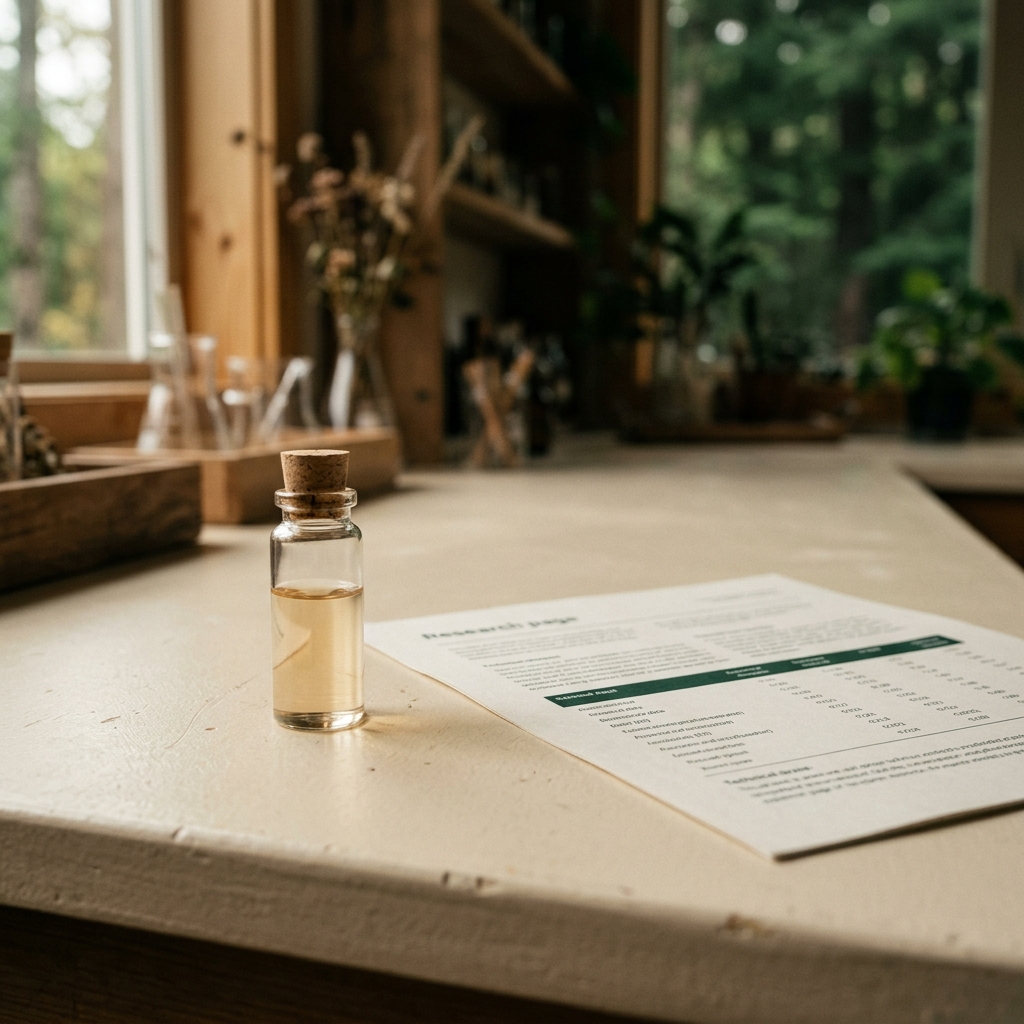
If you have ever read "third-party tested" on a mushroom supplement and felt reassured, it is worth slowing down on that phrase. It can mean a brand sent a sample to an independent lab and will hand you the report — or it can mean almost nothing at all. The difference between a genuine third-party tested mushroom supplement and a marketing line comes down to one question: can you actually open the document? This post is about what that document is, what it should contain, and why it matters more for fungi than for most other ingredients.
This is the deep-dive companion to our broader guide to reading a mushroom supplement label, which walks through the whole checklist — per-ingredient dosing, fruiting body, extract ratio, and more. Here we stay in one lane: testing and the paperwork behind it.
What a third-party tested mushroom supplement's COA proves
A Certificate of Analysis, or COA, is an independent laboratory report on a specific batch of product. That last part matters. Supplements are made in production runs, and quality can vary run to run depending on the raw material and where it was grown. A COA tied to a batch or lot number tells you about the jar in your hand, not about a sample someone tested two years ago.
A complete COA usually confirms three things:
- Identity — the mushroom is the species the label claims. With dried, milled powders you cannot tell Hericium erinaceus from a cheaper substitute by eye, so lab confirmation does real work here.
- Potency — how much of the active compound is present, often reported as beta-glucan content for mushrooms. (Beta-glucans are the cell-wall compounds that bind receptors on immune cells; for why that binding is the mechanism worth measuring, see our explainer on dual extraction.)
- Contaminant screening — heavy metals, and often microbial contaminants and pesticide residues, measured against pass/fail thresholds.
A report that shows only one of these is partial. A potency number with no heavy-metals panel, or a heavy-metals panel with no identity confirmation, tells you part of the story and lets you assume the rest.
How to read one, line by line
Open a COA and work down it in this order. It takes about a minute once you know what you are looking at.
- Batch or lot number. Match it to the number printed on the jar in your hand. If the report has no lot number, or it does not match, the document tells you about some other production run.
- The lab's name. An independent laboratory, named. If the report is on the manufacturer's own letterhead, it is an in-house check — which is not worthless, but it is not third-party either, and nobody should call it that.
- The test date. Recent enough to plausibly cover the batch you bought.
- Identity. The species, confirmed. This is where a substituted or misidentified mushroom would show up.
- Potency. Usually beta-glucan content. Watch for the common trick of reporting total polysaccharides instead — that number includes starch from grain substrate, so it can look impressive while the beta-glucan figure underneath it is low.
- Heavy metals. Lead, arsenic, cadmium, mercury, each with a result and a pass threshold. For mushrooms this is the panel that matters most, for the reason below.
- Anything else. Microbial screening and pesticide residues are common additions.
If a report is missing any of the first three, you cannot tie it to your product at all. If it is missing identity or heavy metals, it is partial — and a partial COA published confidently is doing a job that has nothing to do with quality.
Why heavy-metal screening matters more for mushrooms
Here is the detail most testing posts skip. Mushrooms are unusually good at pulling material out of their environment. The fungal network acts like a sponge, drawing up whatever is in the soil, water, or growing substrate — including heavy metals such as lead, arsenic, cadmium, and mercury. This is a well-established property of fungi; it is part of why mushrooms are studied for cleaning up contaminated land in the first place.
That same efficiency is a liability in a supplement. A mushroom grown in a clean, controlled substrate can be excellent; the identical species grown somewhere contaminated can carry metals you would never want to take daily. The species on the label does not tell you which one you have. Only batch-level screening does.
This is why "it's organic" or "it's natural" is not a substitute for a metals panel. A naturally grown mushroom absorbs naturally occurring metals just fine. The relevant question is not whether the mushroom is wholesome in the abstract — it is whether this batch was screened and passed. That is a quality and process question, not a health claim, and the answer lives on the COA.
The gap between a claim and a document
"Third-party tested" is a claim. A COA you can open is evidence. The space between those two is where a lot of trust quietly leaks out.
A brand can say, truthfully, that it tests — and never publish a single result. It can test once, years ago, and keep using the phrase. It can test for one thing (say, microbial safety) and let the words imply it tested for everything. None of that is necessarily dishonest; some of it is just incomplete. But you cannot tell the difference from the carton, and that is the point. The phrase asks you to trust a sentence. A published, batch-specific COA asks you to trust a document you can read for yourself.
So the thing to look for is not the words "third-party tested." It is a report — ideally linked to the exact batch — that names the lab, shows the test date, and lists what was measured against what thresholds. When that exists, the marketing phrase becomes redundant, because the evidence is right there.
A short, honest checklist for any COA you are handed:
- A batch or lot number that matches the product (not a generic sample).
- The lab's name and the test date — recent, and clearly identified.
- Identity of the species.
- Potency — beta-glucan or active-compound content.
- A heavy-metals panel (lead, arsenic, cadmium, mercury) with pass thresholds, plus microbial and pesticide screening where relevant.
If a report has all five, you are looking at a brand that expects to be checked. If "third-party tested" leads nowhere you can click, treat the phrase as decoration.
Tested vs. certified — and where we are
One more distinction, because the words get used interchangeably and they should not be. Batch testing means a sample from a production run went to an independent lab and came back with results. Certification is a formal, ongoing program — an outside body audits a facility or process on a schedule and grants a mark you have to keep earning. Both are legitimate. They are simply not the same thing, and a brand should tell you which one it actually has.
So let me be plain about Shroombiosis, including the part that does not flatter us. Every dose is on our label, and our formal certifications are in progress — we say "in progress," never "certified," because conflating the two would be exactly the small overstatement this whole post argues against.
But we have not published a COA yet. Everything above says a claim without a document is just a sentence. That applies to us too, and it would be absurd to write this page and quietly exempt ourselves. There are two reasons it is not up. The first is simply that the assay is not finished. The second is more particular: our manufacturer runs its own testing, and we are not going to describe a manufacturer's own report as "third-party," because by the definition at the top of this page it is not independent — it is the people who made the product marking their own work. That is precisely the move this article tells you to watch for.
So hold us to the standard we are asking you to apply. When we have an independent, batch-specific report, it will be linked here and we will name the lab that ran it. Until then, judge our testing claim exactly as skeptically as you would anyone else's — that is the whole point."
If you want to see how this fits the rest of the picture, the related reads are worth your time. Underdosing and testing are two sides of the same transparency coin — see why so many mushroom blends are underdosed and what an extract ratio like 10:1 really tells you. For dosing specifically, our functional-mushroom dosing primer covers how much is enough. And our science page lays out what each mushroom is studied for, with the sources attached.
Look for the document, not the phrase
A test you cannot see is a story; a COA you can open is proof — and for an ingredient that absorbs metals as readily as mushrooms do, the proof is worth asking for.
We hold ourselves to the same standard, which is why this page says plainly that we have not published one yet. When we hold an independent, batch-specific report, it goes up here with the name of the lab that ran it. Until then, apply everything above to us as strictly as you would to anyone else. The rest of how to buy well is in our mushroom supplement buyer's guide.