How Much Lion's Mane Per Day? A Transparent Dosing Guide
Scientifically reviewed by Onur Oncer, B.S. (B.S. Physiology, published researcher).
Short answer
Published human trials on lion's mane (Hericium erinaceus) generally use about 1,000–3,000 mg per day of properly extracted fruiting-body powder, taken consistently for weeks. Our blend lists a real 1,000 mg of lion's mane per serving on the label — at the bottom of that studied range and scalable to two scoops — instead of hiding it in a proprietary blend. This is education, not medical advice.
A quick note before the numbers: this is education, not medical advice. The right amount of any supplement for you depends on your physiology, your other medications, and your goals. The doses below are what published human trials actually used — not a prescription.
"How much lion's mane per day" is one of the most-searched questions in this whole category, and most of the answers online are useless in opposite directions. One camp throws out a precise-sounding number with no source. The other waves vaguely at "a scoop a day" and moves on. As a pharmacist, neither helps you, because the honest answer has two parts: what the studies used, and whether the product in your hand actually delivers it. This post is about the dose, timing, and consistency side of that — if you want the separate question of what the evidence actually supports lion's mane doing, that's covered in lion's mane for focus and memory. It's also the lion's-mane-specific companion to our general functional mushroom dosing primer, and part of our complete guide to functional mushrooms.
The short version: 1,000–3,000 mg per day
Across the human research, lion's mane (Hericium erinaceus) is generally studied at roughly 1,000 to 3,000 mg per day of properly extracted material, taken daily for weeks. That's the range to anchor to. Two trials bracket it well.
The most-cited cognitive study is a 2009 double-blind, placebo-controlled clinical trial in Phytotherapy Research (opens in new tab) (Mori et al., 2009), in which older adults took 3,000 mg per day of fruiting-body powder for 16 weeks and scored higher on a cognitive scale than the placebo group. It's small (n=30) and was run in adults with mild cognitive impairment, so I read it as dose-and-timeline evidence, not a promise about reversing anything.
The lower bracket comes from a 2023 placebo-controlled pilot trial in healthy young adults (opens in new tab) (Docherty et al., 2023), which used 1.8 g per day of solo lion's mane in adults aged 18–45 over a 28-day course. The point for this guide is the number and the timeline — 1.8 g, daily, for weeks — which lands squarely inside the same range. (What that trial actually measured, and how much weight it deserves, is the evidence question we cover in lion's mane for focus and memory.)
Zooming out, a 2025 systematic review in Frontiers in Nutrition (opens in new tab) (Menon et al., 2025) pooled the human and laboratory literature and reached the same practical place on dosing: the controlled human trials cluster in this gram-scale daily range, taken consistently rather than as a one-off.
Why "1,000 mg" only means something with the rest of the label
Here's the part the marketing skips. A dose number is only as honest as the words next to it. "1,000 mg of lion's mane" can mean wildly different things depending on two details:
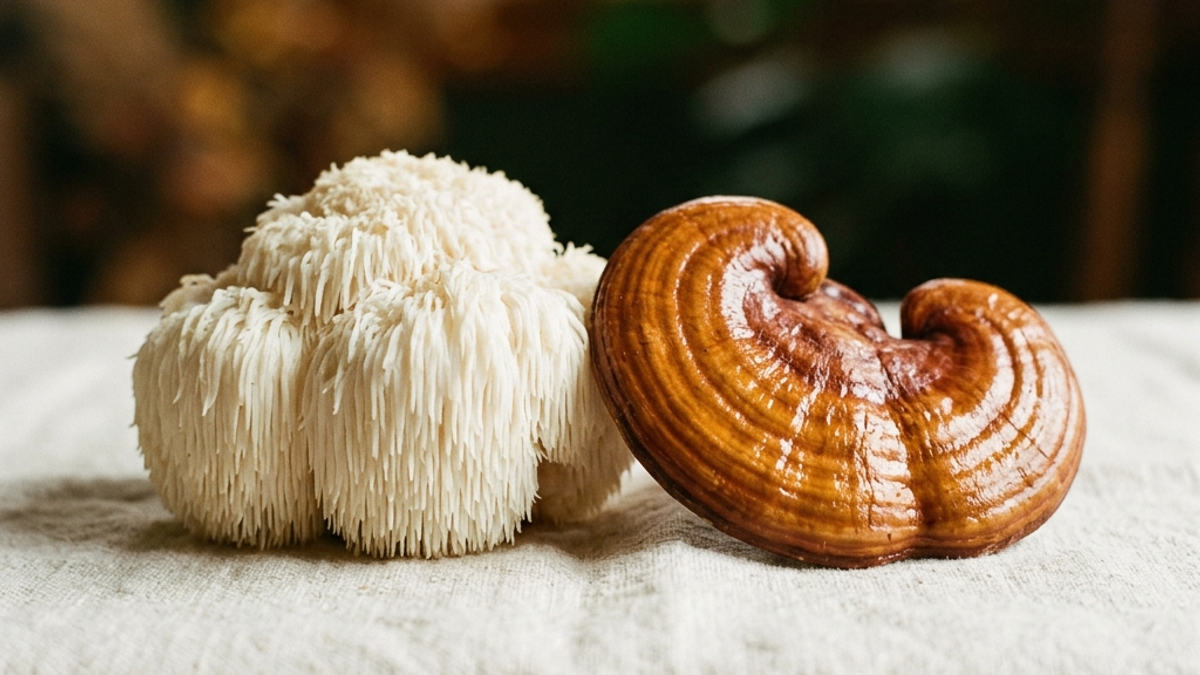
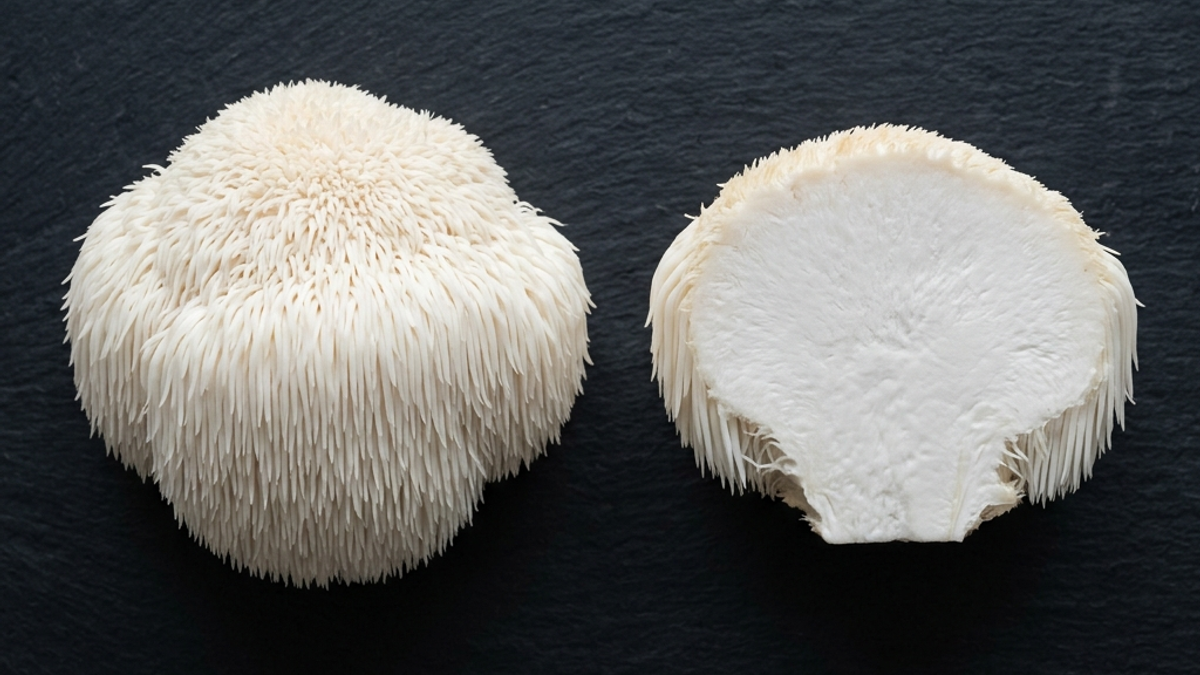
- Fruiting body vs. mycelium-on-grain. The fruiting body is the visible mushroom, where the studied hericenones concentrate. Mycelium grown on grain and milled with that grain leaves a lot of starchy filler in the powder. 1,000 mg of dual-extracted fruiting body and 1,000 mg of mycelium-on-grain are not the same thing in your cup. (More in fruiting body vs. mycelium.)
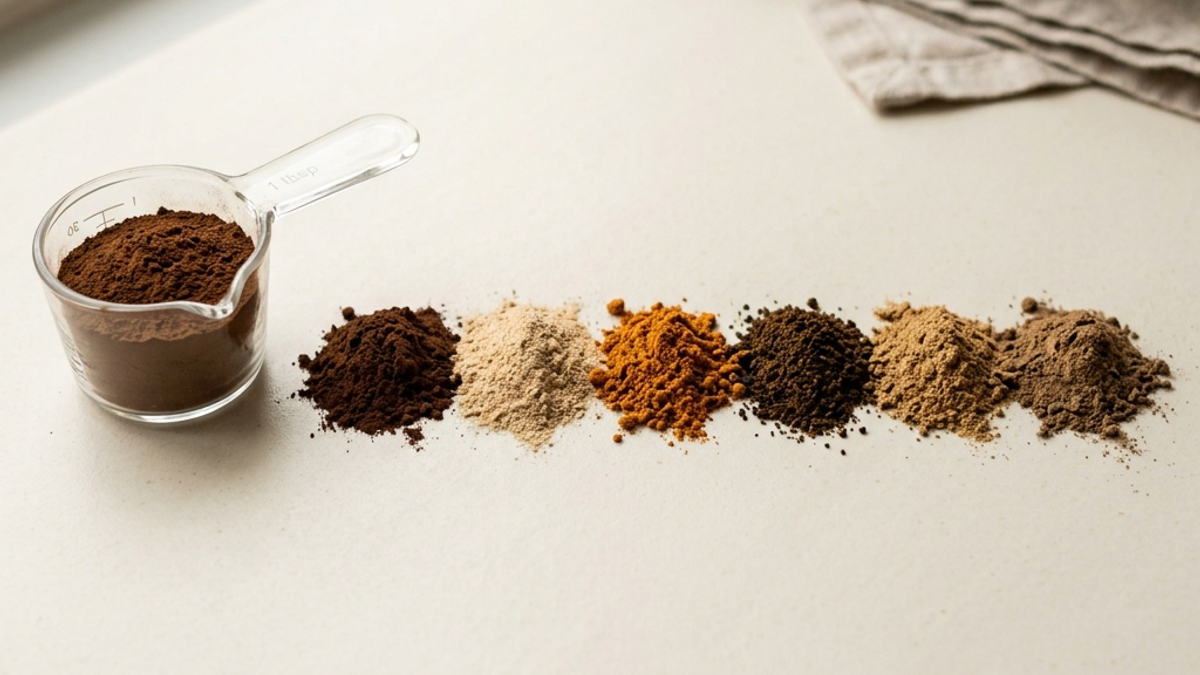
- A real per-ingredient dose vs. a blend total. This is the big one. A "1,500 mg proprietary mushroom blend" with lion's mane listed among six other mushrooms tells you nothing about how much lion's mane you're getting. It could be 800 mg or 80 mg — the label reads the same either way.
So before you ask "is my dose high enough," you have to be able to see your dose at all. For the full walkthrough, see how to read a mushroom supplement label and how to spot an underdosed mushroom supplement.
Our real dose: 1,000 mg, on the label, scalable to 2,000
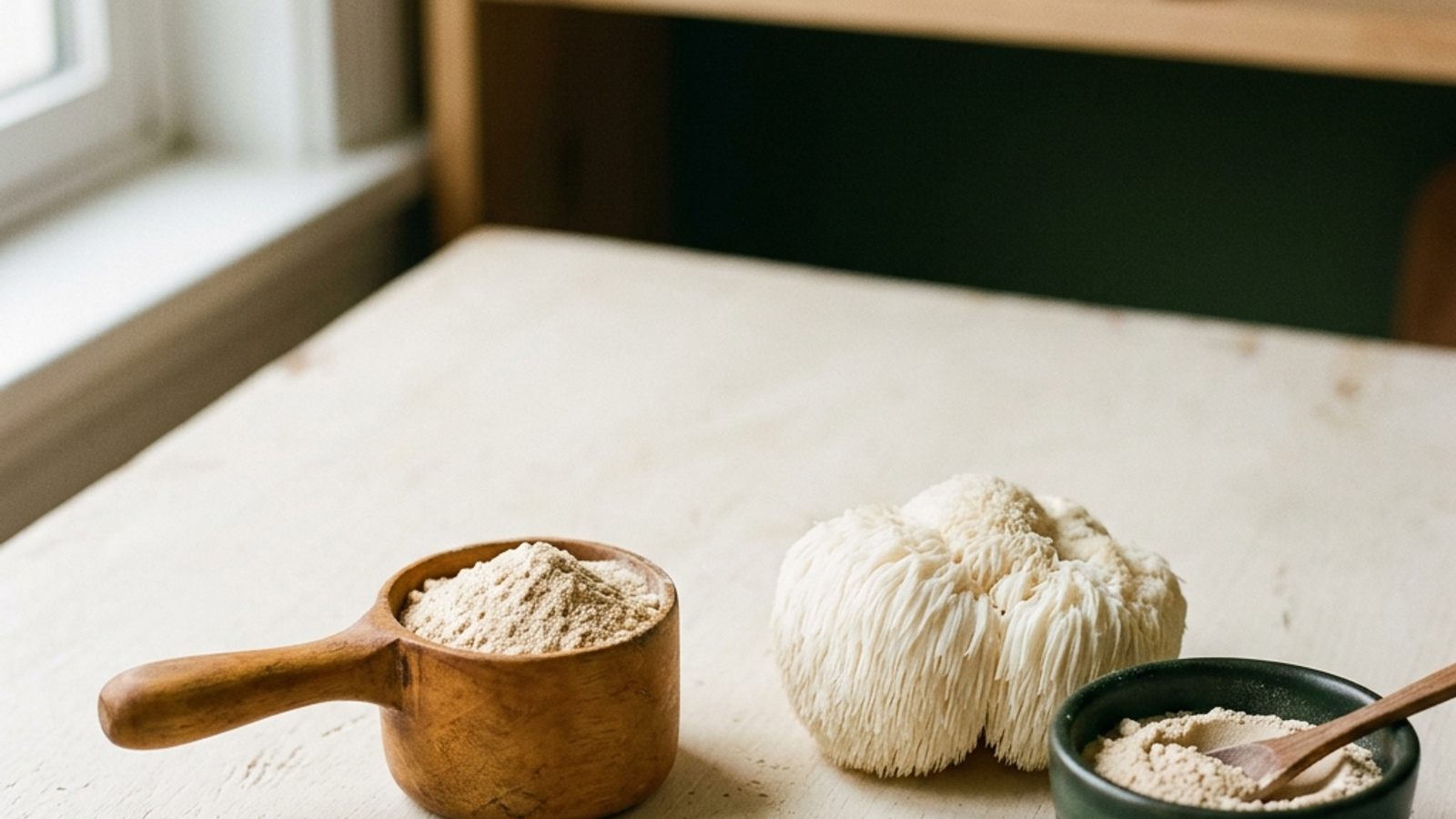
We list 1,000 mg of dual-extracted fruiting-body lion's mane per serving, printed on the label as its own line — not folded into a blend. That puts a single scoop at the bottom of the studied 1,000–3,000 mg range, and we say so plainly rather than implying it's the same as a clinical 3,000 mg dose.
Two honest points about that choice:
- One scoop is a real 1,000 mg, not a fraction of a blend. A "1,000 mg" you can actually verify on the label beats a bigger blend number you can't break down. If a competing product's whole multi-mushroom blend totals only a few hundred milligrams, no single mushroom in it can reach this range at all.
- You can scale up. Our serving note is built so two scoops is still a comfortable daily amount, not an overdose — which puts lion's mane at 2,000 mg per day, deeper into the studied range, if that's what you want. Start with one scoop and adjust.
We dose this way on purpose. It's the same transparency principle behind choosing a transparent mushroom supplement: publish the number, let you do the math.
Timing: when to take lion's mane
The honest answer is that there's no clinically established best time of day, and that's a feature of how lion's mane works, not a gap in the research. Because the benefit is a slow neurotrophic build rather than an hourly stimulant kick, the specific hour matters far less than the daily habit. A few practical notes:
- Morning is fine, and so is any other time. Most people take it in the morning simply because it's easy to remember with coffee or breakfast.
- Pair it with a little fat. Lion's mane's active compounds are fat-soluble, so taking it with coconut milk, cream, or another fat source may help absorption versus water alone. Our blend already includes coconut milk powder for exactly this reason.
- No caffeine, take it whenever. Lion's mane contains no caffeine, so there's no "too late in the day" concern from the mushroom itself. You can take it alongside your coffee or on its own. The deeper mechanism is in our lion's mane pharmacology explainer, and the caffeine-free angle in lion's mane for focus at work.
The one rule that actually matters: pick a time you'll remember every day. The same holds for a whole blend, where the only thing that can genuinely force your hand is whether the product contains caffeine.
Consistency over weeks beats a perfect single dose
If you take one thing from this post, take this. Lion's mane is not a stimulant, and the research is consistent that the benefit accrues over weeks of daily use. In the 2009 trial, cognitive scores rose progressively at weeks 8, 12, and 16 — and notably fell again after participants stopped, four weeks post-intake (Mori et al., 2009 (opens in new tab)). The healthy young-adult pilot tells the same story on a shorter clock: across its 28-day protocol it reported a trend toward reduced subjective stress alongside the cognitive result, supporting a calm daily baseline rather than an overnight one (Docherty et al., 2023 (opens in new tab)).
The pattern is clear: a precisely measured single dose taken erratically does less than a modest dose taken faithfully. Plan to give lion's mane at least a few weeks before you decide whether it's doing anything, and treat it as a daily habit, not an as-needed pill. This is also why the slow build pairs naturally with built energy rather than borrowed energy — you're supporting a baseline, not spiking and crashing one.
Can you take too much lion's mane?
More is not automatically better. The studied benefit shows up inside the ordinary 1,000–3,000 mg range, and there's no good evidence that megadosing past it buys you a faster or larger effect. On tolerability, the 2025 systematic review (opens in new tab) (Menon et al., 2025) notes that reported side effects are uncommon and mild — things like stomach discomfort, headache, or allergic reactions — which is part of why lion's mane is such a popular daily ingredient. As a pharmacist, my plain advice is to stay in the studied range, start low, and let consistency do the work rather than the size of the scoop.
When to ask a clinician first
"Generally well tolerated" is not the same as "automatically fine for everyone." Ask a physician or pharmacist before starting lion's mane — or any new supplement — if you are:
- pregnant or nursing,
- taking prescription medications, or
- managing a medical condition.
That's not because lion's mane is risky; it's because the right call always depends on the rest of your physiology and your medication list, and a clinician who knows both can give you an answer I can't from a blog post. Nothing here is a reason to start, stop, or change a prescribed medication. For the broader picture, see are functional mushrooms safe.
The bottom line
How much lion's mane per day? Aim for the studied 1,000–3,000 mg range of properly extracted fruiting-body powder, taken daily for weeks, with a little fat, at whatever time you'll actually remember. Our blend gives you a real, fully disclosed 1,000 mg per scoop — bottom of the range on one scoop, deeper into it on two — instead of a number you can only admire inside a proprietary blend. The mechanism is real, but it only does anything if the dose is real, the extract is right, and you stay consistent. Get those three lined up and you're working with your physiology instead of guessing.
References
- Mori K, Inatomi S, Ouchi K, Azumi Y, Tuchida T. Improving effects of the mushroom Yamabushitake (Hericium erinaceus) on mild cognitive impairment: a double-blind placebo-controlled clinical trial. Phytotherapy Research. 2009;23(3):367–372. PMID: 18844328 (opens in new tab) · doi:10.1002/ptr.2634 (opens in new tab)
- Docherty S, Doughty FL, Smith EF. The acute and chronic effects of lion's mane mushroom supplementation on cognitive function, stress and mood in young adults: a double-blind, parallel groups, pilot study. Nutrients. 2023;15(22):4842. PMID: 38004235 (opens in new tab) · doi:10.3390/nu15224842 (opens in new tab)
- Menon A, Jalal A, Arshad Z, Nawaz FA, Kashyap R. Benefits, side effects, and uses of Hericium erinaceus as a supplement: a systematic review. Frontiers in Nutrition. 2025;12:1641246. PMID: 40959699 (opens in new tab) · doi:10.3389/fnut.2025.1641246 (opens in new tab)
According to PubMed, the three studies cited above were retrieved and verified via PubMed; DOIs are linked inline.