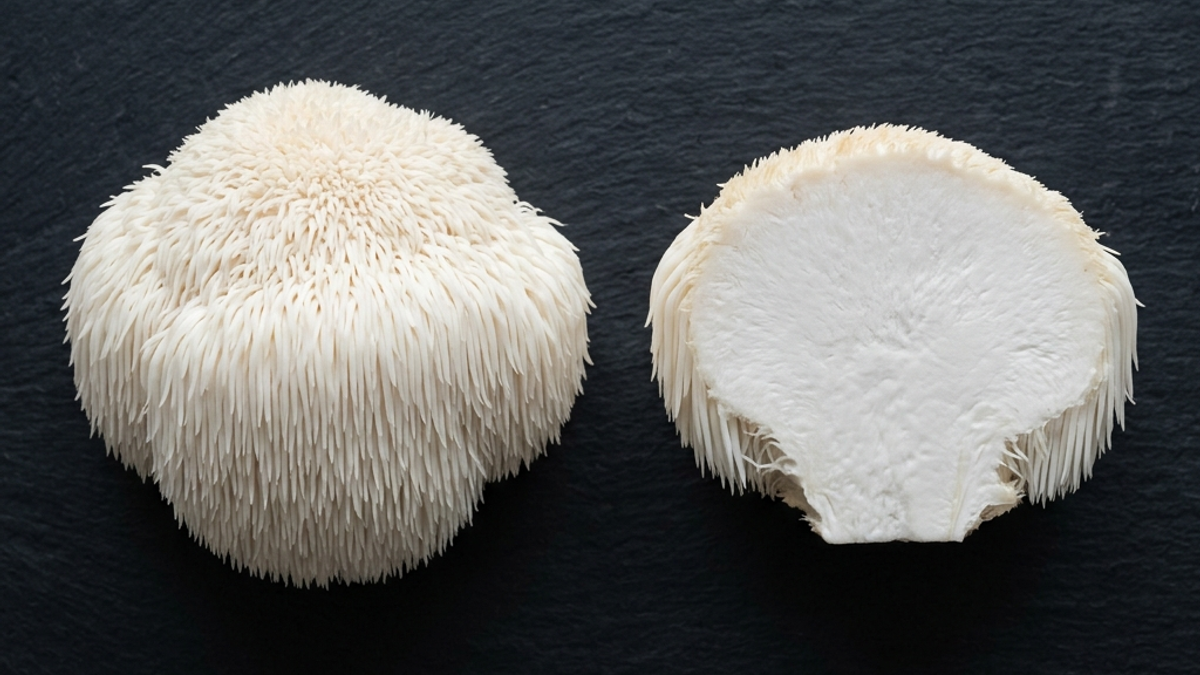
Lion's Mane for Focus at Work: A Calm Look
Scientifically reviewed by Onur Oncer, B.S. (B.S. Physiology, published researcher).
Short answer
Lion's mane is studied for cognition, which makes it a sensible choice for the kind of sustained, clear focus that work and study demand. Unlike caffeine, it isn't a stimulant — there's no spike and no crash — so it supports mental clarity that builds over weeks of daily use. It works best as a steady habit alongside good sleep and deep-work blocks, not as a quick pre-meeting jolt.
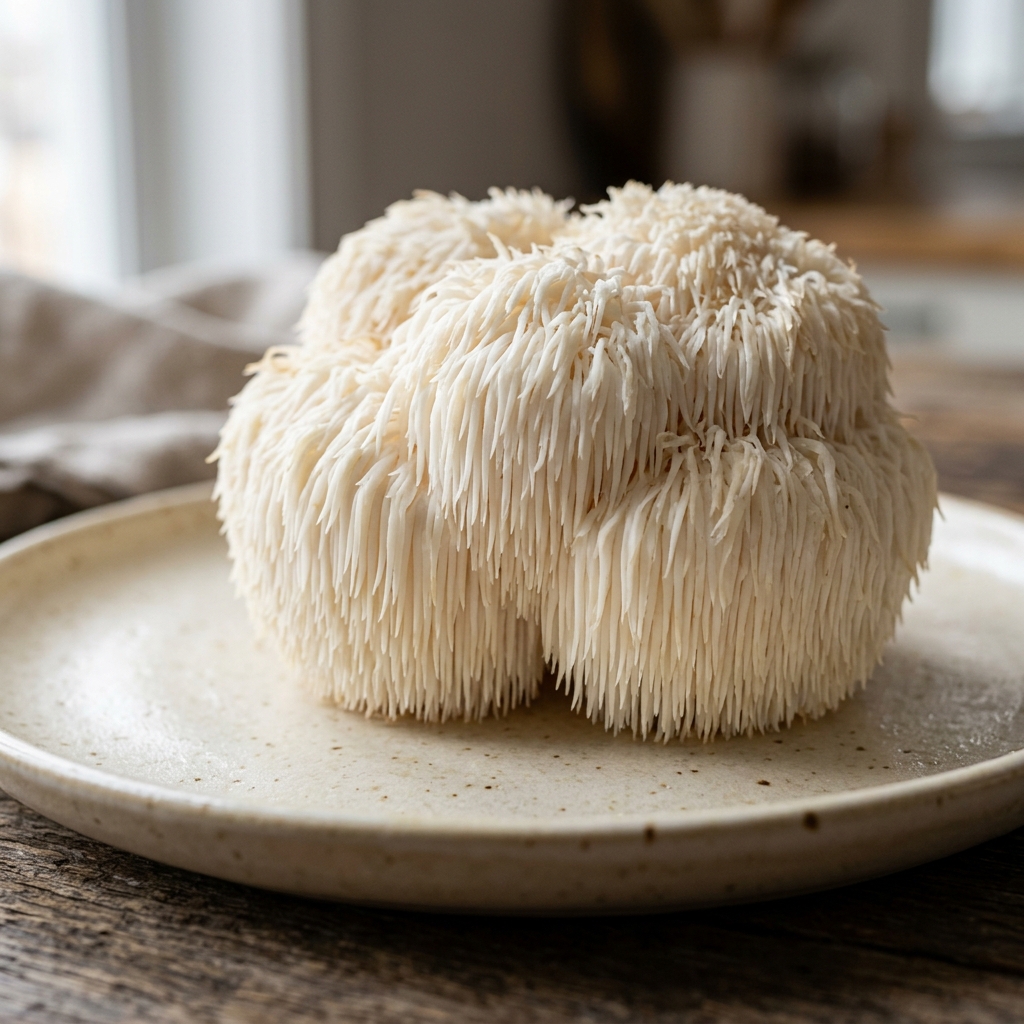
If you're looking at lion's mane for focus at work, the honest starting point is this: it's studied for cognition, and that's a reasonable reason to consider it for deep work — but it isn't a stimulant, and treating it like one will only disappoint you. The clear, sustained concentration that long work and study sessions demand is exactly the kind of thing lion's mane is researched for, and it supports that without a caffeine spike, jitters, or a mid-afternoon crash. The catch is that it works on a slower timeline than a cup of coffee, so it rewards a daily habit rather than a pre-meeting jolt.
This post is about the work angle specifically — fitting lion's mane into a real working day. If you want the mechanism in depth, that lives in the pharmacology of lion's mane; and if your search started with "mushroom coffee," we untangle where the focus actually comes from in mushroom coffee for focus. Here, we'll keep it practical.
What lion's mane for focus actually means
Let's be precise about the claim. Lion's mane is studied for cognitive performance — not as a magic concentration switch, but as a compound the research associates with how the brain maintains and adapts itself over time. In a 2023 double-blind, placebo-controlled pilot in healthy adults (opens in new tab), 41 participants took either 1.8 g/day of pure lion's mane or a placebo for 28 days. The clearest signal came from a single acute dose: about 60 minutes after one serving, the lion's mane group performed a cognitive task significantly faster than placebo (p=0.005). The 28-day chronic arm was largely null. (The same study also looked at subjective stress, but that result was only a non-significant trend toward reduced stress — p=0.051 — so we leave it there and don't build a stress claim on it.)
For work, the useful read is the cognition result. It's a small pilot, so we hold it lightly, but it points in a consistent direction: lion's mane, on its own, supports the kind of clear thinking that a demanding workday asks of you.
Why this matters for deep work: the focus you need to write a brief, debug code, or study for an exam isn't a 90-minute jolt of alertness. It's steadier than that — and steadier is exactly the lane lion's mane sits in.
Why it's not a stimulant (and why that's the point)
Caffeine feels like focus because it raises alertness quickly. But it does that by blocking the brain's "time to wind down" signal, which is why the lift is temporary and often arrives with a cost — the jitters when there's too much, the 2 p.m. dip when it wears off, disrupted sleep if it's too late in the day. It borrows alertness and bills you later.
Lion's mane sits in a completely different category. Researchers connect it to nerve-growth signaling rather than to stimulation — a slow, structural pathway, not a fast chemical nudge. A review of how neurotrophins like NGF and BDNF support neuronal survival and plasticity (opens in new tab) lays out, in general terms, why that pathway matters for how the brain keeps and remodels its connections. (That review is background biology, not lion's-mane-specific proof — we're careful about the difference, and the full mechanism is in the lion's mane pharmacology deep-dive.)
The practical consequence is the whole reason we formulate caffeine-free: there's no spike to come down from. For a working day, that means no engineered crash to plan your afternoon around. If you want the longer version of that distinction, we wrote about built energy versus borrowed energy and why the coffee crash happens.
How to fit lion's mane into a working day
Because lion's mane isn't a stimulant, the "when" matters far less than it does with coffee. You're not timing a peak; you're keeping a habit. A few simple ways it fits a real schedule:
- As a calm morning anchor — stirred into water, milk, or a smoothie before you start, so the focus support is part of your baseline rather than a lever you pull.
- At the afternoon dip — when the temptation is a second coffee, a caffeine-free mix-in is something you can reach for without borrowing against your sleep. We go deeper on this in beating the 2 p.m. slump without a second coffee.
- Alongside, not instead of, the basics — lion's mane supports focus; it doesn't replace sleep, hydration, or a deep-work block with the notifications off. Treat it as one input among several.
If most of your focus problems show up after lunch, the more specific question is whether you can step down the caffeine itself — we look at that honestly in can you replace your afternoon coffee?
What "for focus at work" doesn't mean
A quick boundary, because the work context invites overreach. Lion's mane is not a focus drug and not a substitute for one. It supports cognition and mental clarity as a structure/function ingredient — that's the honest frame, and it's a useful one. It won't override a bad night's sleep or a calendar with no margin in it. We'd rather say that plainly than oversell.
Getting the dose right
Focus support is only real if there's a meaningful amount of lion's mane in the cup. The clinical research clusters around 1,000–3,000 mg per day of fruiting-body powder — the healthy-adult study above used 1.8 g/day. Two things worth checking on any label before you trust a "for focus" claim:
- Is the lion's mane dose stated in milligrams, on its own — not folded into a "proprietary blend" total you can't see inside? Here's how to read a mushroom supplement label.
- Is it dual-extracted fruiting body, not mycelium-on-grain? The studied compounds concentrate in the fruiting body, and water-and-alcohol extraction is what makes them available — more on that in dual extraction explained and our dosing primer.
A label can say "lion's mane for focus" on the front and still under-deliver if either answer is no. Every dose on our label is published for exactly this reason.
The honest timeline
The least exciting part is the most important: this is a habit, not a hit. Even in the pilot above, where the measurable cognitive win came from a single acute dose, we don't read that as an on-demand lever — the 28-day arm was largely null, and the honest frame is consistency over time. Lion's mane rewards a daily routine the same way sleep and training do. So if you're adding it for work, the right expectation is a steady habit over two to four weeks of daily use, not a noticeable lift before your 9 a.m. call.
That timeline is a feature, not a flaw. A focus you build is steadier than a focus you spike — and it doesn't leave you flat at 3 p.m.
The takeaway
Lion's mane for focus at work is a calm, evidence-first choice: studied for cognition, free of caffeine, and steadiest when it's a daily habit rather than a quick fix. It supports the clear, sustained concentration deep work asks for — without the spike or the crash that come bundled with a stimulant. Take a real dose, give it a few weeks, and let it work in the background of a well-built day.
If that's the kind of focus you're after, the caffeine-free blend we built around it puts the full lion's mane dose on the label, our science page lays out the evidence, and the caffeine-free energy & focus guide ties the whole category together.
References
- Docherty S, Doughty FL, Smith EF. The acute and chronic effects of lion's mane mushroom supplementation on cognitive function, stress and mood in young adults: a double-blind, parallel groups, pilot study. Nutrients. 2023;15(22):4842. PMID: 38004235. https://pubmed.ncbi.nlm.nih.gov/38004235/ (opens in new tab)
- Fiore M, Terracina S, Ferraguti G, et al. Brain neurotrophins and plant polyphenols: a powerful connection. Molecules. 2025;30(12):2657. PMID: 40572619. https://pubmed.ncbi.nlm.nih.gov/40572619/ (opens in new tab)