Mushroom Coffee for Focus, Without the Caffeine Jitters
Scientifically reviewed by Dr. Danielle Oncer, PharmD (pharmacology, dosing & safety).
Short answer
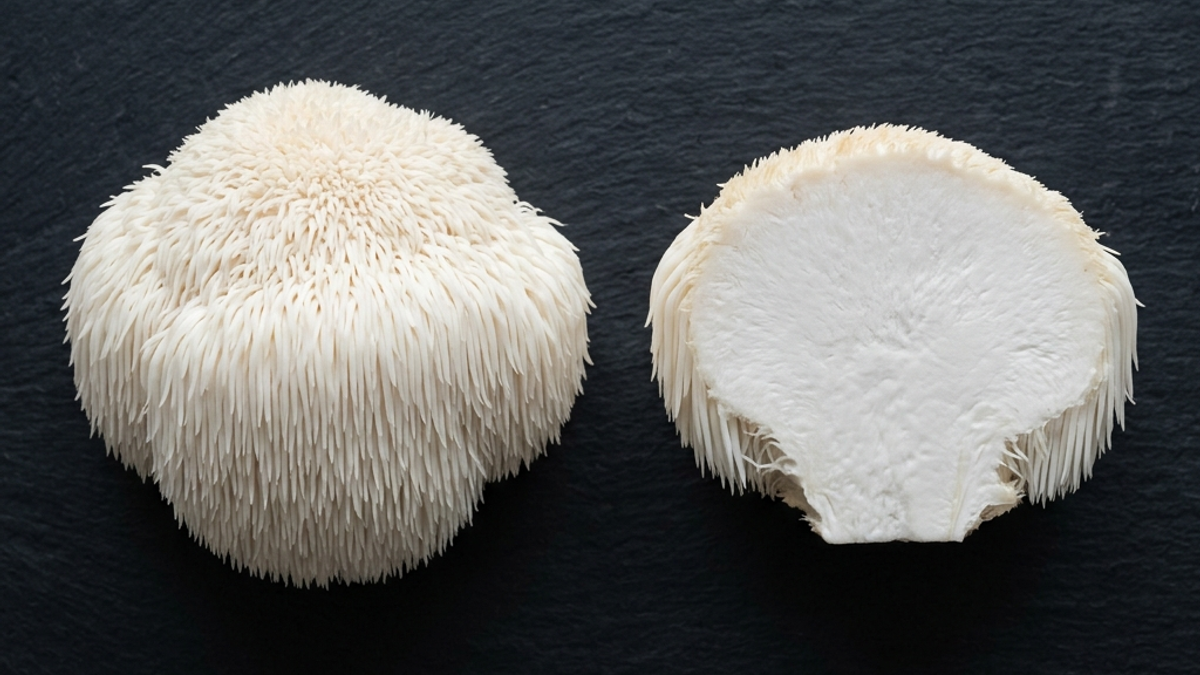
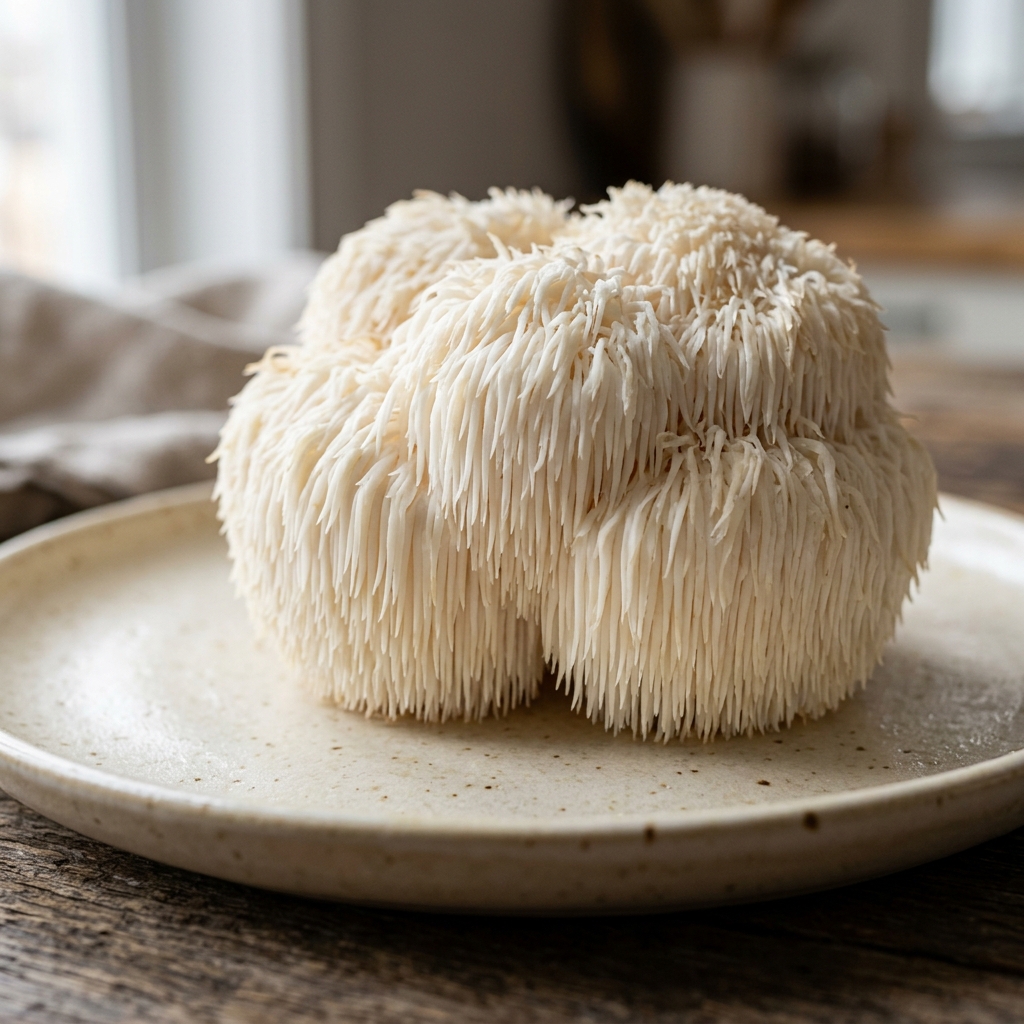
The focus people chase in "mushroom coffee for focus" mostly comes from the lion's mane, not the coffee. Lion's mane is studied for cognition and mental clarity on its own — which means you can get that support without caffeine at all. If the jitters or the afternoon crash are the problem, a caffeine-free lion's mane mix-in gives you the focus part without the stimulant.

If you're searching for "mushroom coffee for focus," you've probably noticed the promise: sharper concentration, fewer jitters, no 2 p.m. crash. It's a real benefit worth chasing — but it helps to know where it actually comes from. Because once you do, the caffeine starts to look optional.
Here's the short version: in most mushroom coffees, the focus-related ingredient is lion's mane, and lion's mane has been studied for cognition on its own — no caffeine required. The coffee base adds caffeine's quick alertness on top, but the mushroom is the part doing the cognitive work. So if the jitters or the crash are exactly what you're trying to avoid, you can keep the focus ingredient and drop the stimulant.
What actually drives the focus in mushroom coffee?
It's the lion's mane. In a 2023 double-blind, placebo-controlled trial on pure lion's mane in healthy adults (opens in new tab), participants taking the mushroom on its own — 1.8 g/day, no caffeine in the mix — showed improved cognitive performance and a trend toward lower subjective stress (which didn't reach statistical significance) versus placebo. The cognitive result is the clean one — and the key detail is that it showed up without a stimulant attached.
The mechanism researchers point to is structural rather than stimulating. It centers on nerve-growth signaling — a review of how neurotrophins like NGF and BDNF support neuronal survival and plasticity (opens in new tab) lays out why that pathway matters for how the brain maintains and adapts its connections. (We go deeper on exactly how this works in the pharmacology of lion's mane.)
Why this matters: caffeine and lion's mane are doing two different jobs. One is a fast stimulant; the other is slow, structural support. When a "mushroom coffee for focus" works, you're feeling a blend of the two — and you can keep the part you actually came for while leaving the part that gives you jitters.
Why caffeine isn't the focus ingredient
Caffeine is genuinely useful — it raises alertness quickly, and that feels like focus. But it works by blocking the brain's "time to wind down" signal, which is why the lift is temporary and often arrives with a cost: the jitters when there's too much, the afternoon dip when it wears off, and disrupted sleep if it's too late in the day.
That's a stimulant doing stimulant things. It isn't building anything; it's borrowing alertness against later. Lion's mane sits in a different category entirely — there's no spike and no crash, because it isn't a stimulant at all. (For the difference between built energy and borrowed energy, see how your gut shapes steady focus and energy.)
So the honest framing is this: if you want a quick jolt, caffeine delivers it. If you want the cognitive-support ingredient that the "mushroom" in mushroom coffee refers to, that's lion's mane — and it doesn't need the coffee to work.
Lion's mane focus, without the jitters
This is where a caffeine-free approach makes sense. A caffeine-free mushroom mix-in gives you the lion's mane (and, in our case, the rest of a seven-mushroom blend plus pre-, pro-, and postbiotics) with no stimulant attached. You stir it into whatever you're already drinking — water, milk, a smoothie, even your own coffee if you still want the caffeine on your own terms.
The practical upshot for focus:
- No jitters, because there's no stimulant to overshoot on.
- No afternoon crash, because there's nothing to wear off.
- Any time of day, including late, because caffeine isn't dictating your timing.
If you came to "mushroom coffee" specifically to cut caffeine, it's worth knowing that "decaf" isn't the same as caffeine-free — decaf coffee still carries a small amount. We break that down in decaf mushroom coffee: is it really caffeine-free?
What about the dose?
Focus support is only real if the lion's mane is actually there in a meaningful amount. The clinical research clusters around 1,000–3,000 mg per day of fruiting-body powder — the 2009 cognition trial used 3,000 mg/day, and the 2023 healthy-adult study above used 1.8 g/day. Two things to check on any label:
- Is the lion's mane dose stated — in milligrams, on its own — rather than hidden inside a "proprietary blend" total? (Here's how to read a mushroom supplement label.)
- Is it fruiting body, not mycelium-on-grain? The studied compounds concentrate in the fruiting body — more on fruiting body vs. mycelium.
A product can say "lion's mane for focus" on the front and still under-deliver if the answer to either question is no.
How to actually use it for focus
The least glamorous part is the most important: consistency. Nearly every study that found a cognitive benefit ran for weeks — 4, 16, 28 days — not a single dramatic dose. Lion's mane rewards a daily habit, the same way training or sleep does. A real amount, taken every day, is the version of this that does something.
So the routine is simple: a daily caffeine-free mix-in, taken whenever fits your day, kept up for a few weeks before you judge it. No timing rules, no crash to plan around.
The bottom line
"Mushroom coffee for focus" works because of the lion's mane, not the coffee — and lion's mane has been shown to support cognition on its own, with no caffeine in sight. If the jitters, the crash, or the sleep hit are why you're looking, you can keep the focus ingredient and lose the stimulant. That's exactly what a caffeine-free mix-in is for: the blend we built around that idea puts the full lion's mane dose on the label, and our science page lays out the evidence behind it. For the whole category in one place, start with the caffeine-free energy & focus guide.
References
- Docherty S, Doughty FL, Smith EF. The acute and chronic effects of lion's mane mushroom supplementation on cognitive function, stress and mood in young adults: a double-blind, parallel groups, pilot study. Nutrients. 2023;15(22):4842. PMID: 38004235. https://pubmed.ncbi.nlm.nih.gov/38004235/ (opens in new tab)
- Fiore M, Terracina S, Ferraguti G, et al. Brain neurotrophins and plant polyphenols: a powerful connection. Molecules. 2025;30(12):2657. PMID: 40572619. https://pubmed.ncbi.nlm.nih.gov/40572619/ (opens in new tab)
- Mori K, Inatomi S, Ouchi K, Azumi Y, Tuchida T. Improving effects of the mushroom Yamabushitake (Hericium erinaceus) on mild cognitive impairment: a double-blind placebo-controlled clinical trial. Phytotherapy Research. 2009;23(3):367–372. PMID: 18844328. https://pubmed.ncbi.nlm.nih.gov/18844328/ (opens in new tab)