
Can You Replace Your Afternoon Coffee? A Realistic Plan
Scientifically reviewed by Dr. Danielle Oncer, PharmD (pharmacology, dosing & safety).
Short answer
Yes — you can replace your afternoon coffee, but it helps to be honest about what you're swapping. The first cup wakes you up; the second or third is usually about habit, ritual, and pushing through a slump. A caffeine-free coffee alternative for energy won't give you a stimulant jolt — it supports steadier, built energy instead. The realistic plan is to ease caffeine down gradually rather than quit cold, and let a mushroom mix-in take over the ritual.
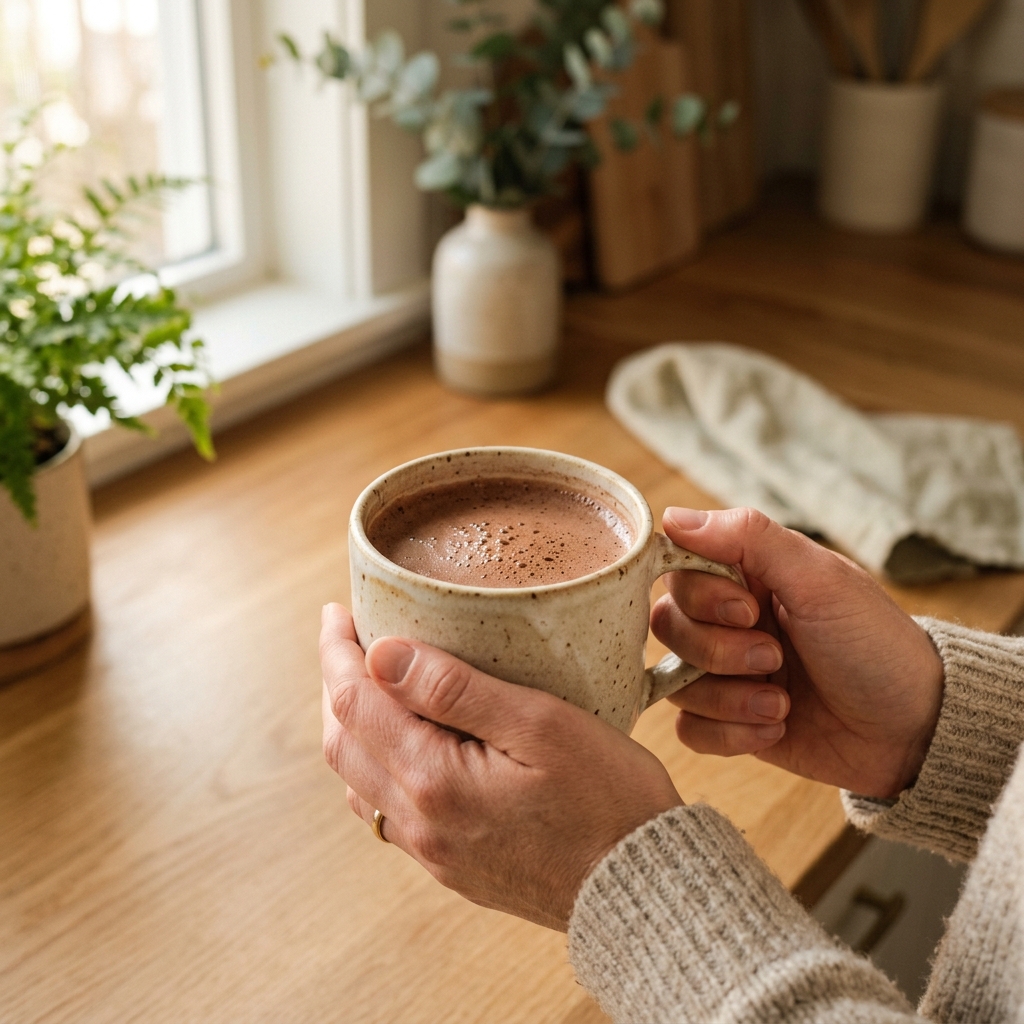
If you're hunting for a coffee alternative for energy to get through the afternoon, the honest first question isn't what to drink — it's what your afternoon coffee is actually doing for you. Because once you separate the real wake-up from the habit, replacing that 2 p.m. cup gets a lot more realistic. The short answer: yes, you can replace it — but the swap works best when you ease caffeine down gradually and let something calmer take over the ritual, rather than expecting a caffeine-free mix-in to hit like a second espresso. It won't, and that's the point.
Here's the plan, laid out honestly. We'll cover what the afternoon cup is really for, what a caffeine-free swap can and can't replace, and a gentle, step-by-step way to make the switch without the headache (literal or otherwise).
What is your afternoon coffee actually doing?
The first coffee of the day does real work — it clears the overnight grogginess and gets you moving. The afternoon one is usually a different animal. By 2 or 3 p.m., you're often reaching for it to push through a dip rather than to wake up: the lunch lull, the post-meeting fog, the long stretch before the day ends.
That afternoon cup is doing three things at once, and only one of them is caffeine:
- A stimulant lift — caffeine raising alertness for a couple of hours.
- A ritual — standing up, walking to the kitchen, a warm mug, a small break.
- A habit loop — "it's this time, so I have a coffee," whether you need it or not.
Caffeine is the only part a caffeine-free alternative can't reproduce directly. The ritual and the habit, though, are most of why the afternoon cup feels essential — and those transfer cleanly to a different drink. (We unpack why that mid-afternoon dip hits in the first place in why the 2 p.m. slump happens.)
There's also a cost worth naming. Afternoon caffeine has a long tail — its effects can linger for hours and nibble at your sleep, which can make the next afternoon's slump worse. That's the loop a thoughtful swap is trying to break, and it's why we built our blend caffeine-free on purpose.
What a caffeine-free coffee alternative can (and can't) replace
Let's be straight about expectations, because this is where most "swap your coffee" advice quietly oversells. A caffeine-free mushroom mix-in is not a stimulant. It will not give you the fast, twenty-minute jolt that caffeine does. If a sharp chemical lift is exactly what you want, nothing caffeine-free will match it — and pretending otherwise just sets you up for disappointment.
What it can do is support a steadier kind of energy — the kind you build from your own metabolism rather than borrow against later. Two ingredients carry most of that work:
- Cordyceps, studied in the context of energy metabolism. Much of the human evidence is on the Cordyceps militaris species: a 2026 narrative review (opens in new tab) found ergogenic and recovery effects tied to oxygen use and energy metabolism — a fundamentally different mechanism from a stimulant. (It's a narrative review, and the authors note more standardized trials are still needed.) More on that in how cordyceps supports steady energy.
- Lion's mane, studied for cognition. A 2023 double-blind pilot in 41 healthy adults (opens in new tab) found that a single acute dose of lion's mane sped up task performance 60 minutes later versus placebo (p=0.005). (Subjective stress showed only a non-significant trend toward reduced stress, p=0.051, so we don't lean on that — the clean result is the acute cognitive one.)
So the honest framing is this: a caffeine-free mix-in replaces the focus and steady energy you came to the afternoon cup for, plus the ritual — but it supports them gradually, over weeks of consistent use, rather than spiking and crashing. That's the trade. For more on the difference between energy you build and energy you borrow, see built energy vs. borrowed energy.
A realistic, step-by-step switch plan
You don't have to quit caffeine to replace your afternoon coffee, and you definitely don't have to do it overnight. Cutting caffeine abruptly is what causes the headaches, the flat days, and the irritability that make people give up by Wednesday. Easing down is gentler and far more likely to stick, and we lay out a gentle two to three week caffeine taper step by step. (This is general, non-medical guidance — if you have a health condition or take medication, talk to your clinician before changing your caffeine intake.)
Here's a four-week version that keeps things calm:
- Week 1 — keep mornings, swap the afternoon ritual. Leave your morning coffee exactly as it is. Replace only the afternoon cup with a caffeine-free mushroom mix-in. You keep the break, the warm drink, and the pause — you just drop the afternoon stimulant.
- Week 2 — let the ritual settle. Use the mix-in at the same time each day so it becomes the new habit cue. Because there's no caffeine, timing is forgiving — you can have it late without it touching your sleep.
- Week 3 — trim the morning if you want to. Optional: ease your morning coffee down (a smaller cup, or half-caf) if cutting back further is your goal. No pressure here — plenty of people keep their morning coffee indefinitely.
- Week 4 — judge it by your afternoons. Notice the shape of your day rather than chasing a single surge. Built energy shows up as fewer dramatic dips, not one big spike.
A few practical notes. The mix-in stirs into water, milk, or a smoothie — or even your own coffee, if you want to keep some caffeine on your own terms during the transition. And if "decaf" was your plan B, it's worth knowing decaf isn't caffeine-free — it still carries a small amount of caffeine per cup. We cover exactly how much, and why, in is decaf mushroom coffee really caffeine-free?
A note on the mushroom-coffee category
If you've browsed the shelf, you've seen mushroom coffees and teas. Most are coffee- or tea-based, so they contain caffeine. That's a legitimate choice if you want some caffeine with your mushrooms. Our approach is different: we're a caffeine-free mix-in, so the "alternative" in coffee alternative for energy is literal — no coffee, no added caffeine, just the functional blend. We go deeper on that distinction in the caffeine-free mushroom coffee alternative.
Setting your expectations the right way
Give the switch a few weeks before you decide. The first few days can feel flat while caffeine winds down — that's the adjustment, not the verdict. The research that found cognitive benefits from lion's mane ran across 28 days of consistent use, and consistency is genuinely the active ingredient here. A real amount, taken daily, is the version of this that does something.
And keep the bar honest. You're not trying to recreate a caffeine spike with a different powder — you're trading a borrow-and-crash pattern for steadier support that holds across the afternoon. If you measure it against an espresso shot, it'll lose. If you measure it against how your 4 p.m. actually feels over a couple of weeks, that's where a caffeine-free approach tends to earn its place. For the bigger picture on dosing and consistency, see our functional mushroom dosing primer.
The bottom line
You can replace your afternoon coffee — not by faking a stimulant, but by being honest about what that cup was really for and swapping it for steadier, built energy plus the ritual you'd miss. Ease caffeine down gradually, keep the morning cup if you love it, and let a caffeine-free mix-in take over the afternoon for a few weeks before you judge it. That's the whole idea behind the blend we formulated and the evidence we lay out on our science page. For the full category in one place, start with the caffeine-free energy & focus guide.
References
- Jędrejko M, Jędrejko K, Granda D, et al. Current evidence of ergogenic and post-exercise recovery effects of dietary supplementation with Cordyceps militaris in humans — a narrative review. Nutrients. 2026;18(5):781. PMID: 41829950. https://pubmed.ncbi.nlm.nih.gov/41829950/ (opens in new tab)
- Docherty S, Doughty FL, Smith EF. The acute and chronic effects of lion's mane mushroom supplementation on cognitive function, stress and mood in young adults: a double-blind, parallel groups, pilot study. Nutrients. 2023;15(22):4842. PMID: 38004235. https://pubmed.ncbi.nlm.nih.gov/38004235/ (opens in new tab)