The Gut–Brain Axis: How Your Gut Shapes Focus and Mood
Scientifically reviewed by Dr. Danielle Oncer, PharmD (pharmacology, dosing & safety).
Short answer
The gut–brain axis is the two-way communication network linking your digestive tract and your brain through nerves, hormones, the immune system, and the compounds your gut bacteria make. Because that line runs constantly, the state of your gut can show up as focus, mood, and steady energy — not just digestion.

You've probably felt it without naming it. A heavy, sluggish gut and a foggy head tend to show up on the same day. A settled stomach and a clear afternoon tend to travel together too. That isn't a coincidence, and it isn't woo — it's a physical communication line called the gut–brain axis, and it's one of the most useful ideas in everyday wellness once you understand what it actually is.
A note before we go further: this is education, not medical advice, and nothing here treats or cures a condition. We're talking about how your body normally works, and why supporting one part of it (the gut) can show up somewhere that looks unrelated (focus, mood, and steady energy).
What the gut–brain axis actually is
The gut–brain axis is the two-way communication network between your digestive tract and your brain. The two are wired and chemically connected, and they talk constantly through four main channels: the nervous system (especially the vagus nerve), hormones, the immune system, and the molecules your gut bacteria release. Signals travel in both directions — the brain influences the gut, and the gut influences the brain.
The reason this matters for daily life is captured in a foundational review in Nature Reviews Neuroscience (opens in new tab), which describes how the gut microbiome can influence brain function and behavior through this network. It's a review of the underlying science rather than a trial of any supplement, so I'll keep the claim where it belongs: this is the mechanism that explains why gut health and how you feel day to day are linked. It is not a promise that any single ingredient rewires your mood.
That distinction is the whole point of writing this carefully. The axis is real and well-documented. How strongly any one person feels it varies — and you deserve to hear that nuance instead of a tidy overpromise.
Why your gut is, chemically, a busy place
Here's the fact that reframes everything for most people. The large majority of your body's serotonin — by standard physiology, around 90% — is produced in the gut, not the brain.
We know that gut bacteria have a hand on those dials thanks to a 2015 study in Cell (opens in new tab) showing that indigenous gut microbes help regulate the host's serotonin biosynthesis. In that work, mice raised without gut bacteria (germ-free) made far less of this gut serotonin; reintroducing specific bacteria brought production back up. In other words, the microbes living in your gut aren't passive passengers — they participate directly in the body's chemistry.
Two honest caveats belong right here, because this is the kind of claim that gets stretched in supplement marketing:
- That mechanism was demonstrated in mice, and the ~90% figure is standard physiology, not a result about any product.
- Most of that gut-made serotonin acts locally — on digestion and gut signaling — and does not simply cross into the brain. So this is a point about where the chemistry happens and who influences it, not a claim that eating a certain food raises the serotonin in your head or changes your mood.
I mention the limits on purpose. As the physiology nerd in this company, I'd rather tell you exactly what the evidence shows than let an impressive number do work it can't honestly do. The takeaway is modest but real: the gut is a major chemical hub, and the microbes there help run it.
How "gut health" turns into focus, mood, and energy
Put the two ideas together — a constant two-way communication line, and a gut full of microbes that participate in the body's chemistry — and the everyday experience makes sense.
When the gut ecosystem is balanced and well-fed, the channels of the axis are running smoothly: the nerves, the immune signaling, and the bacterial byproducts that feed and inform the rest of the body. That's the physiological backdrop many people are describing when they say a settled gut comes with steadier focus and a more even mood. When the ecosystem is struggling, the same line carries that, too — which is one reason you can feel foggy and flat even after a decent night's sleep.
This is exactly why we treat the gut as a foundation rather than a niche topic. It connects to the broader story of caffeine-free focus and steady daily energy — the lane we dig into across our complete guide to gut health, the hub this post belongs to, and the broader functional mushrooms guide. If you want the energy-and-focus angle specifically, how the gut microbiome drives energy and focus and five ways mushrooms support gut health, focus, and energy pick up that thread.
Where mushrooms and the microbiome fit
Functional mushrooms aren't probiotics — they don't add live bacteria. They're prebiotic-acting: several of their beta-glucans and other polysaccharides act as food for the resident bacteria you already have. That's the quiet link between a mushroom blend and the gut–brain axis. A lot of what these ingredients do, they do through a healthy gut rather than around it.
A few examples from our blend, framed honestly:
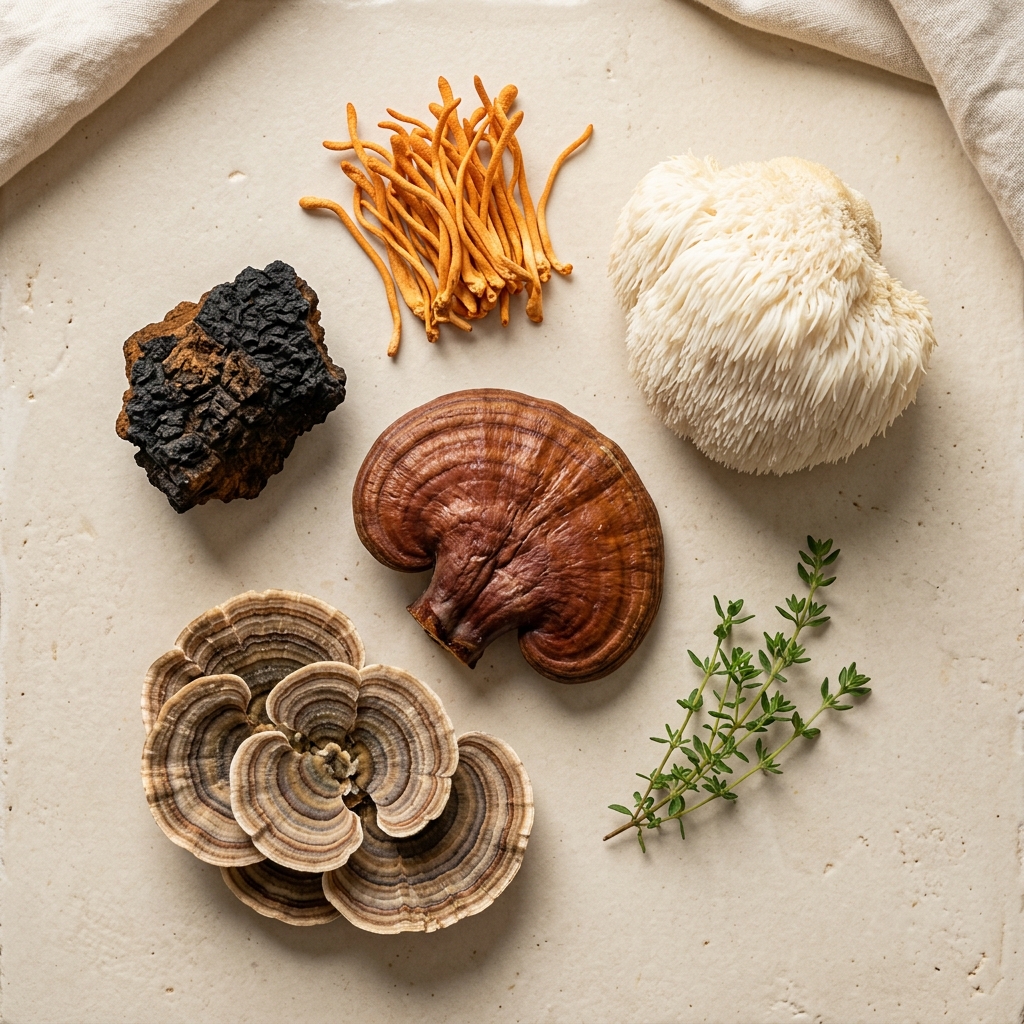
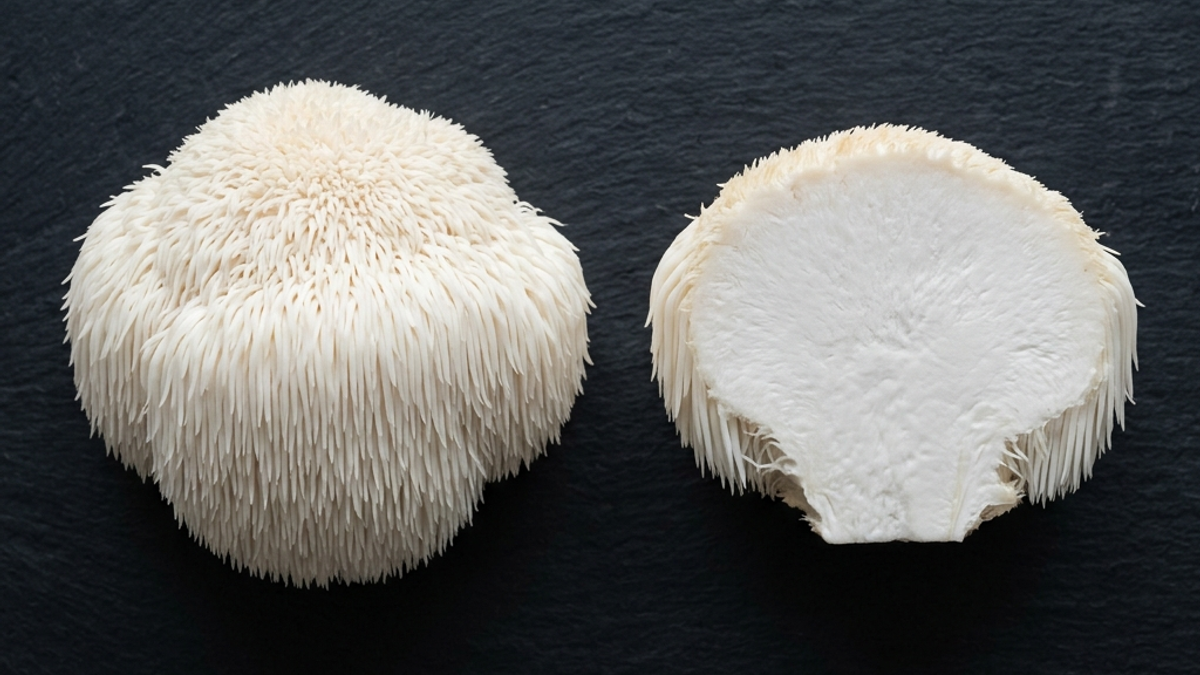
- Lion's Mane (Hericium erinaceus) supports memory and focus — caffeine-free, without overstimulation. The mechanism is genuinely interesting, and I get into how dose, extraction, and your gut decide whether it works at all in the pharmacology of lion's mane.
- Cordyceps supports stamina and steady energy: the kind that carries a long day, not a workout.
- Turkey Tail (Trametes versicolor) supports gut flora and immune balance; its beta-glucans are part of the prebiotic-acting fiber story.
- Reishi (Ganoderma lucidum) supports a calm, healthy stress response — resilience rather than a sleep cure — which helps keep the gut–brain conversation from running hot.
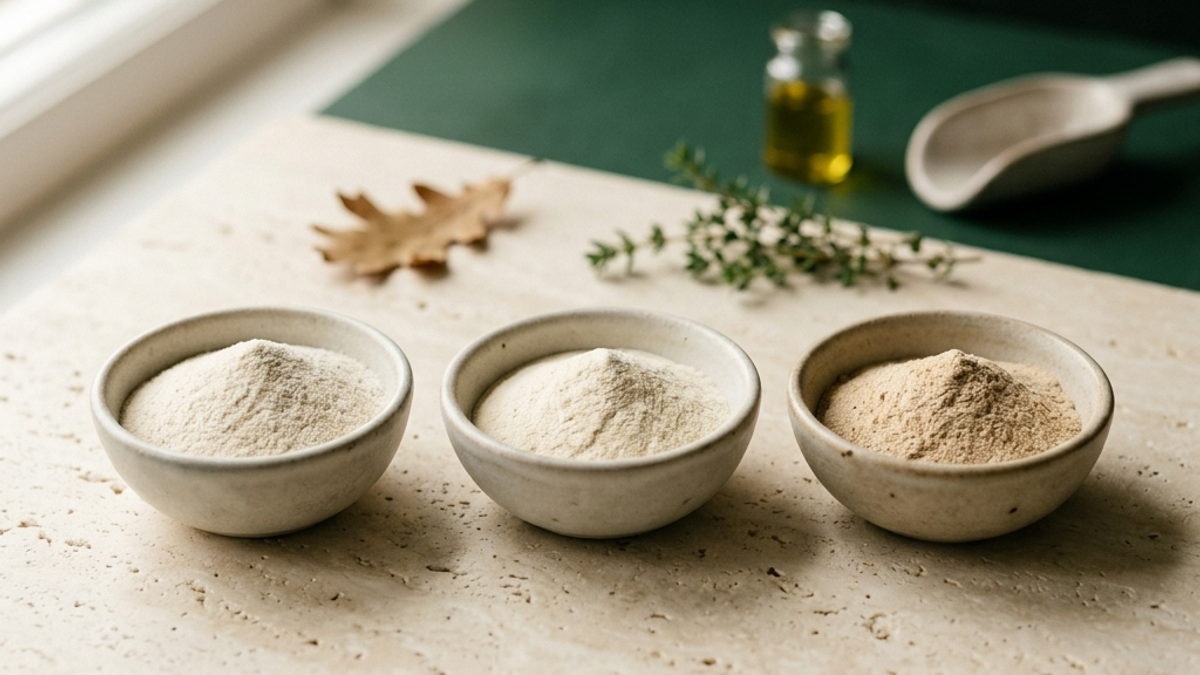
Our mushrooms are dual-extracted — no fillers — because extraction is part of what decides whether those beta-glucans actually reach your gut. That's a transparency point we take seriously, and the full reasoning lives on our science page. If you want to apply this thinking to anything on the shelf, how to read a mushroom supplement label is the practical companion.
What this means for you (and what it doesn't)
The gut–brain axis is a strong reason to treat your gut as a foundation for how you feel — but it's a foundation, not a switch. Feeding your microbiome well, consistently, supports the normal functions tied to focus, mood, and energy. It does not treat a condition, and it works on the microbiome's timescale: human studies of fiber and beneficial bacteria typically measure shifts over several weeks to a few months, not hours. Consistency beats any single heroic dose.
A quick, important note in case it applies to you: if you're pregnant or nursing, taking prescription medications, immunocompromised, or managing a medical condition, talk with a pharmacist or physician before starting a probiotic or any new supplement. A two-minute conversation can catch an interaction and help you choose something that genuinely fits your life.
The bottom line
Your gut and your brain are on the same line, all day. That's why "gut health" quietly shows up as focus, mood, and steady energy — and why we built Shroombiosis to support the gut as a foundation rather than chase a single feeling. Real energy isn't borrowed from a cup; it's built from the inside out, with the full reasoning laid out on our science page.
References
- Cryan JF, Dinan TG. Mind-altering microorganisms: the impact of the gut microbiota on brain and behaviour. Nature Reviews Neuroscience. 2012;13(10):701–712. PMID: 22968153 (opens in new tab) · doi:10.1038/nrn3346 (opens in new tab)
- Yano JM, Yu K, Donaldson GP, et al. Indigenous bacteria from the gut microbiota regulate host serotonin biosynthesis. Cell. 2015;161(2):264–276. PMID: 25860609 (opens in new tab) · doi:10.1016/j.cell.2015.02.047 (opens in new tab)