How Your Gut Microbiome Fuels Real Energy and Focus
Scientifically reviewed by Onur Oncer, B.S. (B.S. Physiology, published researcher).
Short answer
Most of your steady energy and focus trace back to your gut, not caffeine. A balanced microbiome helps make neurotransmitters, feed your cells, and run the gut-brain axis. Feeding it well with fiber, beneficial bacteria, and their byproducts supports energy you build instead of borrow.
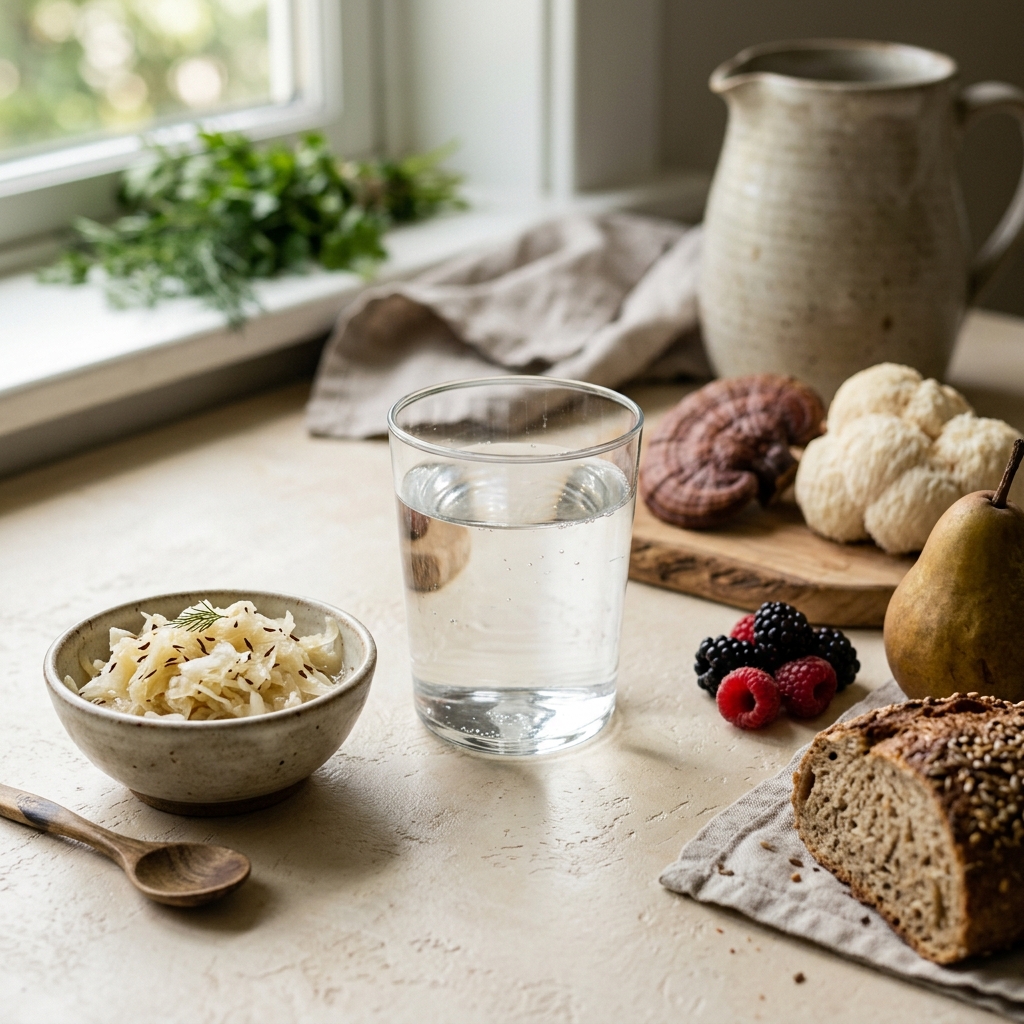
Your body is an ecosystem — one that runs well or runs ragged depending on how you feed it. Most people think of "energy" as something you pour from a cup. But the more interesting source of steady, lasting energy isn't caffeine; it's your gut. As a pharmacist, it's the system I keep coming back to, because so much of how you feel downstream starts there.
A note before we go further: this is education, not medical advice, and nothing here treats or cures a condition. We're talking about supporting normal functions your body already performs — the kind of slow, steady support you build over weeks, not a switch you flip.
The ecosystem you're feeding
Inside you lives a vast community of microbes — bacteria, fungi, and the compounds they produce. This ecosystem doesn't just digest food. It helps manufacture neurotransmitters, supports your immune system, and interacts with the way your body manages inflammation. Think of it less like a single organ and more like a garden: what you feed it decides what grows, and what grows decides how you feel.
Here's the part that surprises people. The large majority of your body's serotonin — by most estimates around 90% — is produced in the gut, not the brain. We know specific gut bacteria help drive that production thanks to a 2015 study in Cell (opens in new tab) showing that indigenous gut microbes regulate the body's serotonin synthesis. Serotonin is one of the signals tied to mood and motivation, so when the gut community is out of balance, it isn't a stretch to say your energy and focus can feel it too.
That study was done in mice, and the ~90% figure is standard physiology rather than a promise about any product. I mention the limitation on purpose: I'd rather tell you exactly what the evidence shows than overstate it. The honest takeaway is simple — the gut is a serotonin factory, and the microbes living there have a hand on the dials.
The gut-brain axis, briefly
The reason gut health shows up as focus and energy — not just digestion — is a two-way communication line called the gut-brain axis. Your gut and your brain talk constantly through nerves, hormones, the immune system, and the molecules your bacteria release. A foundational review in Nature Reviews Neuroscience (opens in new tab) describes how the microbiome can influence brain function and behavior through this network.
It's a review of the science rather than a trial of any supplement, so I'll keep the claim where it belongs: this is why a calm, well-fed gut tends to track with a clearer head, not a guarantee that any single ingredient rewires your mood. The mechanism is real and well-documented. How strongly any one person feels it varies — which is exactly the kind of nuance I think you deserve to hear.
This is also where the lane quietly widens. The microbiome's role in everyday wellbeing touches a lot of lives, and it's a foundation worth tending for anyone — something we explore further in the broader guide to functional mushrooms this post belongs to.
Where mushrooms come in
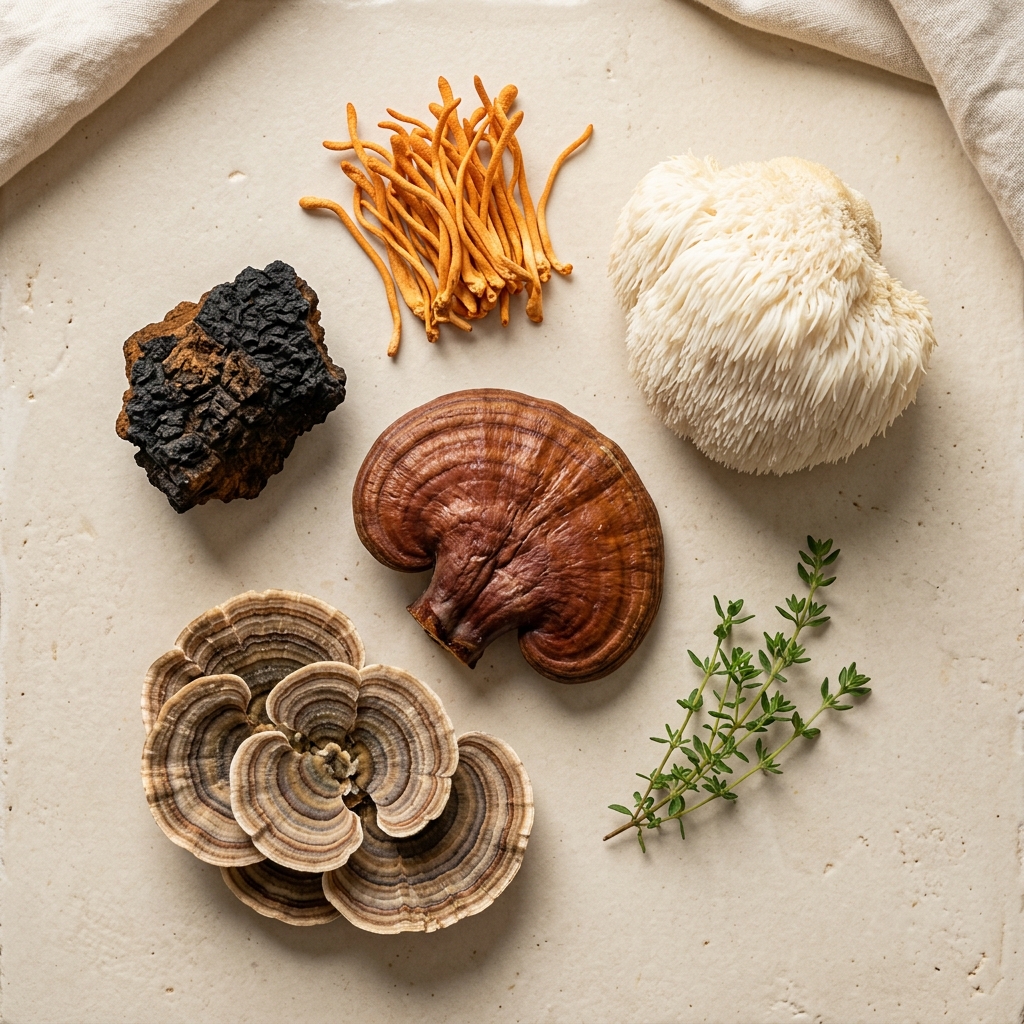
Functional mushrooms like lion's mane, reishi, chaga, and cordyceps have been used for focus, stamina, and resilience for a very long time. Modern research points to beta-glucans and other polysaccharides as the fractions that engage the body — including the gut, where some of these fibers act as food for your resident bacteria. The throughline that matters for energy is this: mushrooms don't act in isolation; a lot of what they do, they do through a healthy gut.
- Lion's mane supports memory and focus through its studied role in neuron maintenance — without overstimulation, and without caffeine. The mechanism is genuinely interesting and worth its own read in the pharmacology of lion's mane, where I get into how dose, extraction, and your gut decide whether it works at all.
- Cordyceps supports stamina and steady energy — the kind that carries a long day, not a workout. We frame it as daily-life endurance because that's our lane.
- Reishi supports a calm, healthy stress response and a settled nervous system — resilience rather than a sleep cure — which helps keep the gut-brain conversation from running hot.
Every mushroom in our blend is a dual-extracted fruiting body — no mycelium-on-grain, no fillers — because extraction is part of what decides whether those beta-glucans actually reach you. That's a transparency point we take seriously, and you can see the whole rationale on our science page.
The chain only works if it's complete
This is the formulation point I care about most. Mushrooms support the gut, but the gut works best when the whole chain is supported — and that chain has three distinct links people constantly blur together:
- Prebiotics — the fibers that feed the good bacteria you already have. Our prebiotic is acacia fiber (gum arabic). In a 2024 randomized, placebo-controlled fiber trial in healthy adults (opens in new tab), a fiber supplement shifted the composition of the gut microbiome over twelve weeks, while the metabolic and inflammatory resilience markers were unchanged. (Worth noting honestly: that supplement combined acacia with carrot powder, so I read it as support for the prebiotic-fiber principle, not proof of acacia alone.)
- Probiotics — live beneficial bacteria you add to the mix. Ours is the spore-forming Bacillus subtilis DE111®. In a double-blind, placebo-controlled trial in healthy adults (opens in new tab), DE111® shifted the systemic immune profile toward more anti-inflammatory immune-cell populations — while gut microbiota and GI markers were largely unchanged — and was safe and physiologically active. It was a small pilot in healthy people, so I'd call it maintenance and support — not treatment.
- Postbiotics — the beneficial compounds bacteria produce, here delivered as a heat-treated, non-live form (Bifidobacterium animalis subsp. lactis CECT 8145 (BPL1® HT)). It's the newest link in the chain and a genuinely useful one: a postbiotic doesn't have to stay alive to be active.
Together, prebiotic + probiotic + postbiotic support the entire chain from the inside out — which is why we built Shroombiosis around all three instead of tossing in a single strain and calling it a gut formula.
There's a practical bonus to DE111® that I love as a pharmacist: it's heat-stable. Most probiotics are fragile and hate a hot drink. A spore-forming strain can ride out the heat of your morning coffee, which means the "stir it into whatever you're already drinking" habit actually delivers something. For the lighter, five-point version of how mushrooms and the gut work together, see five ways mushrooms support gut health, focus, and energy.
How long does this take?
Honestly? Longer than a cup of coffee, and that's the point. The human studies above measured changes over four to twelve weeks, because the microbiome shifts on a biological timescale, not a marketing one. I'd give any gut-supporting routine a fair, daily trial of several weeks before judging it — consistency does more than any single heroic dose. Real energy is something you accumulate.
A quick, important caveat in my professional voice: if you're pregnant or nursing, taking prescription medications, immunocompromised, or managing a medical condition, talk with a pharmacist or physician before starting a probiotic or any new supplement. I'd genuinely rather you ask first. A two-minute conversation can catch an interaction and help you pick something that fits your actual life.
The bottom line
Caffeine borrows energy from later in your day. Supporting your microbiome builds it. Real energy, not borrowed energy — because your search bar can't fix your gut, but feeding your microbiome well, consistently, can support it. That's the whole idea behind how we formulate the blend, with the full reasoning laid out on our science page.
References
- Yano JM, Yu K, Donaldson GP, et al. Indigenous bacteria from the gut microbiota regulate host serotonin biosynthesis. Cell. 2015;161(2):264–276. PMID: 25860609 (opens in new tab) · doi:10.1016/j.cell.2015.02.047 (opens in new tab)
- Cryan JF, Dinan TG. Mind-altering microorganisms: the impact of the gut microbiota on brain and behaviour. Nature Reviews Neuroscience. 2012;13(10):701–712. PMID: 22968153 (opens in new tab) · doi:10.1038/nrn3346 (opens in new tab)
- Eveleens Maarse BC, Eggink HM, Warnke I, et al. Impact of fibre supplementation on microbiome and resilience in healthy participants: a randomized, placebo-controlled clinical trial. Nutrition, Metabolism & Cardiovascular Diseases. 2024;34(6):1416–1426. PMID: 38499450 (opens in new tab) · doi:10.1016/j.numecd.2024.01.028 (opens in new tab)
- Freedman KE, Hill JL, Wei Y, et al. Examining the gastrointestinal and immunomodulatory effects of the novel probiotic Bacillus subtilis DE111. International Journal of Molecular Sciences. 2021;22(5):2453. PMID: 33671071 (opens in new tab) · doi:10.3390/ijms22052453 (opens in new tab)