Antioxidants, Vitality & Aging Well: What Holds Up
Scientifically reviewed by Dr. Danielle Oncer, PharmD (pharmacology, dosing & safety).
Short answer
The honest answer on antioxidants and vitality is that the day-to-day evidence is early. Chaga shows high antioxidant capacity in lab and animal studies, but there are no human trials, so it stays in the traditional-use and preclinical lane. Adaptogen research describes a plausible stress-resilience mechanism, not proof of an anti-aging effect. We frame vitality as steady energy and antioxidant support, never as slowing aging.
If you have searched for antioxidants and vitality, you have probably waded through a lot of confident promises about slowing aging and feeling decades younger. Here is the calm, honest version. Antioxidants are real compounds that help the body manage oxidative stress, and "vitality" is a reasonable way to describe steady energy and resilience day to day. But the specific evidence for the antioxidant-rich mushrooms people ask about is early — much of it is laboratory and animal work, not human trials. So this post sticks to what holds up: the established physiology, the preliminary signals, the traditional uses, and a clear line where the evidence stops. We frame vitality as structure and function, never as a way to slow aging or change your hormones.
What "antioxidants and vitality" really means
Oxidative stress is not a marketing word. Your cells generate reactive molecules as a normal consequence of turning food and oxygen into energy, and the body has its own antioxidant systems to keep that chemistry in balance. Dietary antioxidants — the compounds concentrated in colorful plants, berries, cocoa, and some fungi — are part of how that balance is supported from the outside. That is established physiology and needs no citation.
Where the language gets slippery is "vitality." We use it in a deliberately modest, structure/function sense: steady daily energy, a feeling of resilience, and antioxidant support as part of a normal healthy routine. We do not use it to mean anti-aging, longevity, testosterone, or anything that crosses into treating a condition. "Aging well" here is a lifestyle idea — sleep, movement, food, stress management — not a claim that any powder slows the clock. That distinction is the whole spine of this post.
Chaga and antioxidants: rich in the lab, quiet in the clinic
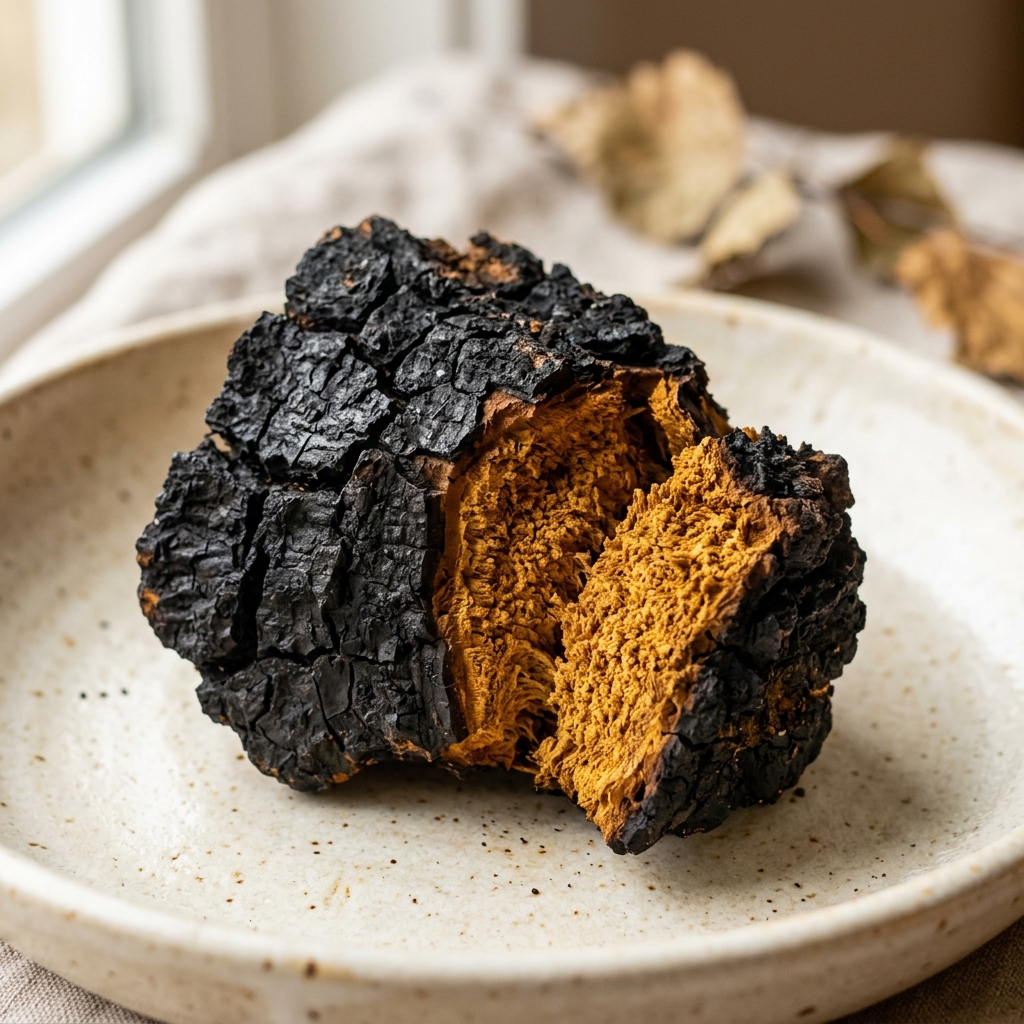
Chaga (Inonotus obliquus) is the ingredient people most often have in mind when they ask about antioxidants and vitality, and there is a real reason for that. A 2026 review in Molecules (opens in new tab) documents chaga's antioxidant capacity in laboratory and animal studies, driven by antioxidant compounds such as phenolics. That is a genuine, repeatable finding about the chemistry of the mushroom.
Here is the caveat we will not bury: there are no high-quality human trials behind it. The antioxidant capacity has been measured in test tubes and animal models, which tells us about the compound's properties, not about what it does in a person over weeks or years. So chaga belongs in the traditionally used and preclinical lane. We can honestly say chaga has been traditionally valued and that preclinical studies show high antioxidant activity. We cannot, and do not, say it delivers a human antioxidant benefit, supports healthy aging in people, or does anything to your vitality that has been demonstrated in a clinical trial. If you want the longer version of where chaga's claims stand, our piece on chaga's traditional claims versus what's actually been studied walks through it carefully.
That gap — impressive lab chemistry, missing human data — is exactly the kind of nuance the supplement aisle tends to skip. We would rather show it to you.
Adaptogens, stress, and a more honest take on resilience
"Vitality" overlaps a lot with how the body handles stress, which is where the idea of adaptogens comes in. A 2010 review in Pharmaceuticals (opens in new tab) defines adaptogens and describes their proposed stress-protective mechanism, acting on the central nervous system and the HPA stress axis to help the body adapt to load. It is a useful framework for understanding why certain mushroom and plant compounds are studied for resilience rather than for a quick lift.
Read it for what it is, though. This is a mechanism review, not product proof. It explains a plausible pathway by which stress-resilience ingredients might work; it does not show that a given blend produces a measured vitality outcome in you. So when we talk about resilience, we mean the mechanism and the tradition, not a guaranteed effect. Reishi is the mushroom most associated with this calm, steady framing, and we cover it in reishi for calm and stress — again, with the mechanism and traditional use leading, and the human evidence described honestly. Steady energy, the kind you build rather than borrow, is a related idea we unpack in built energy versus borrowed energy.
Where antioxidants fit into aging well
Aging well is not the achievement of any single ingredient. It is overwhelmingly the boring, durable stuff: sleep, regular movement, a diet heavy on plants, not smoking, and managing stress. A varied, colorful diet supplies a wide range of dietary antioxidants as a natural part of that pattern, which is a far stronger foundation than leaning on one compound to do the work.
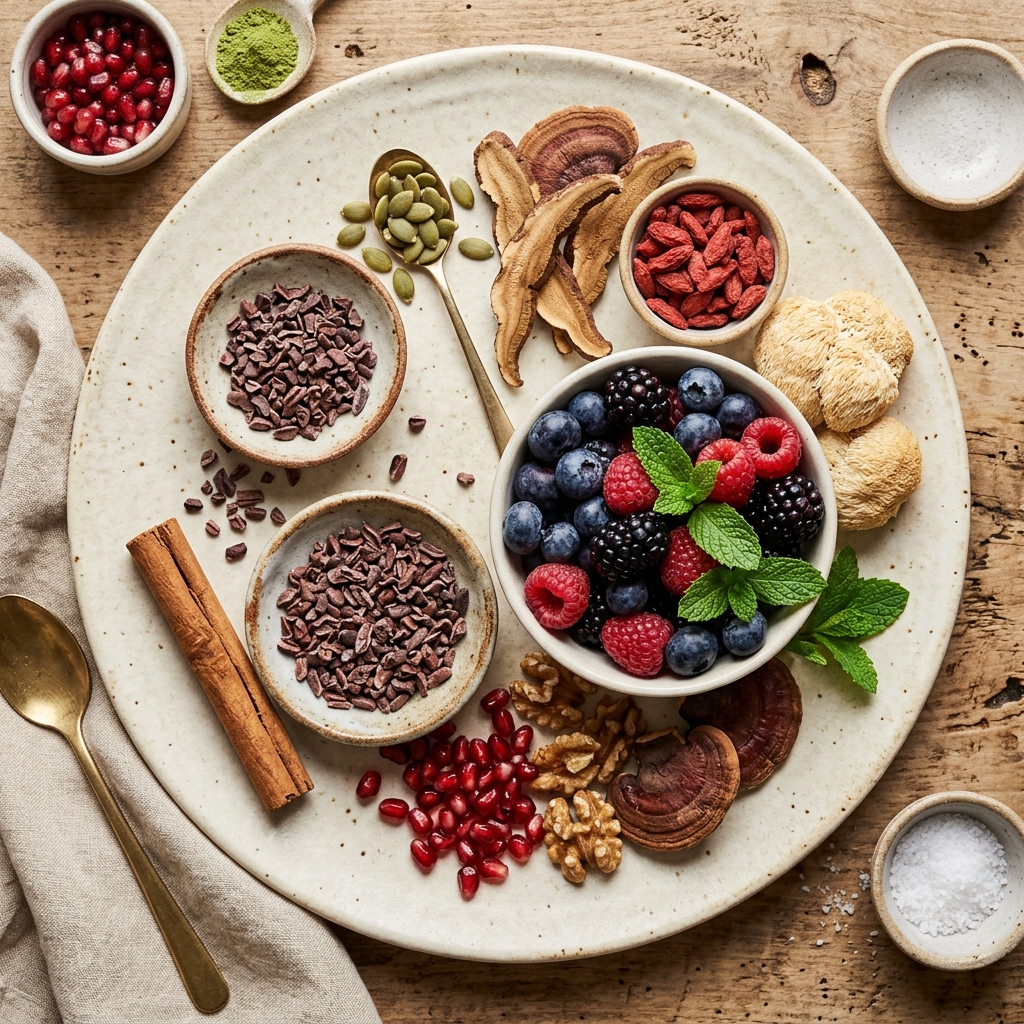
So the honest role for an antioxidant-supporting blend is support layered onto good habits, not a shortcut around them. We are comfortable saying a mushroom-and-superfood mix can contribute dietary antioxidant support and steady, caffeine-free energy as part of a healthy routine. We are not comfortable — and the evidence does not allow us — saying it slows aging, extends lifespan, or restores anything. If you are thinking about energy specifically, our companion post on men's energy without stimulants takes the daily-life angle, and the broader circulation and cardiovascular wellness piece covers the related, and similarly dose-honest, story on blood flow.
How to think about a mushroom and superfood mix for vitality
If you decide a blend belongs in your routine, treat it the way the evidence suggests — as steady support, not a single dramatic dose.
- Set grounded expectations. Aim for steady energy and antioxidant support as part of your day, not a transformation. The honest framing is the useful one.
- Give it consistent weeks. Functional ingredients reward a daily habit far more than an occasional big serving. Steady beats spiky.
- Build the base first. Sleep, movement, and a plant-rich diet do the heavy lifting; a blend is a layer on top, not a replacement.
- Read the label. Know what is in the cup and at what level, so your expectations match the actual formulation rather than the marketing.
That last point is the brand's spine: every dose on the label. The seven fruiting-body mushroom extracts, superfoods, and pre-, pro-, and postbiotics in our blend are listed transparently, and our how we formulate page lays out the dose-honest philosophy behind it. For the wider context on what functional mushrooms can and cannot do, our functional mushrooms guide is the place to start.
The bottom line
On antioxidants and vitality, what holds up is modest and worth saying plainly: chaga shows high antioxidant capacity in preclinical studies but has no human trials behind it, adaptogen research describes a stress-resilience mechanism rather than a proven outcome, and aging well is built mostly from daily habits. We frame vitality as steady energy and antioxidant support — never as slowing aging — because that is the version the evidence actually supports. Real support is built from the inside out and over time, which is the whole idea behind how we formulate.
References
- Sadowska A, Włosek-Pawełas D, Car H. Medicinal Mushrooms and Their Bioactive Compounds: From Traditional Use to Therapeutic Potential. Molecules. 2026;31(10):1749. PMID: 42197308. https://pubmed.ncbi.nlm.nih.gov/42197308/ (opens in new tab)
- Panossian A, Wikman G. Effects of Adaptogens on the Central Nervous System and the Molecular Mechanisms Associated with Their Stress-Protective Activity. Pharmaceuticals (Basel). 2010;3(1):188–224. PMID: 27713248. https://pubmed.ncbi.nlm.nih.gov/27713248/ (opens in new tab)